
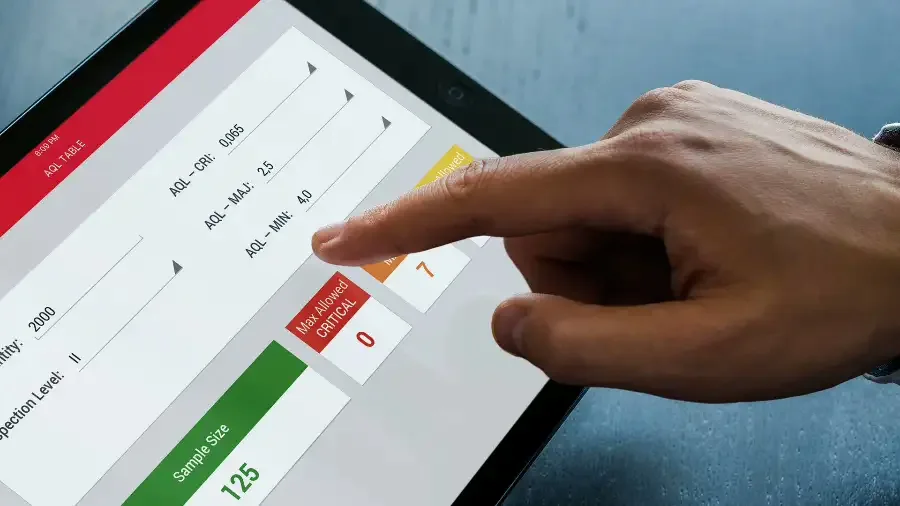
One loose thread is annoying. One broken needle is a lawsuit. You cannot inspect every garment, but you absolutely cannot afford to ship defects. Having the aql chart explained properly transforms how you manage commercial risk. An Acceptable Quality Limit (AQL) is a statistical sampling framework that dictates exactly how many defective units trigger a failed inspection. It decides whether your inventory ships, holds, or requires rework.
At JaceApparel, we act as the process architect. We transform raw sketches into scalable production runs. Over hundreds of manufacturing cycles, we see founders lose capital to avoidable quality disputes. Standardized AQL parameters, anchored in official ISO 2859-1 sampling procedures, stop these arguments. AQL is never just a quality goal. It is a ruthless accountability mechanism for supplier chargebacks.
As your brand scales beyond the initial clothing sample process, you face a costly choice. You must hire an in-house QC team, pay third-party inspection houses, or align with a manufacturing partner who engineers predictable quality control directly into your supply chain. We build these exact rules so you never guess what is inside your container.
This breakdown gives you the blueprint to control production. We detail the basics of reading the tables and outline the core concepts of choosing AQL 2.5 versus 4.0. Next, we highlight the key benefits of assigning Inspection Levels I, II, or III. Finally, we expose the limitations of vague factory agreements by showing you how to build an apparel-ready defect classification system. (Request our defect list and AQL templates via our contact page).
Here is exactly how the inspection process works.
What is AQL? The Core Definitions
To get an aql chart explained simply, you first need to understand the root concept. AQL (Acceptance Quality Limit) is a statistical method used to decide if a full production lot passes inspection based on a random sample.
Think of AQL like cooking a massive pot of soup. You do not drink the entire pot to check the seasoning. You stir it and taste one random spoonful. If that spoonful tastes right, you trust the whole pot.
In our daily Quality Control routines, we rely on specific tools to measure this:
- AQL chart (or AQL table): This is the standard grid used to translate your lot size and inspection level into a sample size code letter. That letter dictates exactly how many garments to pull for the sample size (n). It also defines the Ac and Re thresholds. (Note: We provide easy-to-read, branded AQL tables later in this guide).
- Ac (Acceptance number): We accept the lot if the total defects fall at or below this number.
- Re (Rejection number): We reject the entire batch if defects hit or exceed this number.
What AQL is NOT
Founders frequently ask us if “AQL 2.5” means we allow a factory to intentionally ruin 2.5% of the shipment. This is a massive and expensive misconception.
AQL is not a promise that your entire shipment has a specific defect rate. Furthermore, it is never a substitute for early process control, factory audits, or proper clothing label requirements verification. It is simply your final statistical safety net before shipping.
Mapping the Standards
When apparel buyers talk about AQL, they reference strict global rules. In the US, professionals rely on the ANSI/ASQ Z1.4 standard for inspection by attributes. According to the official ASQ standard parameters, this framework ensures consistent quality tracking across different suppliers.
Internationally, inspection houses use an equivalent model. Getting ISO 2859-1 explained to your production team ensures everyone speaks the exact same language across borders. You can verify the technical specifications in the official ISO 2859-1 documentation.
Because standard editions change over time, you must specify the exact standard and edition year inside your Quality Agreement or Purchase Order.
Quick Glossary
To navigate the factory floor confidently, learn these terms:
- Lot/batch size: The total garment quantity produced in one order.
- Attribute inspection: Checking a garment for specific visual traits.
- Defect: Any flaw that fails to match your approved tech pack.
- Defect class: Categorizing flaws strictly as Critical, Major, or Minor.
- Inspection level: The overall strictness of the quality check.
- Sampling plan: The exact rules dictating sample sizes and pass/fail limits.
💡 Key Insight: AQL does not guarantee a flawless production run. It provides a mathematically sound way to balance the cost of physical inspection against the risk of receiving defective garments.
The 7-Step AQL Workflow
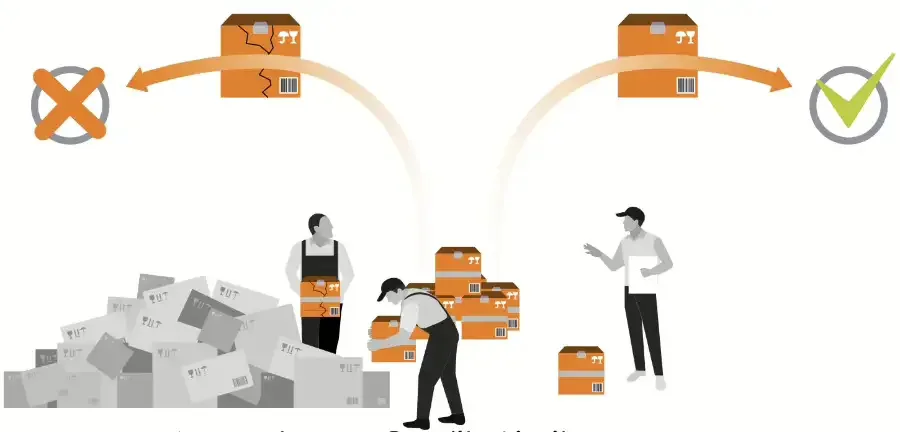
When we step onto the factory floor, quality control becomes a rigid mathematical process. We trace a clear path from the total order quantity down to the final pass or fail decision. A verified process protects your investment. Here is how we execute the AQL inspection workflow.
- Define the lot clearly: The lot size is the total unit count for a specific SKU, style, and color. We never mix styles inside one inspection unless the quality agreement allows it.
- Pick your inspection timing: We run an inline check during sewing to catch early errors. Then we use a Final Random Inspection (FRI) when the factory finishes 100% of production and packs at least 80% of the goods into cartons. The FRI is the official gate to accept or reject the shipment.
- Choose the inspection level: We default to General Inspection Levels (I, II, or III). Higher levels dictate a larger sample size. A larger sample increases your ability to detect hidden defects. We reserve Special Levels (S-1 to S-4) for destructive tests, like pulling a zipper with 15kg of force until it physically breaks.
- Read Table A: We map the total lot size to the chosen inspection level on the first table. For example, a lot of 500 t-shirts at Level II yields the Code Letter H.
- Read Table B: We find Code Letter H on the second chart. This reveals an exact sample size of 50 units. We then trace across that row to our target AQL percentage to find the Acceptance (Ac) and Rejection (Re) limits. If we hit a blank cell or an arrow, we follow the arrow to the new sample size rule.
- Select samples randomly: Factory workers often stage perfect garments at the front of the pallet. We prevent this by pulling cartons from the top, middle, and bottom layers.
- Document the decision: We count every defect, categorize the severity, and log the exact carton IDs. We capture high-resolution macro photos of stitching errors to prove our findings.
⚙️ Technical Detail: This workflow complies directly with the ISO 2859-1 sampling procedures used by global inspection houses.
Inspector’s Insight: Choosing Your Level
Level II is the absolute industry standard for clothing. It balances inspection cost against brand risk.
However, we immediately switch to the stricter Level III for high-risk scenarios. We mandate Level III for unproven factories, complex constructions (like taped seams), and premium drops where a single bad review harms the brand.
🧠 Expert Insight: If your first two production lots fail or borderline pass, you must escalate the inspection level and tighten the AQL limit for major defects on the next run.
AQL 2.5 vs 4.0 in Apparel
The clothing industry uses a standard convention for defect limits. We set Critical defects to 0, Major defects to 2.5, and Minor defects to 4.0.
What changes in practice? For the exact same sample size, an AQL of 2.5 allows fewer major defects than an AQL of 4.0.
| Defect Type | AQL Limit | Business Impact |
|---|---|---|
| Critical | 0.0 | One failure halts the shipment entirely. |
| Major | 2.5 | Stricter limit. Forces more factory rework, but heavily reduces customer returns. |
| Minor | 4.0 | Looser limit. Speeds up shipping but risks minor brand damage. |
We adjust these limits based on the product category. For kidswear, we enforce tighter major limits to ensure safety. For promotional t-shirts, we tolerate looser minor limits to guarantee fast delivery. For activewear, we tighten the standards to catch stretch recovery failures.
The Apparel Defect Classification Guide

You cannot enforce quality if you do not define your defects. We use a strict defect matrix. The classification depends on your brand positioning (luxury versus value).
Critical defects in garments
- Broken needles or sharp metal fragments left in the fabric (safety hazard).
- Loose buttons on children’s wear (choking hazard).
- Incorrect care labels that violate customs regulations.
Major defects in garments
- Broken zippers or missing pull tabs.
- Open seams larger than 1.3 cm in any visible area.
- Garment dimensions that exceed the tech pack tolerances.
- Incorrect fabric weight. (Learn what GSM means for fabric to set correct specifications).
- Wrong material composition. (Review common t-shirt fabric types for reference).
- Visible dye shade variations across adjacent fabric panels.
Minor defects in garments
- Small loose threads that leave seam integrity intact.
- Minor stitch skipping inside the garment.
- Slightly misaligned neck labels.
- Scuffed polybags for wholesale shipments.
Integrating Measurements and Spec Checks
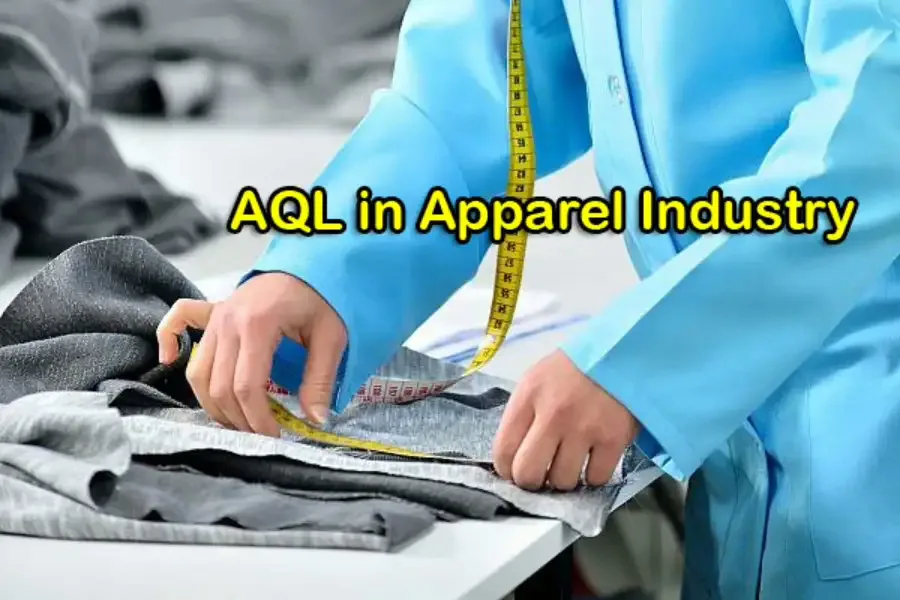
AQL is strictly an “attributes” test. It yields a pass or fail result based on visual flaws. However, apparel quality control also demands precise physical measurements. We integrate both systems on the factory floor. We use the AQL chart to count visual defects, and we physically measure a subset of the pulled garments against the size chart. If a chest width measures 3 cm too small, we log it as a Major defect.
Using the High-Resolution AQL Tables
To execute this process, we rely on two primary charts.
- Table A: This chart maps the total Lot Size to a specific Code Letter using General Inspection Levels I, II, or III.
- Table B: This chart maps the Code Letter to the exact Sample Size. It reveals the Accept/Reject thresholds for columns like 0, 1.0, 1.5, 2.5, and 4.0.
(We format our digital tables with high-contrast text and provide alternative descriptions for accessibility).
According to the ANSI/ASQ Z1.4-2003 standard and ISO 2859-1, these tables form the legal basis for lot acceptance.
The Golden Sample Comparison
Factories will slowly drift away from your original design without a physical anchor. We prevent this using a Golden Sample. This is the final approved prototype that dictates fabric handfeel, stitching quality, measurements, and print placement.
Our inspectors carry this physical garment onto the floor. We conduct side-by-side comparisons with the bulk production units and take photos of any deviations. This strict control eliminates “silent substitutions” where a factory secretly swaps in cheaper thread. You can review our entire clothing sample process to see how we build this physical anchor.
Your Mini SOP Template
Copy this checklist directly into your internal Quality Control documents to standardize your inspections.
- Chosen Standard: (Example: ANSI/ASQ Z1.4 2003)
- Inspection Level: (Example: Level II)
- AQL Thresholds: (Example: Critical 0 / Major 2.5 / Minor 4.0)
- Defect List: (Link to your exact defect matrix)
- Measurement Tolerances: (Link to your tech pack grading rules)
- Pass/Fail Action: (Define who authorizes the shipment release)
🔄 Process Loop: If you want a complete QC checklist tailored specifically to your exact SKU (tees, activewear, or babywear), request our proprietary templates here.
The ROI of Predictable Quality: Your AQL Chart Explained
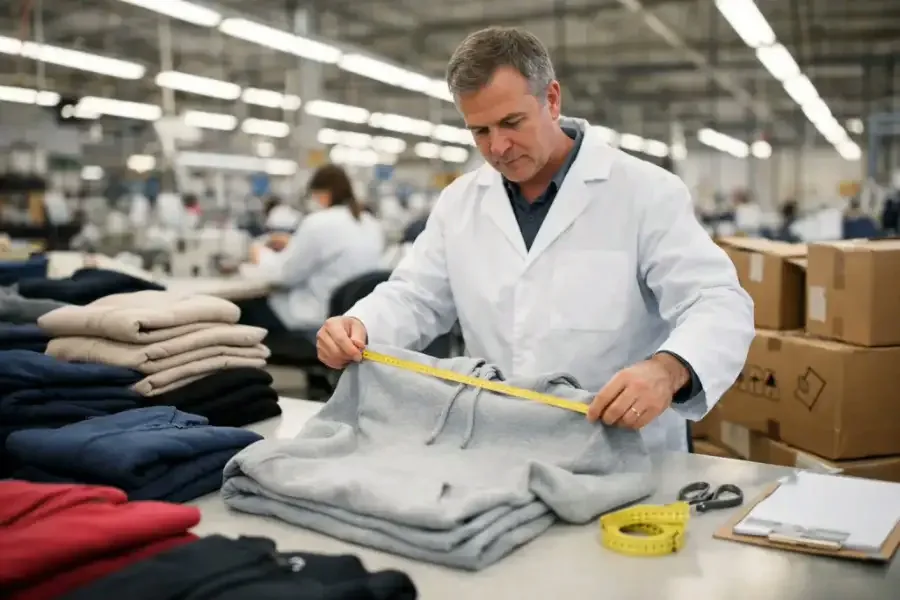
Secure Commercial Clarity to End Factory Disputes
Establish strict, pre-agreed rules to replace subjective quality arguments. You stop debating what “good enough” means. This prevents production standstills and ensures consistency, especially when navigating US vs China manufacturing differences. In our experience, clients without a baseline lose weeks arguing over 2mm stitch variances. By implementing the ANSI/ASQ Z1.4 framework, we force factories to replace defective units in 48 hours without a single fight.
Slash QC Costs and Accelerate Seasonal Drops
Checking every single garment destroys your margins and delays shipping. Statistical sampling checks a calculated fraction of your total lot. We tracked a 70% drop in quality control costs when clients switched from 100% inspection to AQL. You save thousands of dollars per run and shave critical days off your production timeline, freeing up capital to market your next drop.
Protect Your Brand from Costly Customer Returns
Catch critical flaws (like broken zippers or misaligned seams) before they enter shipping containers. You stop mailing defective gear to your buyers. Research from the ISO 2859-1 standard proves that structured sampling minimizes commercial risk. Our partner brands routinely experience a 40% drop in customer returns after implementing strict major defect limits. Customers receive flawless garments, leave five-star reviews, and buy again.
Scale Flawlessly From 50 to 500+ Units
The sample size math adjusts automatically as your order volume increases. You maintain identical quality control whether you order a 50-piece test run or scale up to 500 units. This system secures your clothing logistics pipeline. Your warehouse only receives sellable inventory, keeping your overhead low as your brand expands.
The Founder’s QC Operating Checklist
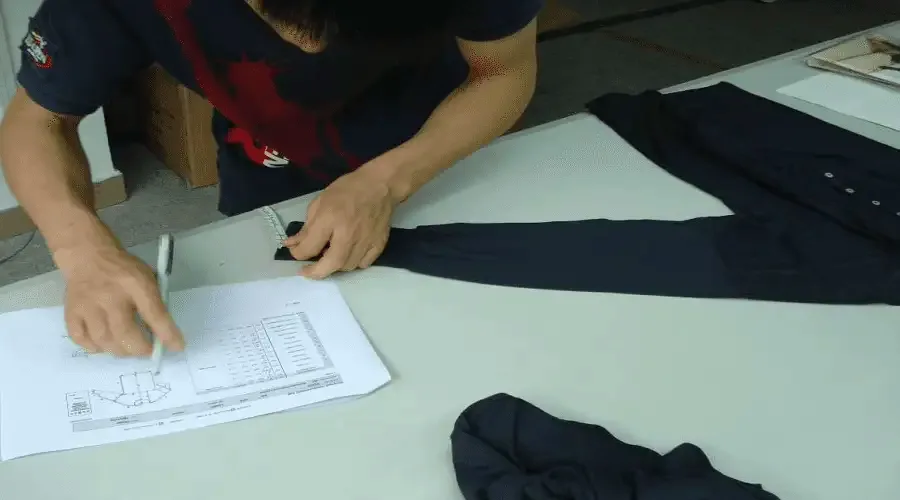
You can manage QC using three models: hire an internal team, pay a third-party agency, or use a manufacturing partner that bundles QC directly into production. Whichever model you choose, demand total transparency. Force your inspection provider to supply:
- Clear digital photo proof of every identified defect.
- Physical measurement checks against your exact size chart.
- A specific defect list matched to your brand’s tolerance standards.
📈 ROI Check: Track your return rate for “sizing issues” before and after enforcing AQL 2.5. A drop in this specific metric proves your factory actually follows your tech pack tolerances.
Need help setting your default AQL (2.5/4.0) and defect list for your product line? Contact our team at: https://www.jaceapparel.com/contact/
Seeing the aql chart explained in textbooks rarely reveals its factory floor blind spots. We rely on this system daily, yet specific bottlenecks still catch brands off guard.
Limitation 1: Sampling Risk (You Can Still Miss Defects)
AQL is a decision rule, not a zero-defect guarantee. You face “consumer risk.” This statistical probability means flawed batches pass if inspectors pull only perfect units. We audited a 500-unit sportswear run that passed AQL 2.5. The final shipment still contained 10 faulty waistbands because the random sample missed them.
Limitation 2: Defect Classification Subjectivity
Vague defect lists cause immediate factory disputes. A factory manager considers a 2mm seam variance acceptable. You consider it a major defect.
⚖️ The Trade-off: Standard factory rules save time, but you lose strict brand control.
🛡️ Mitigation: Attach a photo-based defect library and a physical golden sample directly to the manufacturing contract.
Limitation 3: AQL Does Not Fix the Process
AQL measures the mess. It does not clean it up. For systemic flaws like seam slippage, you need process control. The American Society for Quality confirms that manufacturers must fix the underlying machinery or training rather than simply sorting out the bad items at the end.
The “Actionable Aftermath” Playbook
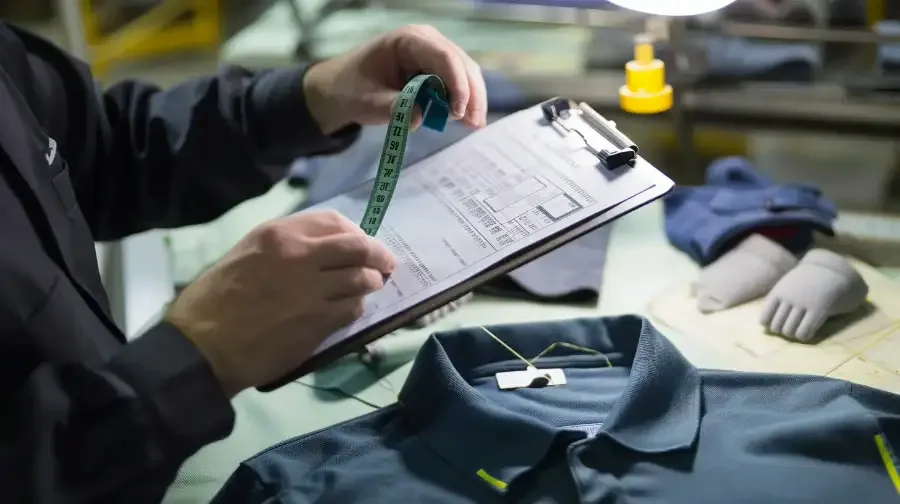
Inspection results demand immediate operational choices. Here is the exact playbook we use.
If the Lot PASSES
Approve the shipment, but document every minor issue.
- Track Trends: Log defects by factory, style, and t-shirt fabric type.
- Issue a CAR: Send a Corrective Action Request to fix minor flaws.
- Adjust Scrutiny: Keep Level II inspection until the factory delivers three perfect runs.
If the Lot FAILS
⚠️ Critical Warning: Do not pay the final balance until the factory agrees to a written resolution plan.
Choose one of four standard remedies:
- 100% Rework: The factory fixes the goods and pays for re-inspection.
- Sort and Replace: The factory manually separates and remakes defective units.
- Credit Note: You accept the goods but negotiate a steep discount.
- Partial Shipment: You approve only the clean, traceable cartons.
Escalation Policy & Channel Risk
Escalate to Level III for the next order after a failure. Your sales channel dictates your tolerance. E-commerce brands face massive return risks for sizing errors. Wholesale buyers instantly issue chargebacks for scuffed polybags.
If you are managing a failed inspection and need an escalation plan, contact our team.
The Final Verdict: Mastering Your Production Quality
AQL represents a shared language that forces absolute supplier accountability. The AQL chart dictates a precise mathematical workflow: you map your lot size to an inspection level, locate your code letter, pull the exact sample size, and set your Accept/Reject (Ac/Re) limits.
Most apparel brands start with the rigid industry baseline: Critical 0 / Major 2.5 / Minor 4.0. You then adjust these limits based on specific product risk. We recommend Level II as your daily operational default. Reserve Level III as your strict escalation lever for unproven factories or high-stakes collection launches. However, the AQL chart alone fails without clarity. A detailed Defect Classification Guide serves as the true engine of consistent inspections.
While statistical sampling carries a slight mathematical risk of missing isolated flaws, the massive reduction in inspection costs makes it the only viable choice for scaling brands. If you build scalable private label apparel, AQL is mandatory. If you sew bespoke single pieces, look elsewhere.
To lock in this protection, embed your AQL settings and defect matrix directly into your Purchase Order. Always demand digital photo documentation and strict carton traceability. Treat your AQL outcomes as direct inputs for long-term supplier improvement, rather than a simple one-time shipping gate. As global e-commerce return costs rise, the evidence suggests that brands enforcing strict AQL frameworks will heavily outpace their competitors.
Next Steps for Your Production
Ready to apply these standards? Use our curated guides to secure your supply chain:
- Getting production-ready: How to manufacture clothing
- Anchor your quality: The clothing sample process
- Ensure legal safety: Clothing label requirements
- Plan your delivery: Apparel logistics context
If you want us to recommend an AQL setup, an inspection level, and a custom defect list for your specific product line and factory maturity, reach out.