For cycling brands, club kit & event merchandise

Custom Cycling Apparel Manufacturer — High-Performance Wholesale Bike Kits

Moisture-wicking knits, full sublimation and pattern development, cut and sewn to your tech pack rather than adapted from a stock range. Panel layout, pad, print and finishing are set with you, proved on one sample, then run at a size a race team, a brand or a retailer can sell through — on a quick turnaround that cuts your lead time by up to 40%, so inventory stays at what actually sells.

12%

Less drag

300%

Faster drying

UPF50+

UV block

Order facts

The scale behind a cycling order: the size of the floor, the number of people on it, the yearly output, and the year the mill started.

Production floor

20,000 sqm

Workforce

400+ people

Annual output

~1,000,000 pcs

Operating since

2015

Three standards are held, and the certificate copy for each travels with the quote rather than waiting for dispatch: OEKO-TEX Standard 100, BSCI and GRS.

Before you commit

Four Places a Cycling Kit Order Stalls

None of these is about the artwork. They are the choices that get made after the design is signed and before the first panel is cut.

The pad is picked off a chart instead of off the rider

  • Choose a pad by thickness alone and it rides wrong by the third hour, whatever the label claims.
  • Density, width and the shape over the sit bones decide it, and those are read from the rider.

Our fix

Taken from the rider’s own position on the bike, not from a thickness grade.

A size run that only fits one kind of body

  • Sizing graded on a stock chart strands the middle of a club between two sizes.
  • Panel count and stretch decide whether one size suits a sprinter and a tourist alike.

Our fix

Graded across the sizes a club actually holds, rather than narrowed to one build.

Print that gives up before the season does

  • Decoration picked for the look rather than the panel it lands on fails first at the stretch.
  • Placement across a seam or over a knee is where coverage goes wrong, not the artwork itself.

Our fix

Matched to the panel it has to cross, so the method follows the cloth.

Colour that shifts between the sample and the run

  • Two dye batches can leave the second delivery reading as different kit, even in the same navy.
  • Every colourway on one order wants dyeing together, and the sample is what the run is held to.

Our fix

Dyed as a single lot per colourway, so a restock matches the run before it.

The kit list

Nine Pieces, Each One Cut to Your Own Kit

What the grid describes is what each piece is for. The numbers underneath it come from your own chart, never a stock block.

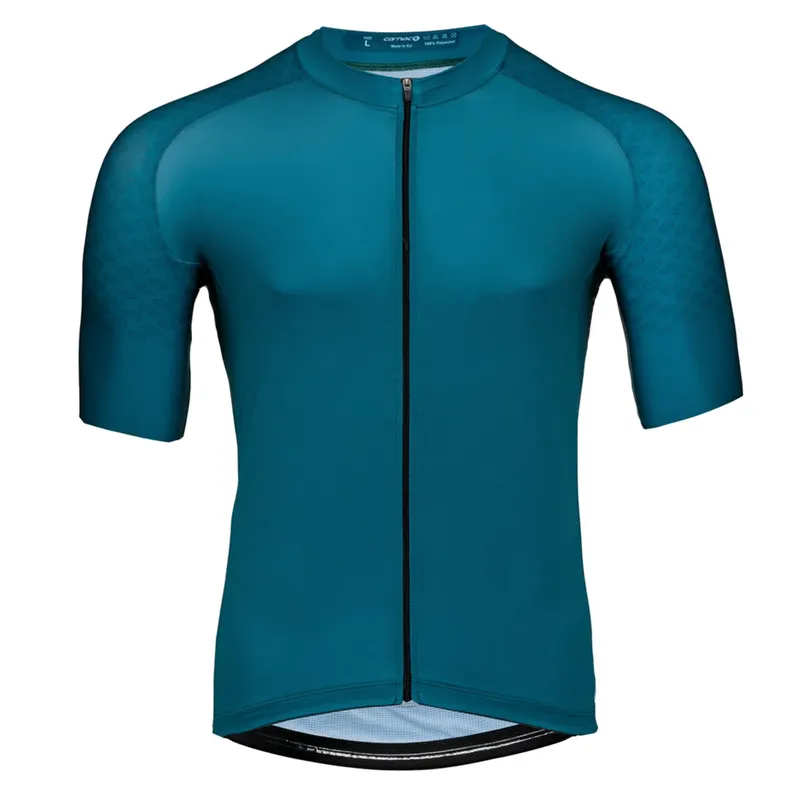
Teal short-sleeve jersey laid flat on white, a full-length zip down the front and dotted fabric across the raglan sleeves

Jerseys

The piece a club or a brand puts its name on, cut to the shape your riders actually hold.
Cut
Race or athletic, on your own block
Panels
Three to five, plus raglan sleeves if you want them
Finish
Flatlock seams, silicone gripper at the hem
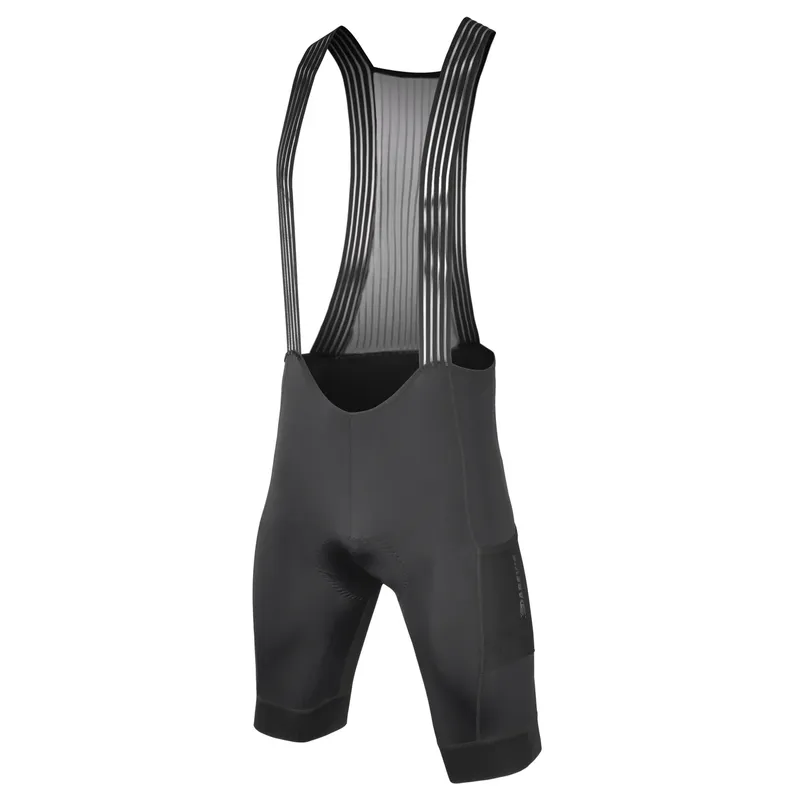
Black bib shorts laid flat, ribbed mesh braces over a dark seat panel and mesh side panels down the legs

Bib shorts

Braces take the weight off the waist, so the pad stays where it was set.
Cut
Anchored at the shoulder, not the waist
Panels
Eight to twelve, with the pad set in its own panel
Finish
Raw-cut leg ends, laser-finished to sit flat
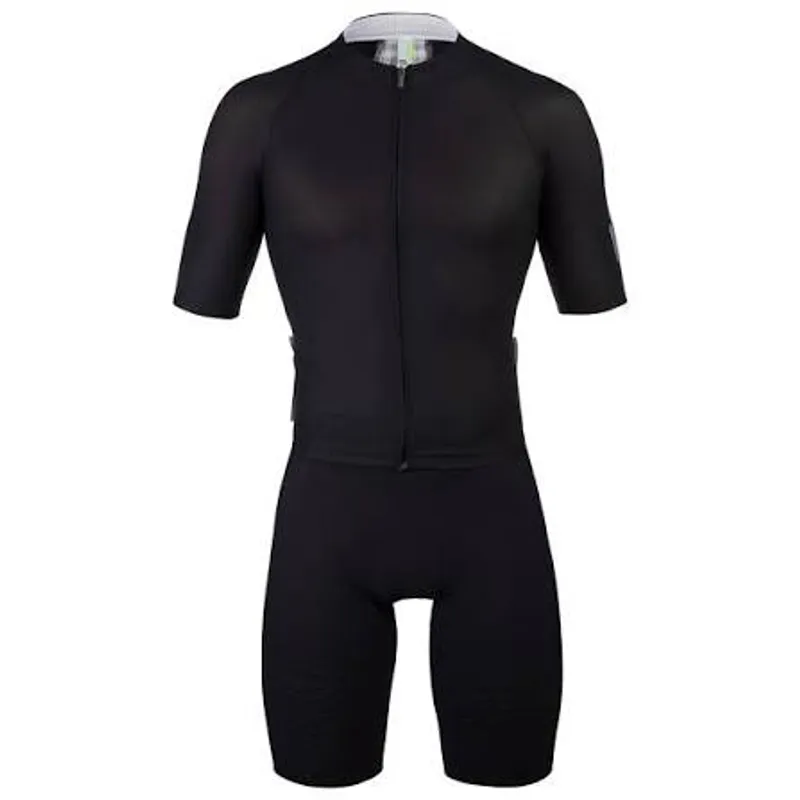
One-piece black skinsuit on a white ground, a grey collar above a full-length zip and shorts ending at mid-thigh

Skinsuits

One garment to the shoulder, for time trials, track and triathlon.
Cut
One piece, cut to a time-trial or track position
Panels
Fewer seams than a jersey and short, for a reason
Finish
Bonded or flatlocked, depending on the fabric
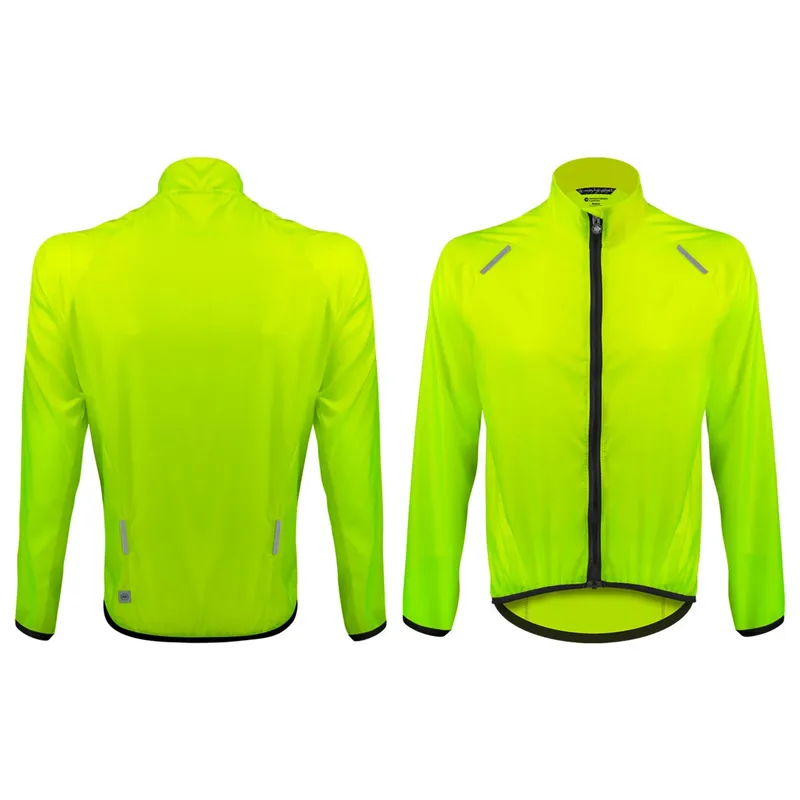
Hi-vis yellow-green wind jacket shown twice on white, the back at left with two reflective strips and the front at right behind a black zip

Wind jackets

Packs to a pocket and still cuts the wind on a descent.
Cut
Loose enough to layer over a jersey
Panels
Shell, lining and sleeve, with the zip between them
Finish
Taped at the shoulders, where water pools
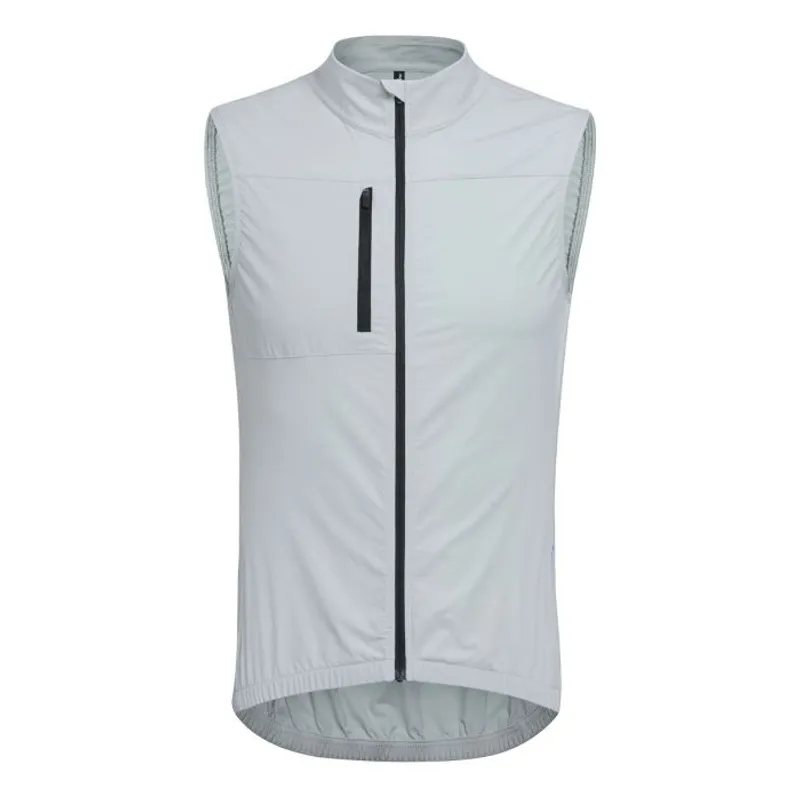
Pale grey gilet laid flat, a black zip down the middle and a second black zip closing the chest pocket

Vests

Warmth over the chest without the bulk of a second jersey.
Cut
Sleeveless, sized to sit under a jacket
Panels
Front and back, bound at the armhole
Finish
Mesh at the back, gripper tape all round
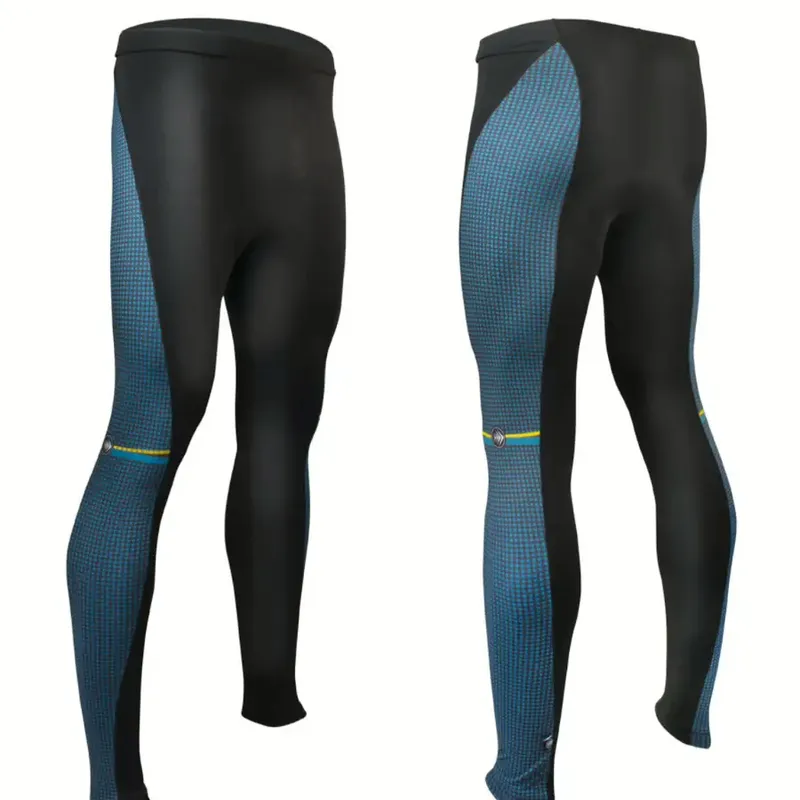
Two full-length tights in black and blue honeycomb panels, a thin yellow band across each knee

Leg tights

Cold-weather leg coverage, cut to the knee or down to the ankle.
Cut
Full length to the ankle, or cut at the knee
Panels
Four-panel legs, with the knee shaped rather than seamed straight
Finish
Ankle zip and reflective tape, if the brief asks
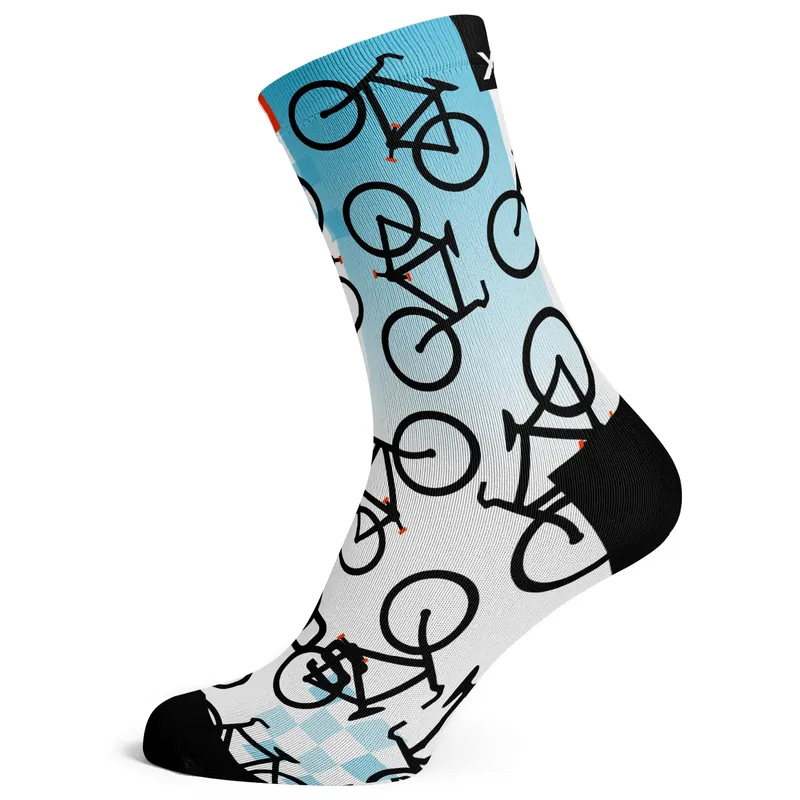
Blue crew sock in profile, a black bicycle print repeated over a pale blue-to-white gradient, with a black heel, toe and cuff tab

Crew socks

The piece that takes the most wear and the fewest decisions.
Cut
Height set to your shoe, not a stock length
Panels
One knitted tube, no cut panels at all
Finish
Hand-linked toe, ribbed cuff
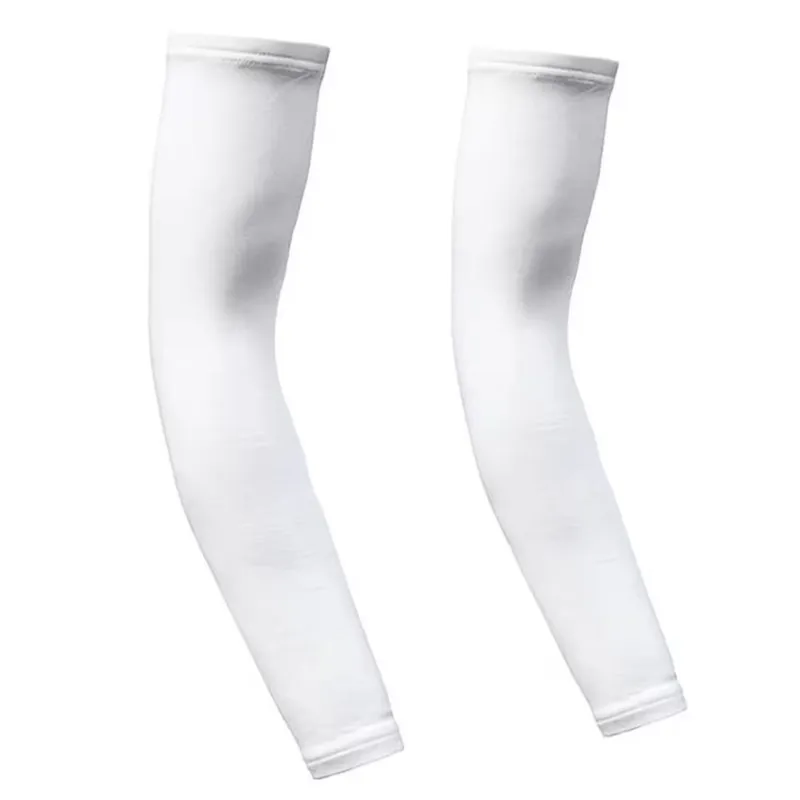
White arm warmers lying side by side, each curving like a bent arm with a band at the top and at the wrist

Arm warmers

Removable warmth, taken off at the foot of the climb.
Cut
Shaped to the elbow, tapered at the wrist
Panels
Tapered panel each, seamed once
Finish
Silicone band at the top, flat seam below
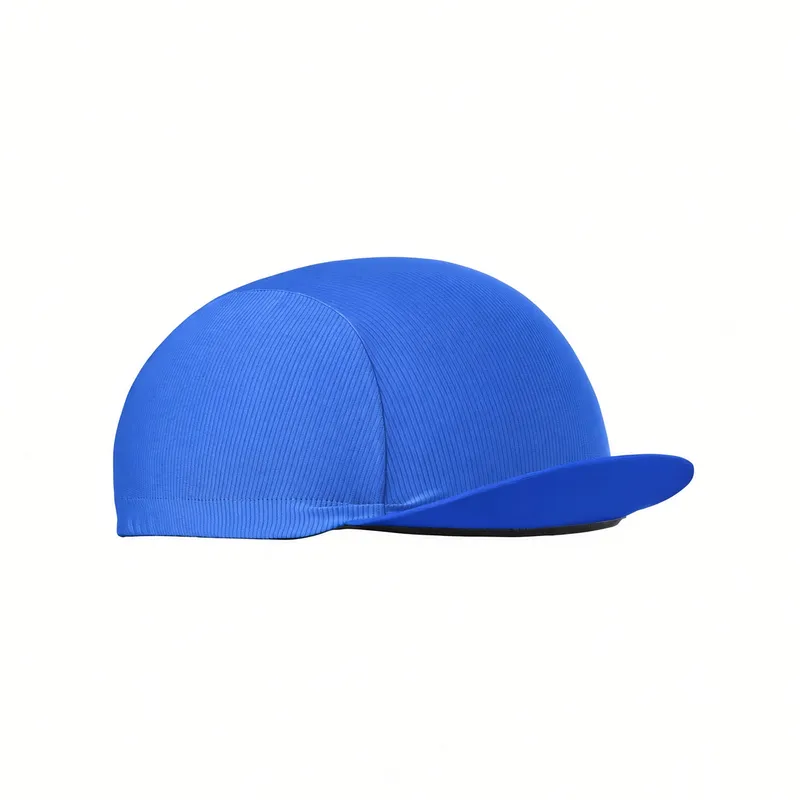
Royal blue four-panel cap in profile on a white ground, a seam down the crown and a short level peak above a black under-edge

Riding caps

Under a helmet, a cap does the small jobs — sun, sweat and rain.

Cut
Four-panel, with a peak you choose
Panels
Crown and brim, plus a band if the cap is lined
Finish
Elasticated band inside, peak bound at the edge

Decoration

Four Ways to Put Your Artwork on the Kit

One of these happens before the panel is cut and three happen after the garment is sewn. That single difference decides which designs are possible.
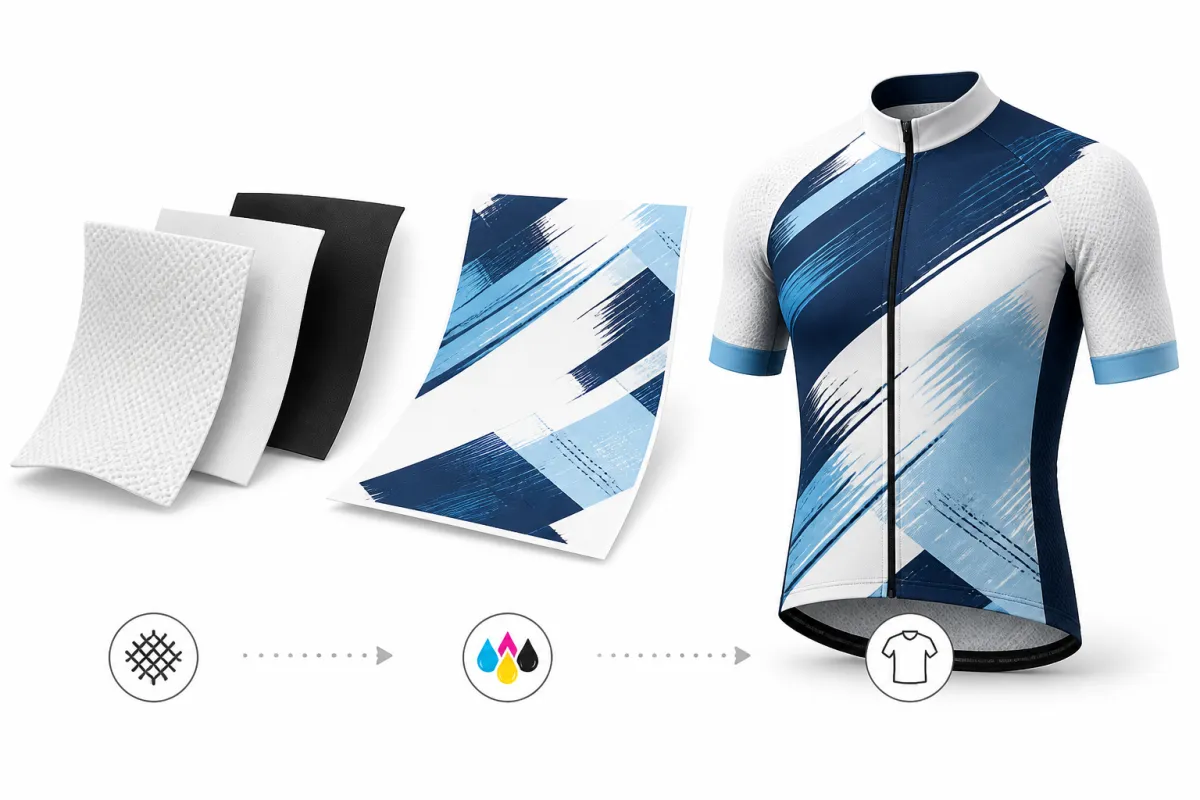
Fabric swatches beside a printed panel and a finished jersey, with three icons tracing the run from cloth to print to garment

Panel sublimation

  • Print is laid into the panel before it is cut, so the surface takes artwork edge to edge.
  • Colour runs across seams and zips without breaking, which is what a full kit design needs.
  • Suited to graphics that wrap the body rather than sit in one spot on it.

Usually printed forAll-over graphics that wrap the body
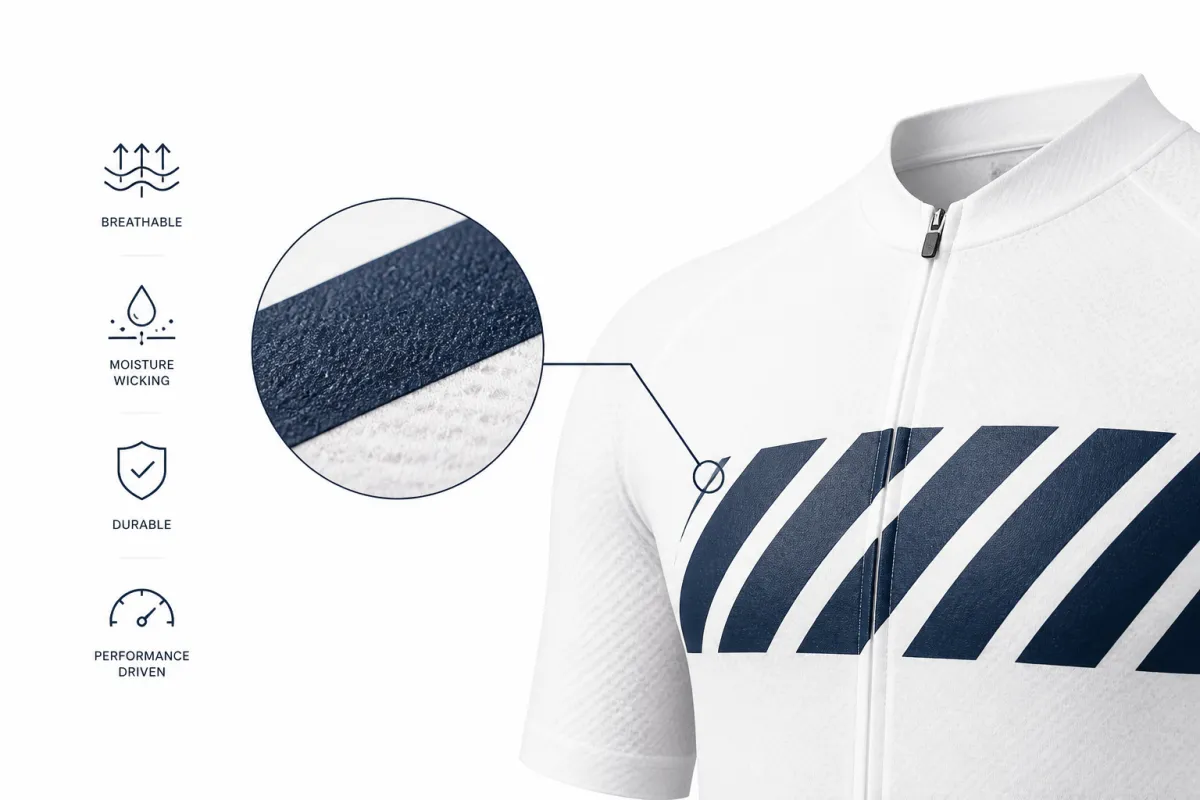
Close-up of a printed stripe on white knit, a jersey filling the right half and four feature icons stacked down the left edge

Screen printing

  • Ink sits on top of the fabric, so the mark reads solid and opaque.
  • Works on a flat panel and a small number of colours.
  • Numbering, sponsor blocks and a repeated club crest are its natural work.

Usually printed forBlock colour, numbering and sponsor marks
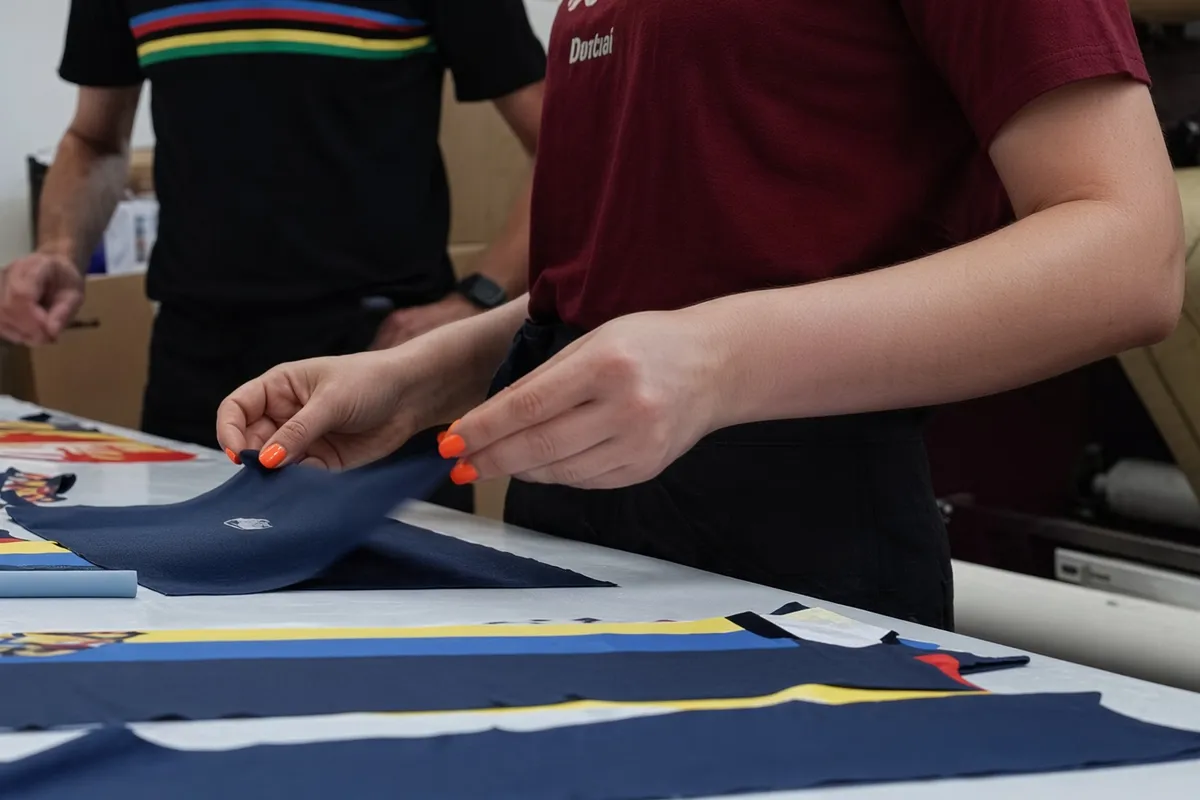
Hands lifting a cut navy panel from a print bench, printed panels and a roller laid across it and a press behind

Heat transfer

  • Cut vinyl or printed film pressed onto the finished garment.
  • Good where a name, a number or a one-off block has to land on a short run.
  • Applied after sewing, so it can cross a zip or sit over a pocket.

Usually printed forNames, numbers and short runs
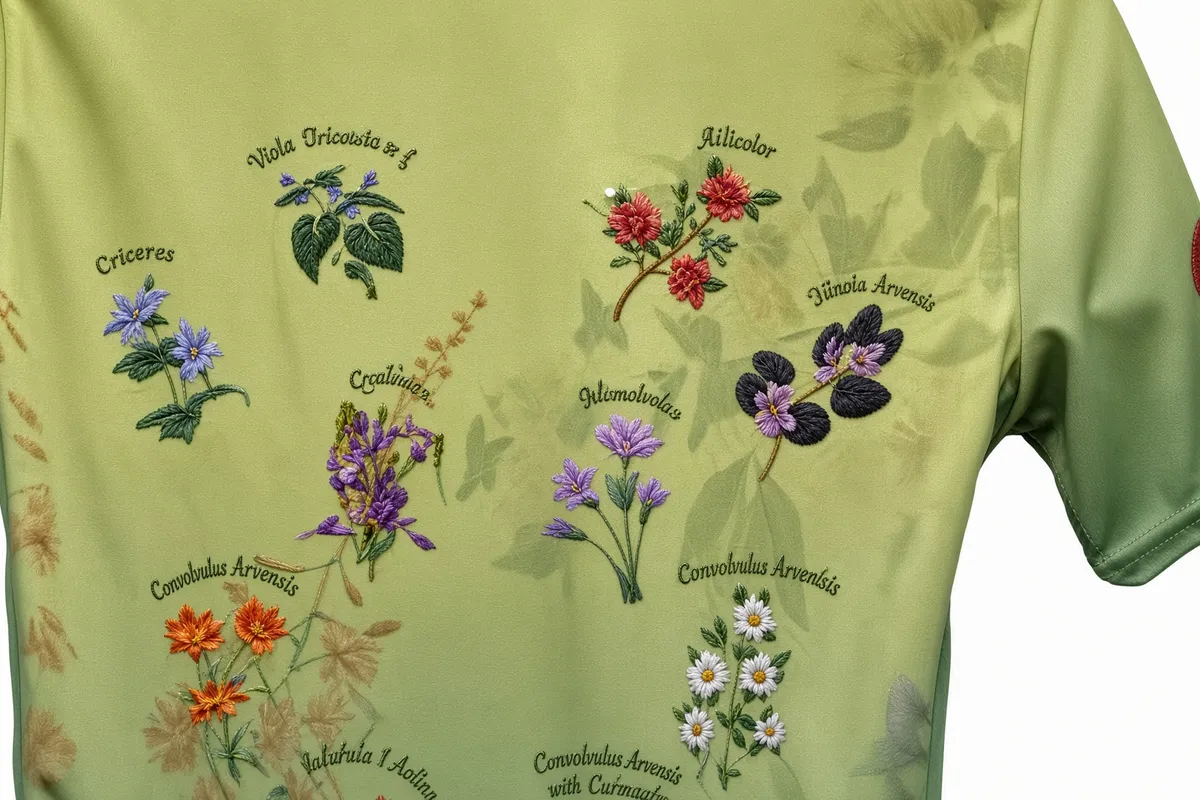
Stitched flowers, buds and leaves spread across a green panel, each with a caption in embroidered script

Embroidery

  • Stitched thread, for a club crest or a wordmark.
  • Reads as a raised mark and takes wear better than a flat print does.
  • Kept small on stretch fabric, where a dense stitch would stiffen the panel.

Usually printed forCrests, wordmarks and caps

Bring your artwork

Fabric directions

Six Directions, Matched to the Ride and the Weather

Pick the direction first — what the ride is, and what the weather does to it. The weight, the blend and the finish are then quoted against the tech pack rather than taken from a sample card.
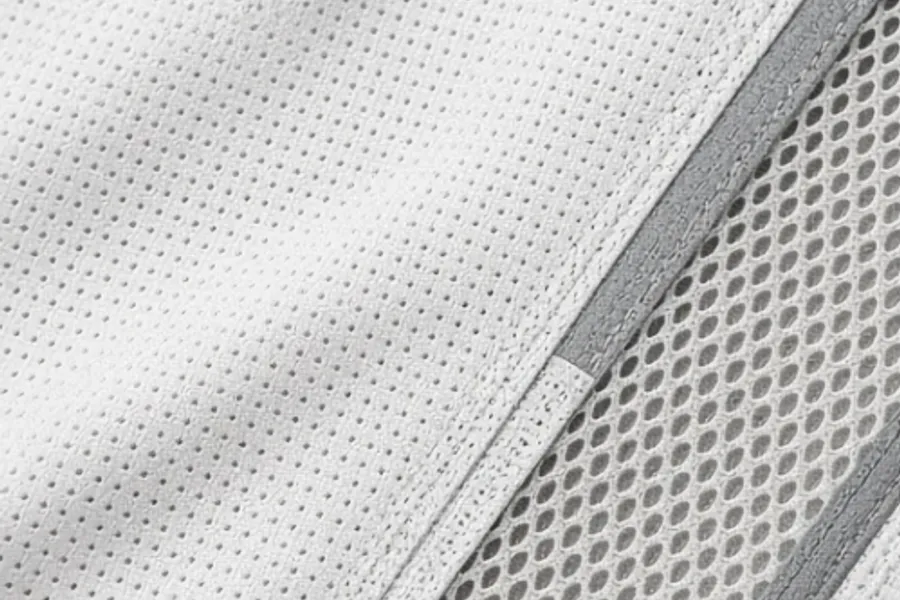
Perforated white knit filling the frame, a band of open mesh running diagonally below it

Lightweight knit

Woven to move sweat off the skin and dry fast, for the hottest part of the year.

Usually matched toSummer jerseys, sleeves and club kit
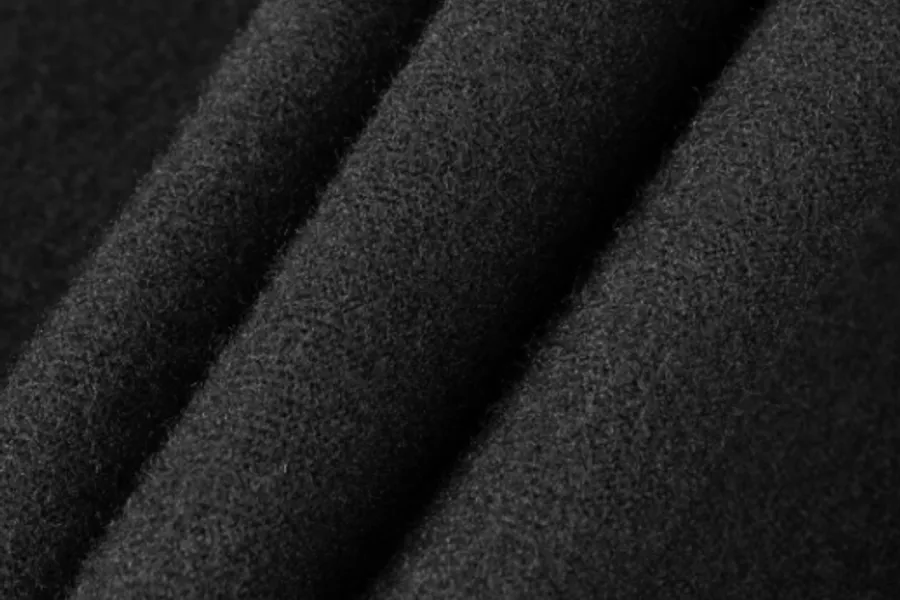
Folded dark fleece filling the frame, its brushed surface catching light along four soft ridges

Brushed thermal

Fleeced on the inside so it holds warmth without needing a bulky outer layer.

Usually matched toWinter tights, jackets and warmers
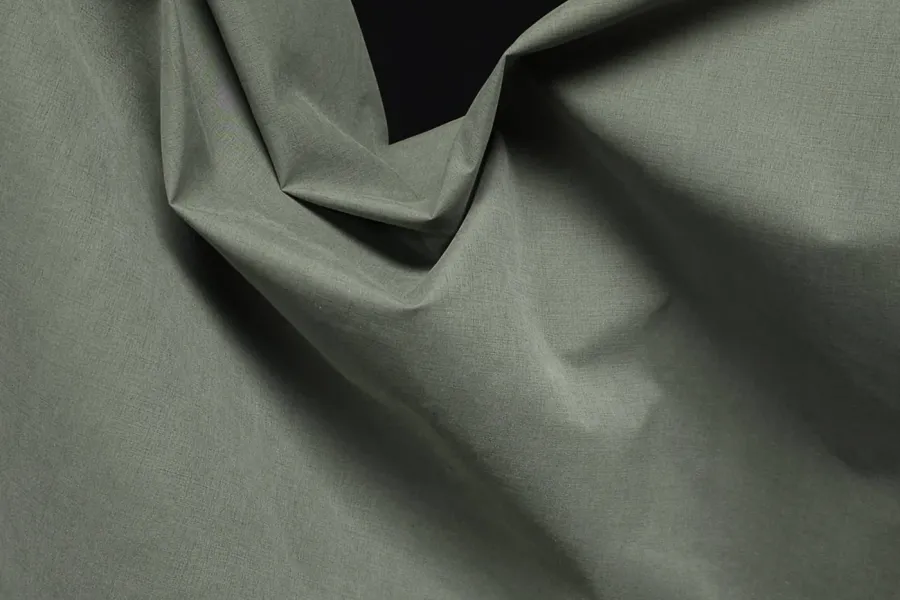
Sage-green shell fabric folded across the frame, its weave catching light along the creases

Wind-resistant shell

Blocks wind at the front and sheds light rain, with a breathable back panel.

Usually matched toGilets and shell jackets for a cold start
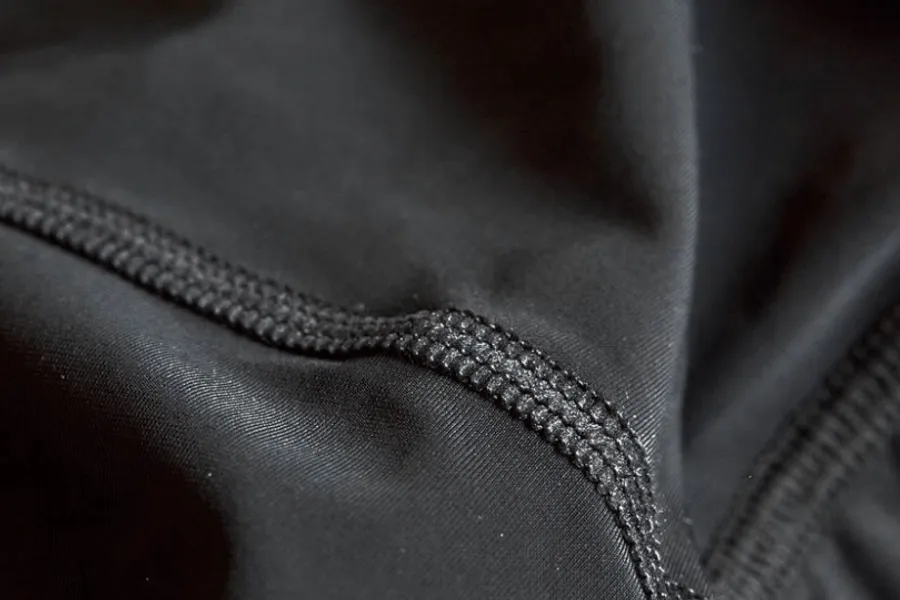
Dense black knit filling the frame, a flatlock seam running diagonally across the middle

Compression knit

Denser knit held through the pedal stroke, at the pressure your own spec sets.

Usually matched toBibs, tights and support panels
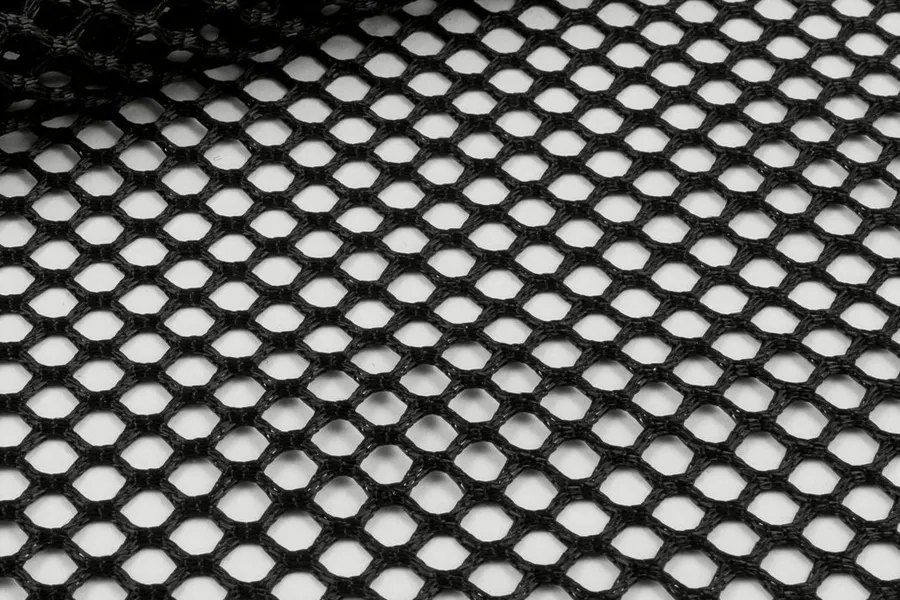
Diamond open mesh filling the frame in black, one corner folded back on itself

Open mesh

Loose, open structure for the panels under the arm and down the back.

Usually matched toUnderarm and back panels
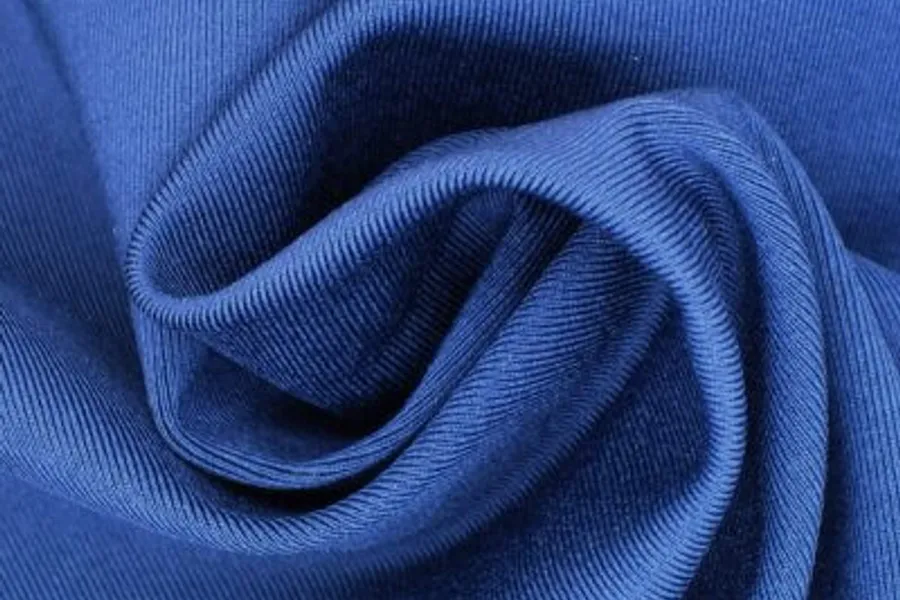
Ribbed blue knit swirled into a fold at the centre of the frame

Recycled knit

Spun from reclaimed fibre rather than virgin polymer, for a kit whose own content has to be stated.

Usually matched toBrands and events with a sustainability line

Weight and blend are quoted against your tech pack · no fabric here is held as a stock line

Match a fabric to the ride

Built in

Four Components That Decide How a Kit Feels at Hour Four

The garment is signed off long before these are chosen, and these are what the rider notices first. Each one is specified on the tech pack, piece by piece, rather than assumed.
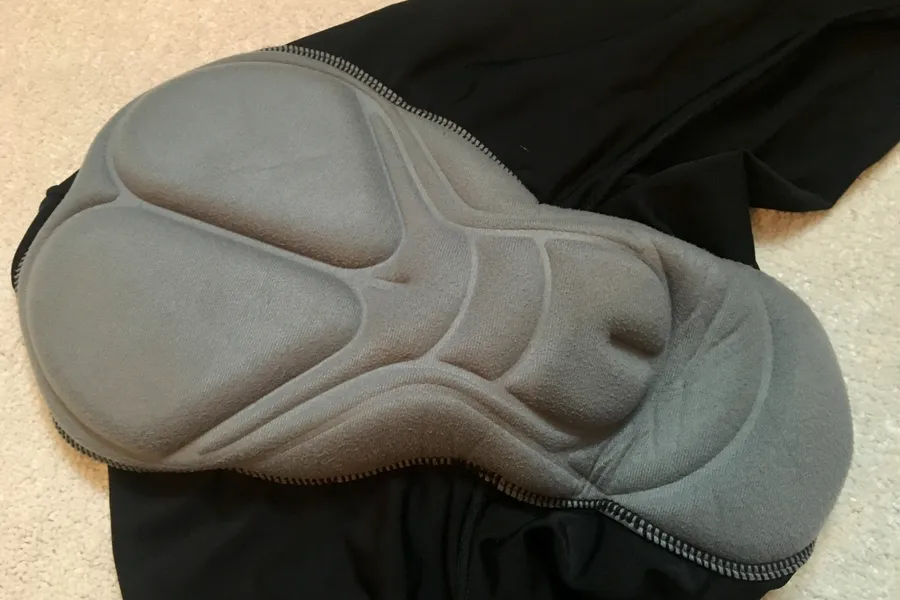
Multi-panel grey chamois pad sitting inside a black bib short, its contouring raised above the fabric

Chamois & pads

  • The pad is chosen by what the rider needs under them, then built into the short itself.
  • Riders who want one get a second, thinner pad in a liner short.
  • Coverage over the sit bones is the measurement that matters, and it is taken rather than quoted.
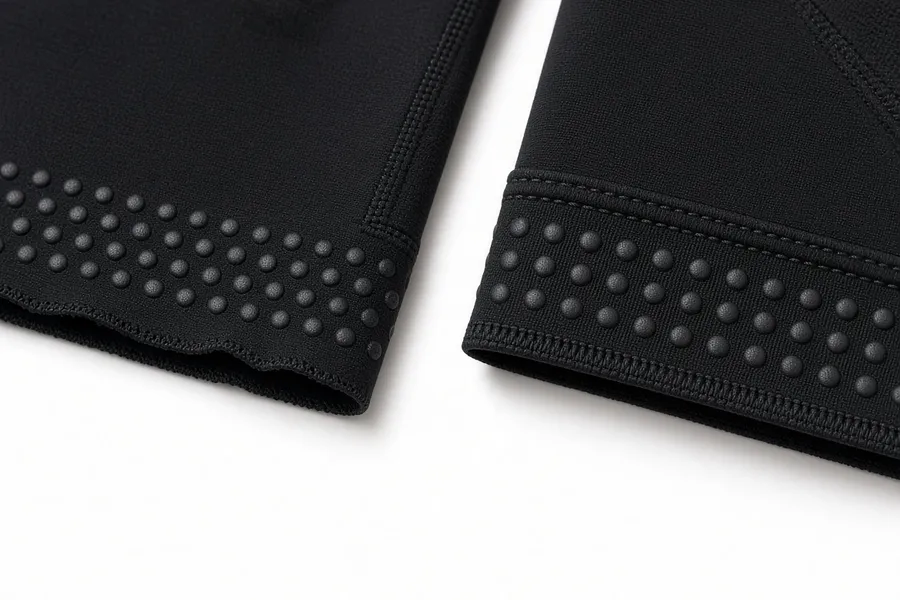
Silicone gripper dots banding the inside of two black leg hems, one folded back to show its stitching

Leg grippers

  • Silicone bands hold the leg end flat against the skin without pinching it.
  • Grip is calibrated on the sample, because a band that is too strong is worse than none.
  • Laser-cut ends and a stitched band are both available, and they behave differently.
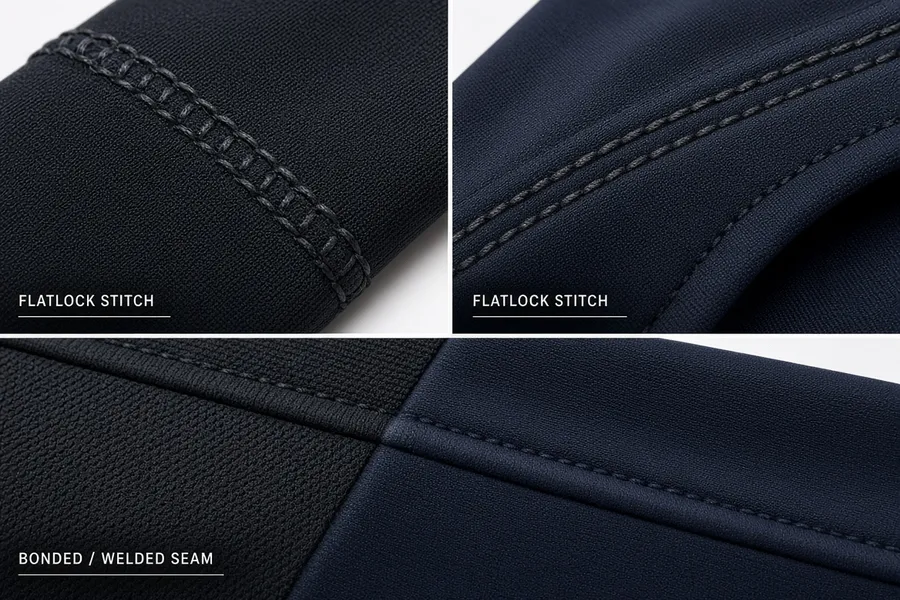
Detail of four seam treatments across dark fabric, a flatlock ridge beside a bonded panel joint

Seams & stitchery

  • Flatlock joins leave a seam that lies flat rather than rubbing under a strap.
  • Where the fabric suits it, panels are bonded instead of sewn.
  • Stitch type and thread are named on the tech pack so the second run matches the first.
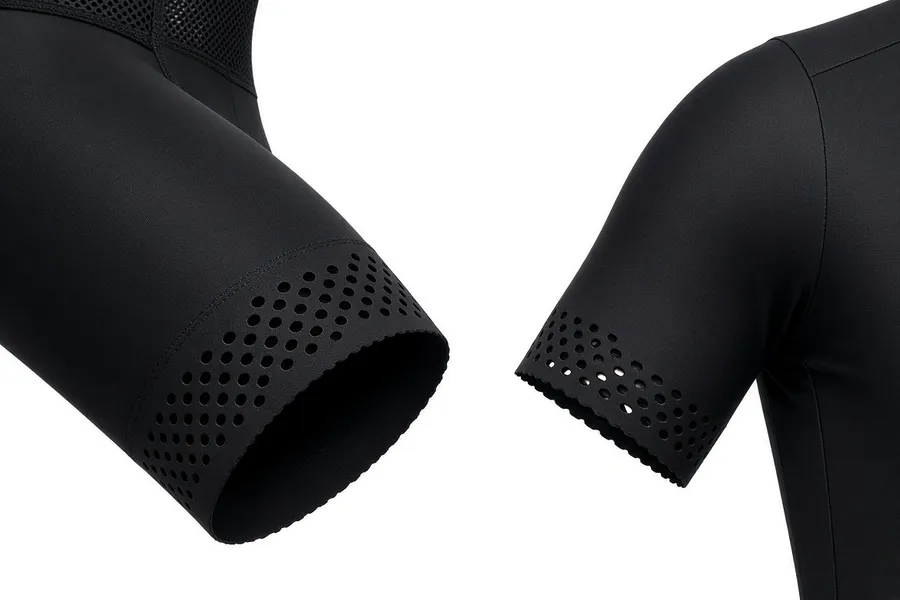
Laser-cut holes finishing the edge of a bib short leg and a sleeve cuff, both cut in black

Raw-cut edges

  • Lasered hems and armholes finish without a turned edge or a band.
  • The fabric is cut to hold its own edge, so nothing rolls and nothing rides up.
  • Used at the leg of a bib short and the cuff of a sleeve, where a hem would show.

Lock the spec first

Panels, Pad and Print Signed off on One Wearable Set

The sample carries its own line on the quote, and the bulk clock starts the moment that set is signed — nothing sits between the two waiting on a decision.

How it runs

Four Stages from a Kit Brief to a Sealed Carton

Each stage closes before the next opens, so a change of fabric, pad or placement is caught at the sample rather than halfway through the bulk run.

  1. Start from the kit you ride

    Brief

    Tell us the pieces, the sizes, the quantities per colour and where the kit is ridden. Anything you already have is enough to start the pattern — a jersey you wear, a club sketch, or a sample from another supplier.

  2. Lock the panels and the pad

    Tech pack

    No fabric is chosen until the ride decides it: the cloth, the stretch and the finish are settled, the sizes come off your own chart, and the pad placement goes onto one tech pack before anything is cut.

  3. Sew the pre-production set

    7–10 working days

    The sample is sewn first, so the fit, the pad position and the print are judged on something a rider can put on and pedal in.

  4. Run the bulk and pack it

    7–15 working days

    What you signed becomes the reference the line works to. Panels, print and finishing are measured against it, and every carton is turned out before the order leaves.

Every carton is turned out against the approved set · AQL 2.5 at final inspection

Client work

Two Kit Lines, and What Changed after Them

Both of these started with a problem that was costing the brand money every month. What follows is the problem, what was changed on the line, and the client’s own account of the result.

Germany

Apex Performance Wear

Jonas Weber, in a grey suit jacket and white shirt against a plain grey wall

Jonas WeberHead of Sourcing

Pain point

Leggings arrived with the waistband elastic inconsistent from one batch to the next, and the returns that followed ran at 18% in their first quarter. Sampling ran three weeks or more each round, which pushed the fall collection launch back with it.

Our solution

The waistband elastic tension was standardised at 42% stretch recovery and held across the runs, a pre-production stretch test report was added, and the sample set came back inside the window quoted for it rather than running on.

Our return rate was killing our margins. After switching to Jace, waistband-related returns dropped from 18% to under 3% in two quarters. We also went through far fewer sample rounds — the first sample was close enough to approve. For a German brand, that level of consistency is hard to find.

Jonas Weber, Head of Sourcing, Apex Performance Wear

Australia

Velvora Active

Michelle Tran, in a black top against a plain pale wall

Michelle TranProduct Manager

Pain point

Selling into the EU market required certified recycled fabric documentation, and the old supplier could only offer generic material labels. Colour fading well before the garment had done its work was the other recurring complaint.

Our solution

GRS-certified recycled nylon was supplied with full traceability documents, a post-wash colour retention test was added to the routine, and colour delta reports went back batch by batch.

Compliance was our biggest blocker for EU expansion. Jace handed us complete GRS documentation and batch colour reports — no chasing. Our post-wash colour fade complaints went from 9% to under 1.5%. They handle the compliance side so we can focus on selling.

Michelle Tran, Product Manager, Velvora Active

Customers

Clients We Have Produced For

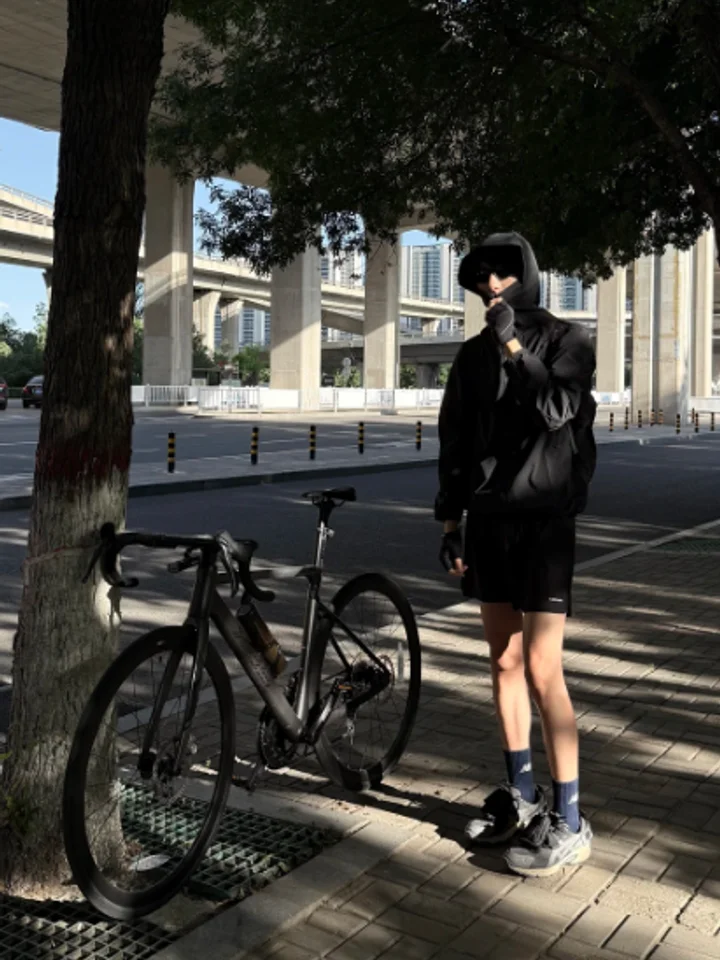
Standing beside a road bike on a city street, dark jacket and black shorts in the shade of a tree
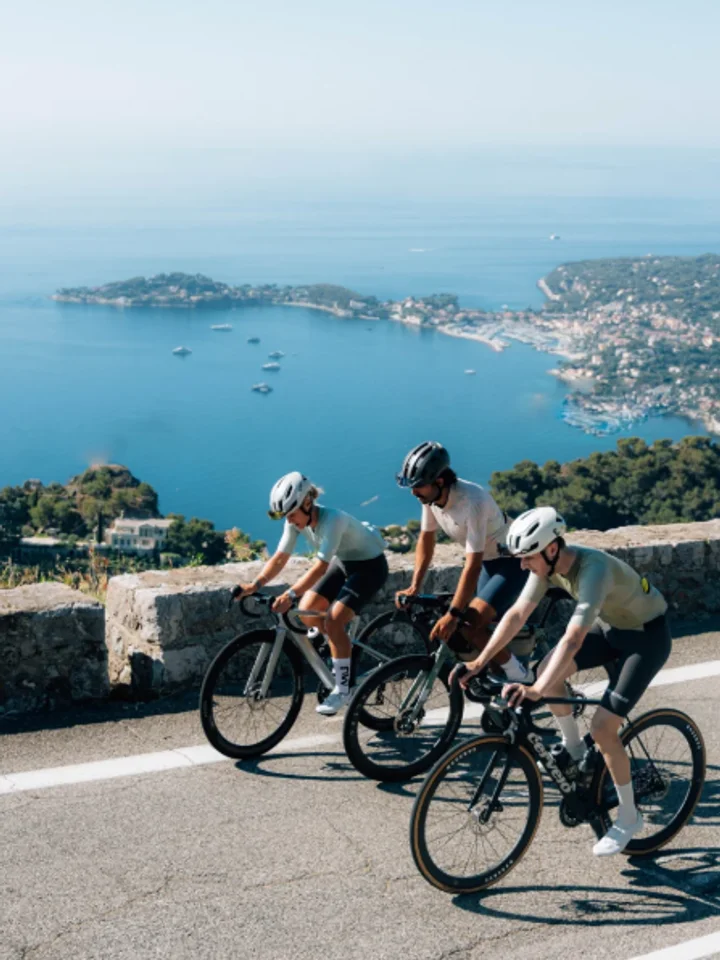
Riding three abreast up a coast road in pale kit, the bay and the far shore dropping away below
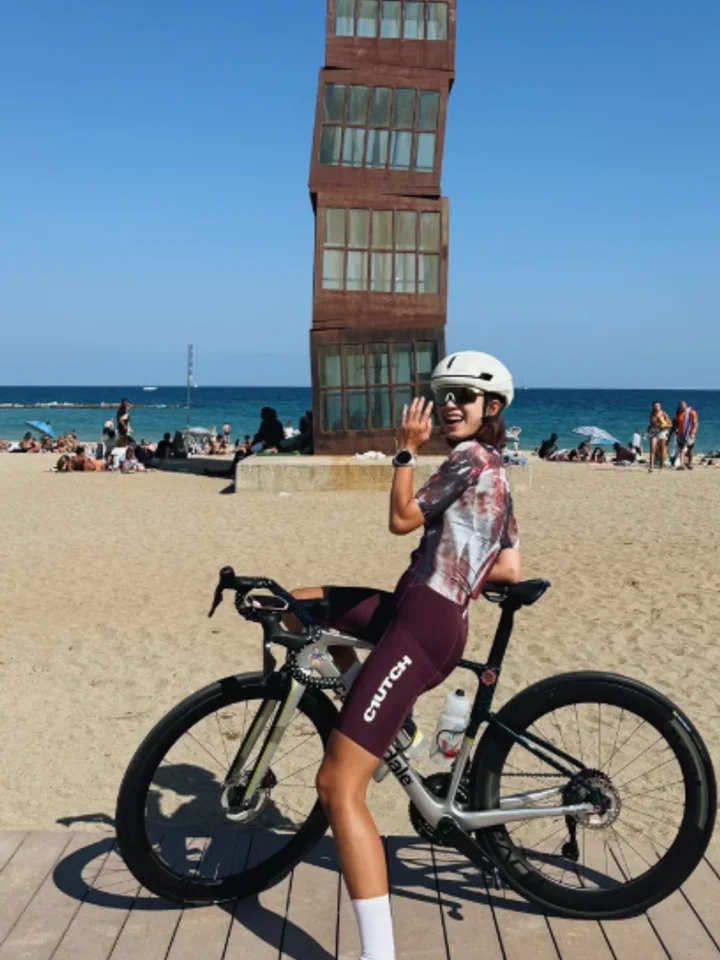
Leaning on a road bike on the sand with one hand raised, a beach and a tower of windows behind
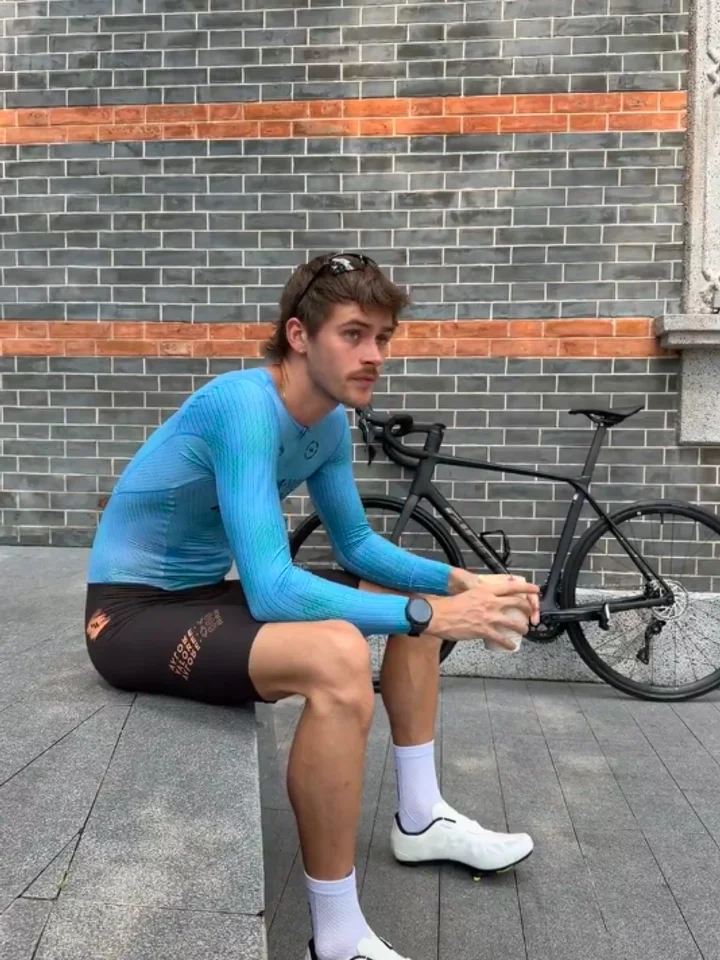
Seated on a step against a tiled wall, blue long sleeves and black bibs, a bike propped alongside
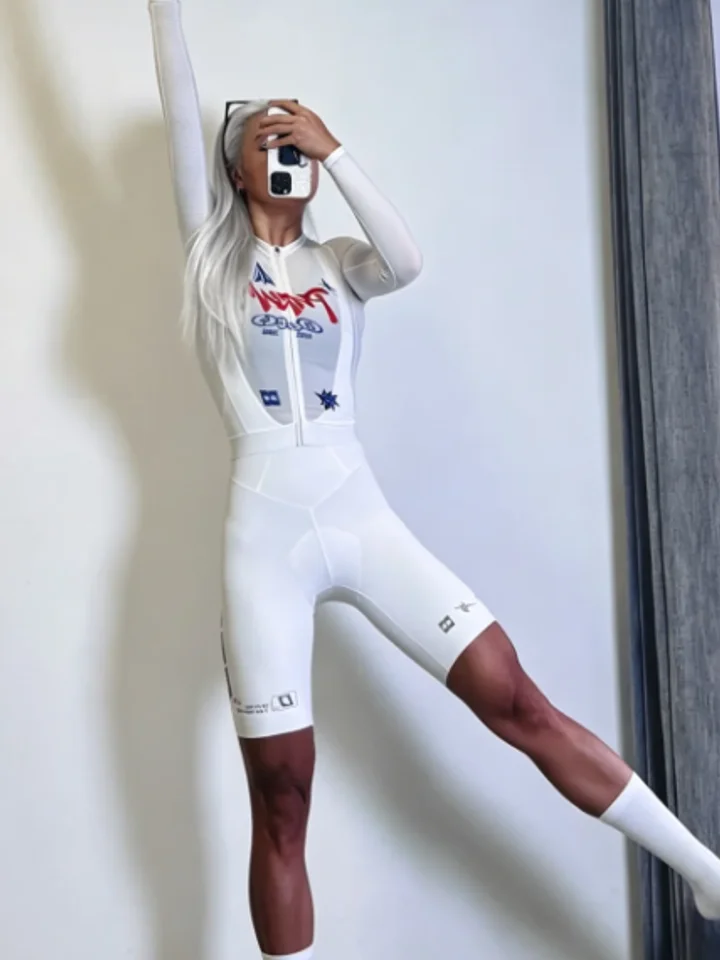
Arm raised in a pale race suit against a plain wall, its chest and both thighs printed
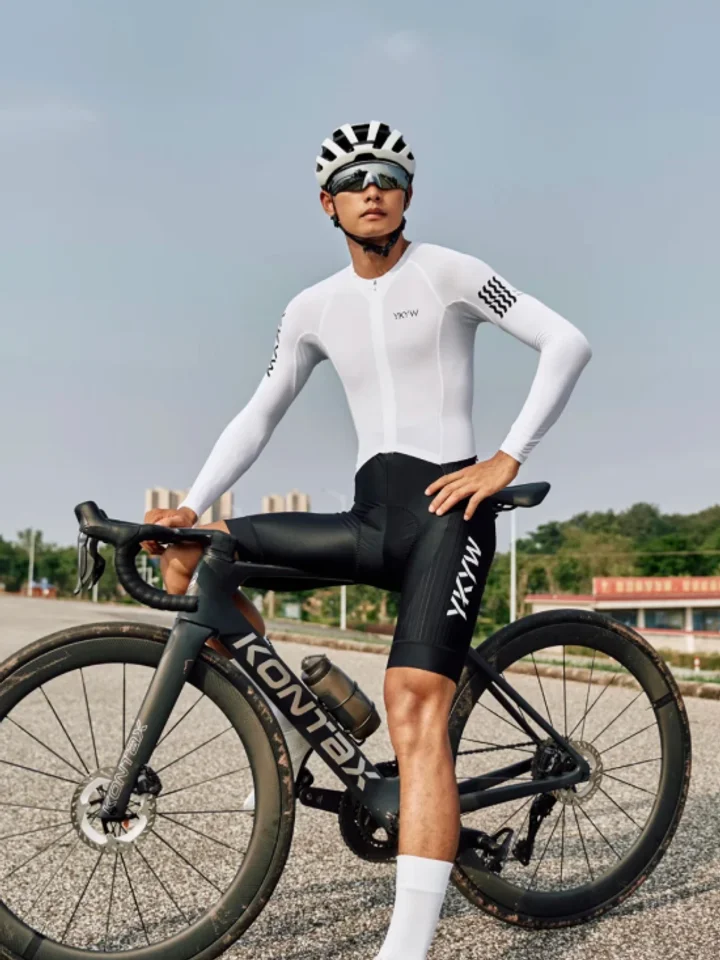
Holding a road bike at rest in white long sleeves, a striped helmet on and the bars in one hand
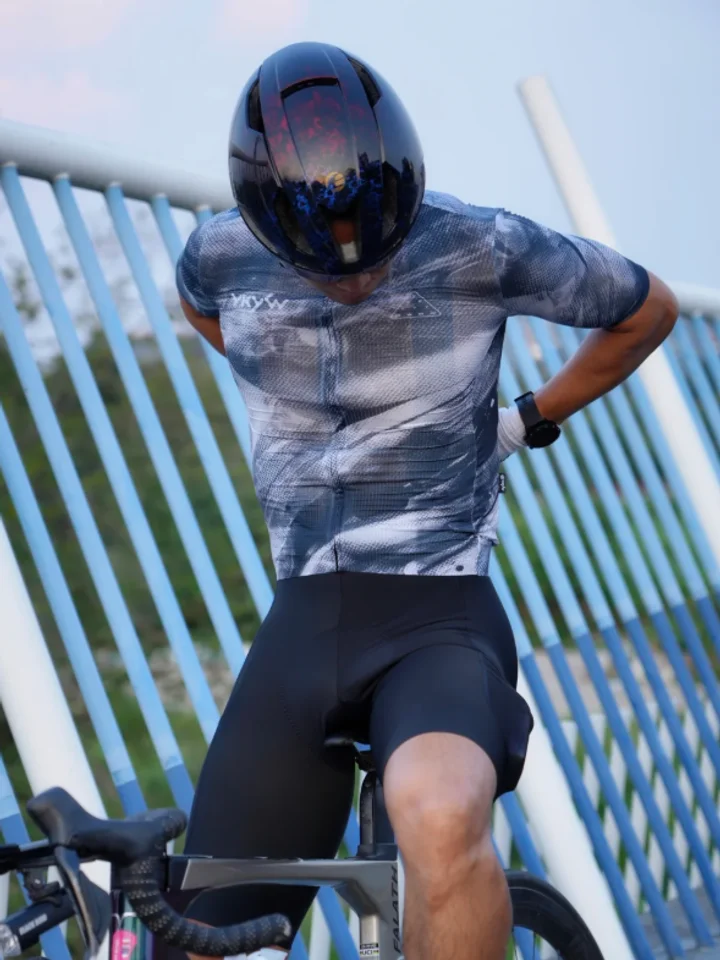
Bent over the bars in a marble-print jersey and a black aero helmet, blue railings behind

Questions

Frequently Asked Questions About Custom Cycling Apparel Manufacturer

01What is the smallest cycling order you will take?

Kit orders start at one hundred pieces per colour. That minimum is per colourway, and sizes do not count against it — one colour in three sizes is still a hundred pieces, not three hundred.

Begin with one colourway
02Can you cut to our own size chart?

Sizes are graded against the chart you supply rather than a stock range, and the panel layout moves with it — a longer torso or a shorter inseam changes how the panels divide, not just the label on them.

Grade to your own chart
03Do we approve a made-up sample before bulk?

One made-up set is sewn per style, and it takes 7–10 working days from the point your tech pack locks. That window covers 3–5 fit revisions. Sampling runs US$80–150 per style, and the fee comes back off a bulk order of 500 pieces or more.

Cost a sample
04Once the sample is signed, how long does the bulk run take?

Bulk lands 7–15 working days after the set you approved goes to the line. Colourways added later go back in at cutting, on the pattern that is already locked, so the schedule does not reset.

Plan the run window
05How is a kit order checked before it ships?

Each carton is opened and checked at AQL 2.5 against the set you signed. Pads that have shifted and prints that have drifted are caught while the goods are still at the line, which is the point of checking there rather than at the port.

Read how the floor runs
06What paperwork travels with a cycling order?

Your order travels with its own paperwork: the composition, the care wording and the test reports raised for the run. Anything your compliance file still needs can be asked for at the quote stage, before the bulk schedule opens.

List what travels with it
07Does the kit ship under our own label?

It does. The woven label, the heat transfer on the leg, the hangtag and the polybag are all built from the artwork you supply, and labels are counted on a threshold of their own rather than inside the garment minimum.

Count a label run
08What terms does a kit shipment move on?

DDP, DAP or DPU, whichever the destination allows, with air at 5–7 days and sea at 30–45. The applicable term gets a line to itself, so the landed cost is agreed before anything moves.

Settle the freight term

Next step

The Piece List, the Sizes and the Colourways Open the Price

The reply breaks the jersey, the short and the print into separate lines, so a kit can be costed per set before anything is cut.

Request a quote