For clothing brands, workwear programmes and merch suppliers
Custom Logo Embroidery Service – Digitise Designs and Sew Logos Onto Custom Made Apparel
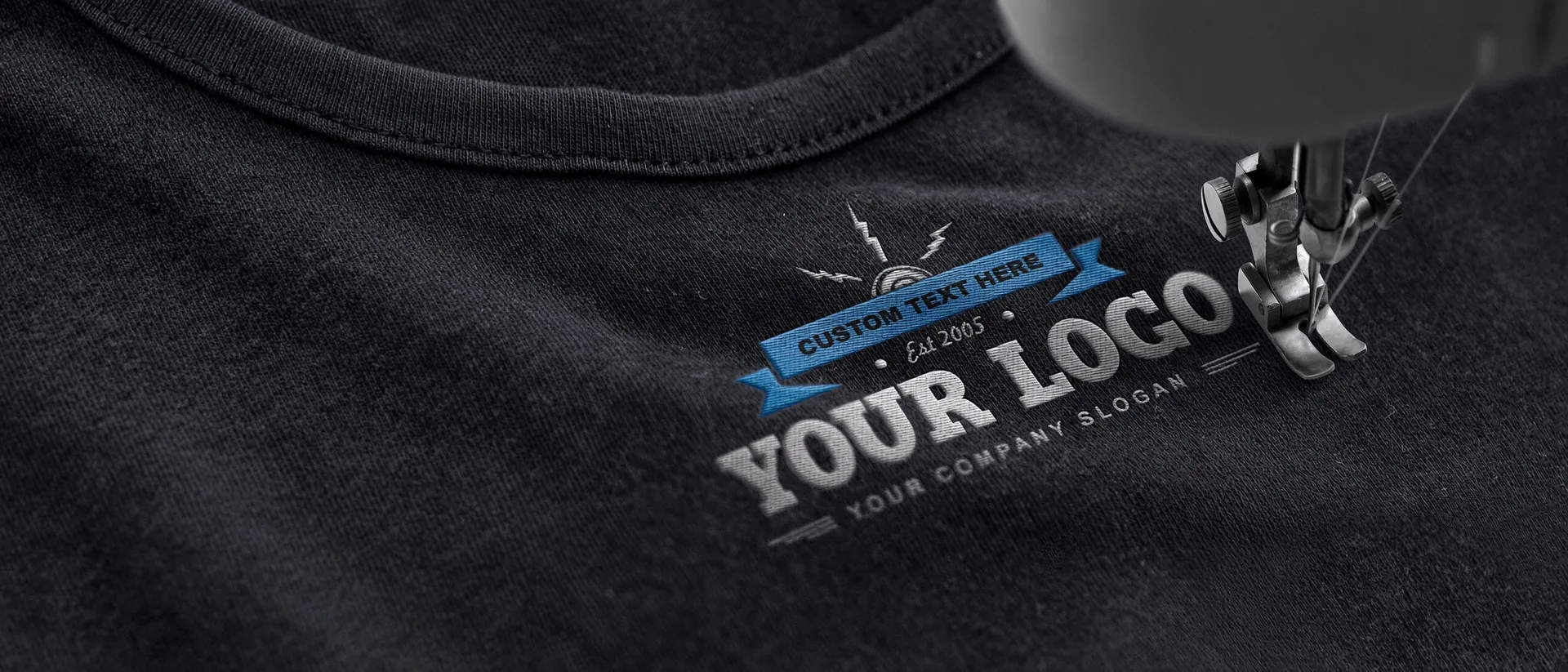
Our custom garment embroidery service transforms your brand artwork into usable embroidery digitisation files and sews your logo onto apparel via multi-head stitching equipment. All garments are cut and assembled in our own workshop. Orders start from 100 pcs per colour, and your first embroidered sample will be finished and available for approval within 7–10 working days.
The terms behind a run
What an embroidery order is quoted on, before the logo is even digitised.
Smallest run
100 pcs / colour
Digitised sample
7–10 working days
Bulk after approval
7–15 working days
Inspection standard
AQL 2.5
Freight runs DDP, DAP or DPU by destination — air 5–7 days, sea 30–45 — priced against your order rather than folded into the piece rate.
Four builds
The Four Stitched Builds, and Where Each One Belongs
Four builds cover most stitched marks. Which one you want is a decision about how the mark should read — and how the garment will be worn.
Build 01 / 04
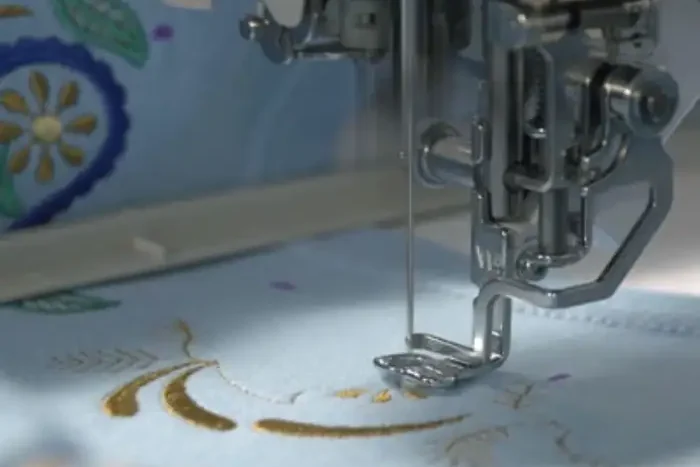
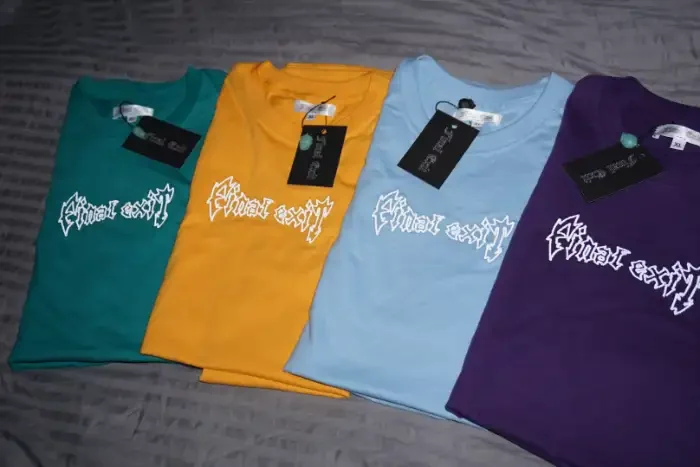
Regular
Flat stitching through a thread colour you pick, sitting proud of the cloth rather than soaked into it.
How it’s set up
- The logo is digitised before anything is hooped
- Underlay goes down before the top stitching, so the mark does not sink
- Thread is matched to the brief, not to a house palette
Best for
- A left-chest mark, a cap front or a sleeve
- Wordmarks that have to stay legible when small
- Workwear washed hard and repeatedly
Watch-outs
- Very fine linework loses definition where the needle turns
- Photographic artwork belongs on a print, not on a stitch
Build 02 / 04
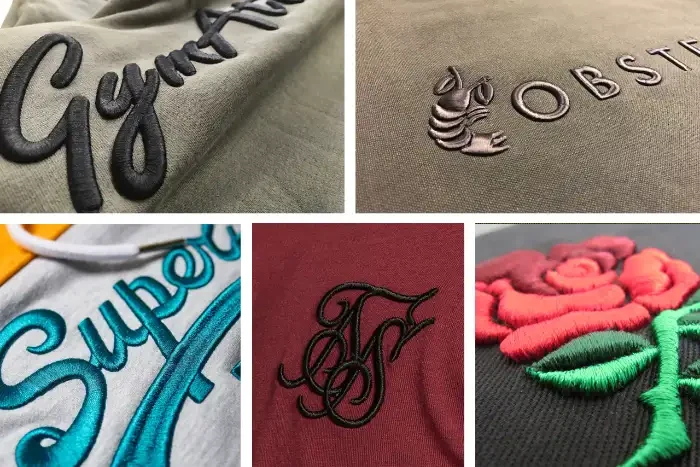
3D Puff
Raised foam under the stitching gives the mark a domed, three-dimensional face.
How it’s set up
- Foam is laid in the hoop beneath the top thread
- Stitches pack over it, so the mark rises off the surface
- Trimming happens before the foam can be caught
Best for
- Bold lettering and heavy marks
- Streetwear and team pieces where the mark is meant to be felt
- Caps and structured fronts
Watch-outs
- Not for small type — the foam needs room to dome
- Inner detail is lost under a raised face
Build 03 / 04
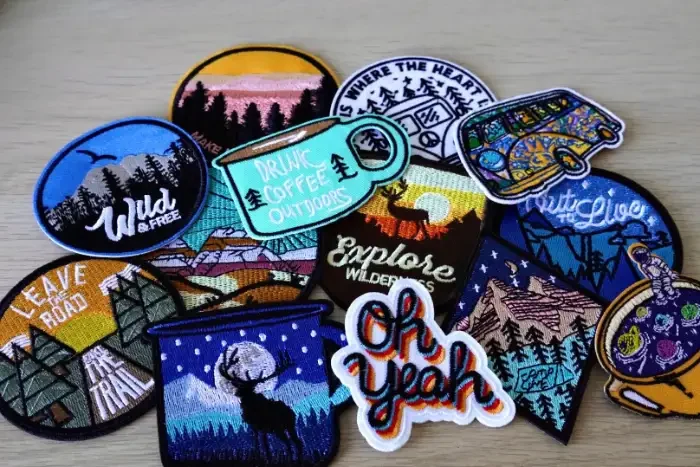
Patches
The design is stitched on its own ground first, then attached to the garment as a separate piece.
How it’s set up
- A stitching ground is chosen for the patch itself
- The border is finished before the patch is applied
- Attachment is by stitch or by heat, depending on the base
Best for
- Crests and emblem shapes that need a defined edge
- Corporate and uniform programmes
- Jackets, bags and caps that take a heavier add-on
Watch-outs
- Adds weight and a second layer at the placement
- A patch needs a flat area to sit on, so not every curved panel suits one
Build 04 / 04
Reflective
Thread that returns light back to its source, so the mark reads in a headlight or a torch beam.
How it’s set up
- Retroreflective thread runs on the same machines as any other
- Stitched from the same digitised file as the standard mark
- Positioned where light will actually reach it
Best for
- Hi-vis and safety garments
- Night-time event and logistics work
- Logos that have to be seen after dark
Watch-outs
- Reads as a flat grey by daylight
- Finer than standard thread, so very dense fills are not its strength
The build is settled with the logo file, because it decides how small the mark can go.
Quote an embroidered runMaterials
Thread, Cloth, and What Will Hold a Stitched Mark
The stitch is only as good as the base under it. Thread choice and the backing behind it are what decide whether a mark stays crisp or distorts.
Threads and finishes
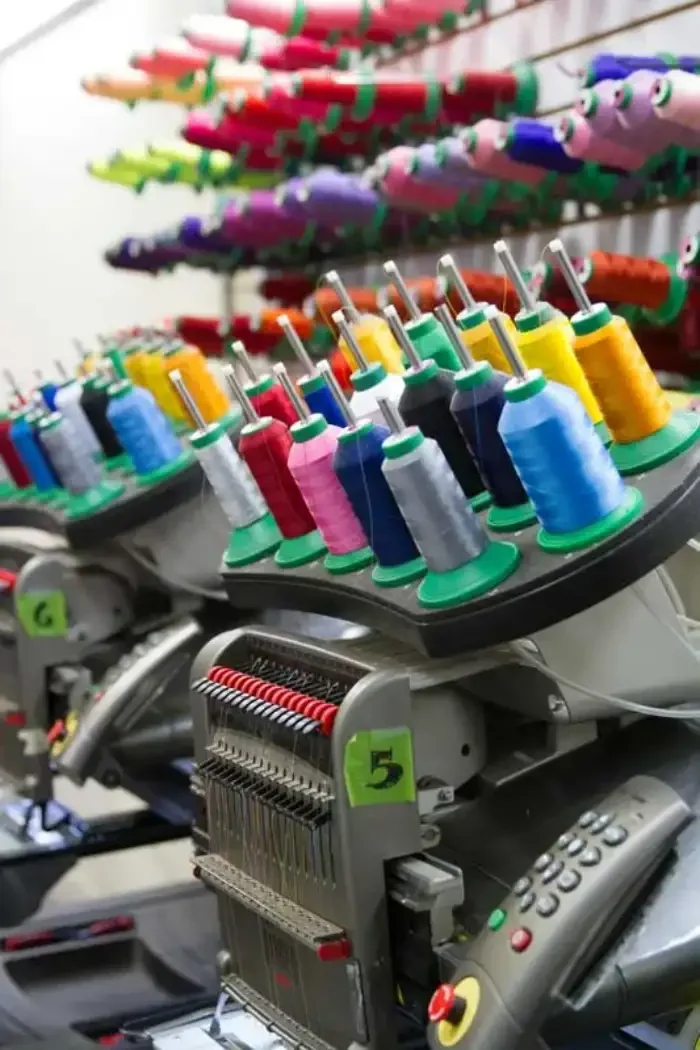
The reel decides how the mark reads almost as much as the design does.
- Polyester thread for most work, and rayon where a softer sheen is wanted
- Metallic and high-sheen reels for a mark that should catch the light
- Retroreflective reels where a garment has to be picked out after dark
- Matte finishes where the mark should sit quietly on the cloth
Bases that hold a stitched mark
A stitch is a series of holes, so what is underneath it matters.
- Cotton and poly-cotton, the most forgiving base to start on
- Denim and twill, which carry a dense, heavy mark well
- Leather and coated cloth, which take a stitch but mark permanently — a misplaced hole cannot be closed
- Stretch knits, supported with a backing so the mark does not pucker
Send the base you have in mind and the backing is specified with the sample, rather than guessed at when the order is already cut.
The make
From Your Logo File to a Stitched Garment
Nothing is stitched into bulk until you have held the mark in your hand.
01
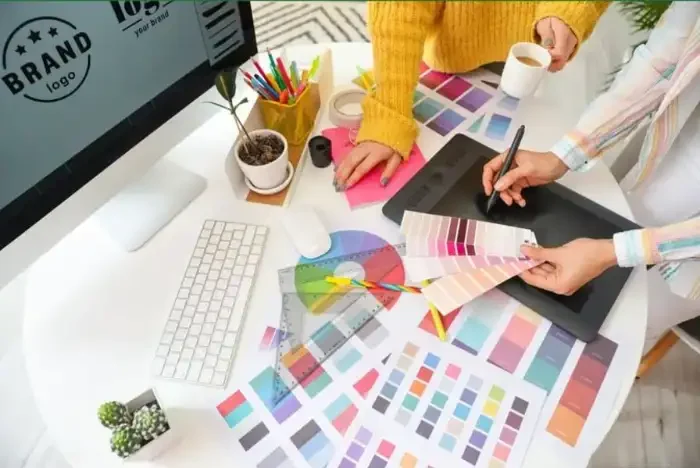
Digitise the logo
The file you send is traced into a stitch path — direction, density and the order the colours run in. What comes back is a file the machine will run, not a picture to imagine.
02
Approve the stitch-out
A stitch-out on your own cloth is posted to you. Size, thread colour and placement are signed off on the physical mark, and the bulk run is matched against what you signed.
03
Hoop and stitch
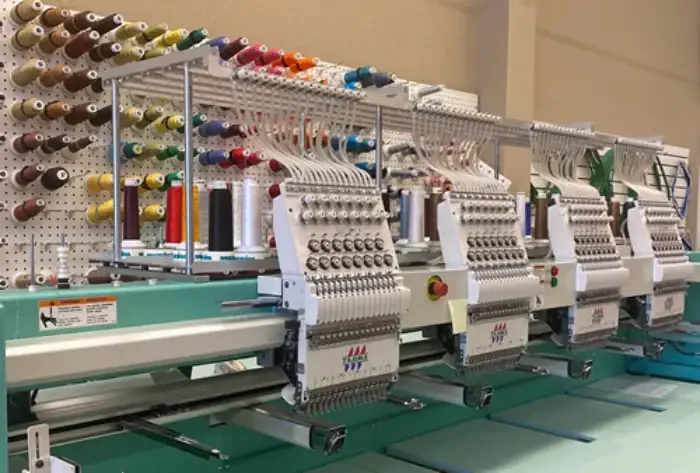
Approved pieces are hooped and run on multi-head machines, one colour at a time, with the backing under the stitch doing the work of holding it flat.
04
Trim, press and inspect
Backing and jump threads are cleared by hand, the mark is pressed, and the piece goes on to final inspection with the rest of the order.
On file
The stitch file stays with the order, so a repeat run or a second colourway is stitched from the same path rather than digitised again.
Stitch or print
When a Stitched Mark Is the Right Call, and When It Is Not
A stitch and a print are not interchangeable. The decision is usually settled by how small the mark is, and what it has to survive.
Stitch it
Embroidery is the right call when
The mark has to repeat across every size and colourway in the range without drifting.
It has to survive the washing schedule the wearer will actually put the garment through.
A cuff, a pocket edge or a placket — a small area with its own boundary.
The mark is meant to be read by touch as much as by sight.
Reach for a print
Embroidery is the wrong call when
- Sublimation
Photographic artwork, or an all-over pattern that runs edge to edge. Sublimation dyes it into the fibre; on a low order it goes to a print partner.
- Screen printing
A large, solid block of colour, or a mark that covers most of the panel. Screen printing lays a flat film and holds that area better.
A base that will not take a needle well — a coated shell, or a very light knit — is safer printed than stitched.
The two usually live together — a stitched mark on the chest, a printed panel round the back. Where a mark sits decides which one carries it.
Questions
Frequently Asked Questions About Custom Embroidery
01What is the smallest embroidered order you will take?
100 pcs per colour — the same floor every line on this site runs at. Each colourway carries its own minimum, so one mark on a tee in three colours is a 300-piece order rather than three separate minimums. Sizes mix freely inside a colour.
Ask about order minimums02How long does an embroidered order take from logo to delivery?
A 7–10 working-day window from the logo file being digitised, which covers the stitch-out and its revision rounds, then a 7–15 working-day bulk run. Air adds 5–7 days and sea 30–45, and every stage carries its own date on the quote.
Ask for a dated schedule03What artwork can you embroider?
A vector logo, or a clean image we can trace — a photograph of a mark you like is often enough to start from. Very fine internal detail and soft gradients are the cases where a print serves the design better.
See customization options04Which garments can carry a stitched mark?
Tops, outerwear, workwear, headwear and bottoms — tees, polos, hoodies and sweatshirts through to jackets, uniforms, hi-vis and caps. More than one placement on the same piece is a normal brief: a chest mark and a sleeve mark are digitised separately and run in one order.
Look at past client work05How small can an embroidered mark go?
It depends on the build and the lettering. Regular stitching holds small type far better than 3D puff, which needs room to dome, and fine linework closes up where the needle has to turn. The smallest legible size is worked out when the logo is digitised, not promised as a fixed number in advance.
See what can be embroidered06What does a stitched sample cost?
US$80–150 per style, itemised on the quote, and that fee comes off the invoice once a bulk order passes 500 pieces. On a smaller first run it stands as a one-off cost rather than a deposit.
Ask what a sample covers07What quality standard applies to an embroidered order?
AQL 2.5 at final inspection. Certificate cover follows the cloth you pick: OEKO-TEX 100, BSCI and GRS where the base qualifies.
See the certifications we hold08What happens if the stitching is not right on the sample?
The stitch file is corrected and re-run, and three to five revision rounds sit inside the sample quote. A correction goes into the digitised path itself, so the next stitch-out is cut from the corrected file.
See how a revision is handledNext step
Approve the Stitch-Out, Then Run the Order
A logo file, a photograph of a mark you like, or a garment to copy is enough to start. The reply is a costed quote carrying both dated windows, and one line saying which build suits the mark.