
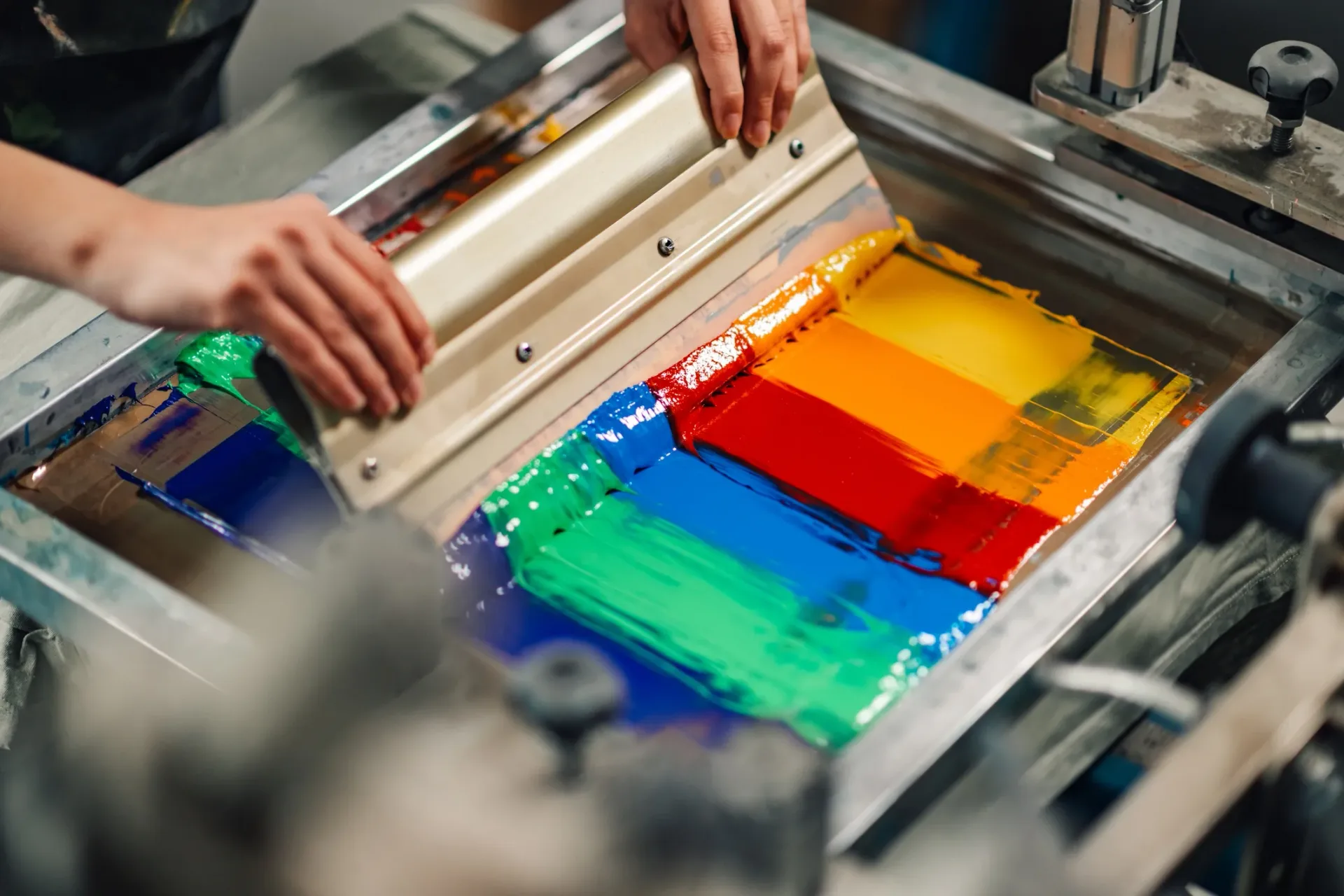
For apparel brands, uniform buyers and merch suppliers
Custom Screen Printing — Spot Colours Proofed on Your Own Cloth
Screen printing is a spot-colour process: artwork is separated into its colours and printed through a mesh screen, one colour at a time. In-house prints keep sharp edges and solid coverage after 40+ wash cycles, with colour consistency at ΔE ≤ 3.0 across repeat orders. We print up to 6 spot colours per design on garments we cut and sew in-house, from 100 pcs per colour. Every order gets a physical proof on your actual cloth before the full run, so bulk delivery holds no surprises.
The four methods
Screen Printing Techniques, and What Each One Is For
Four techniques cover almost every decorated-garment brief. Which one you want is a decision about how the print should look and feel — not a default.
Method 01 / 04
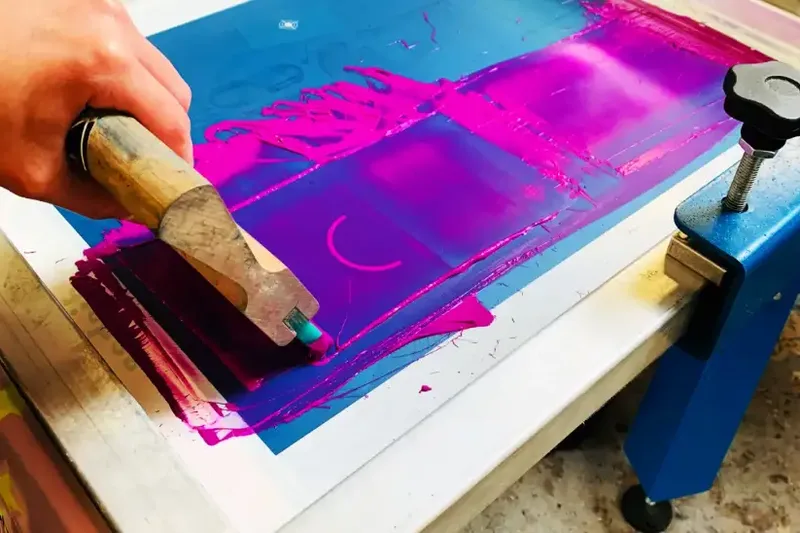
Silk Screen
The workhorse of the four: a mesh screen carries the image, and a squeegee pulls the ink across it.
How it’s applied
- The screen is flooded with ink
- The squeegee drives a bead through the open mesh onto the cloth
- One screen and one pass per colour
Best for
- Bold logos and wordmarks
- Designs with a small number of spot colours
- Tees, hoodies, sweatshirts and workwear
Watch-outs
- Every colour adds a screen and a pass
- Photographic or all-over artwork belongs on a different process
Method 02 / 04
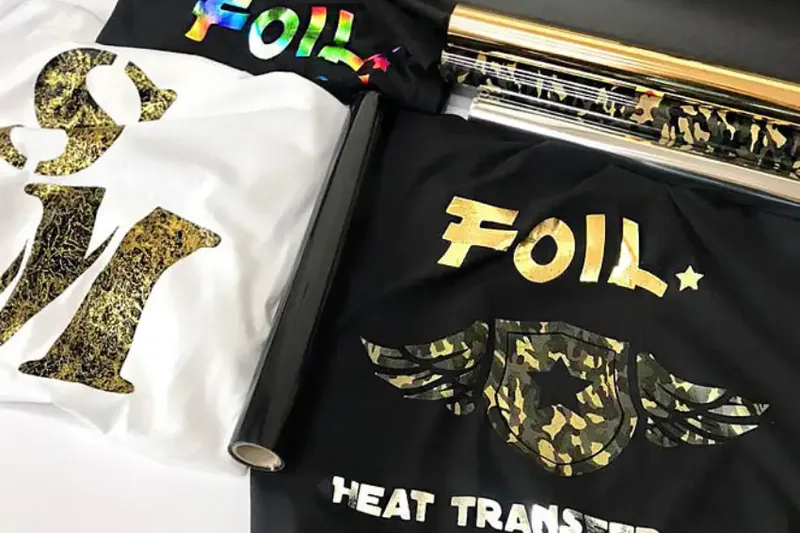
Foil
Metal foil bonded to an adhesive print, rather than printed as ink.
How it’s applied
- Adhesive is screen-printed first
- The foil sheet is heat-pressed onto it
- The metal transfers only where the adhesive sits
Best for
- Logos and short lines of type
- Work that needs a metallic or holographic finish
Watch-outs
- Kept to a small area
- Best as a logo or a line of type, not a large block of colour
Method 03 / 04
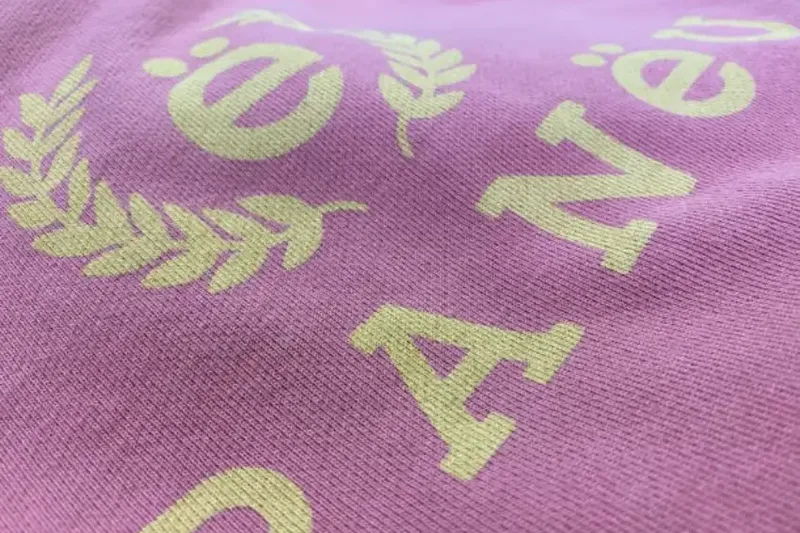
Water-Based
Carries pigment into the cloth instead of laying a film on top of it.
How it’s applied
- Printed through the same mesh screens
- Cured so the pigment binds to the fibre rather than sitting proud
Best for
- Large areas and soft-hand prints
- Where the wearer should feel the cloth, not the print
Watch-outs
- Thinner and softer than a heavier build
- The more forgiving choice on garments that flex
Method 04 / 04
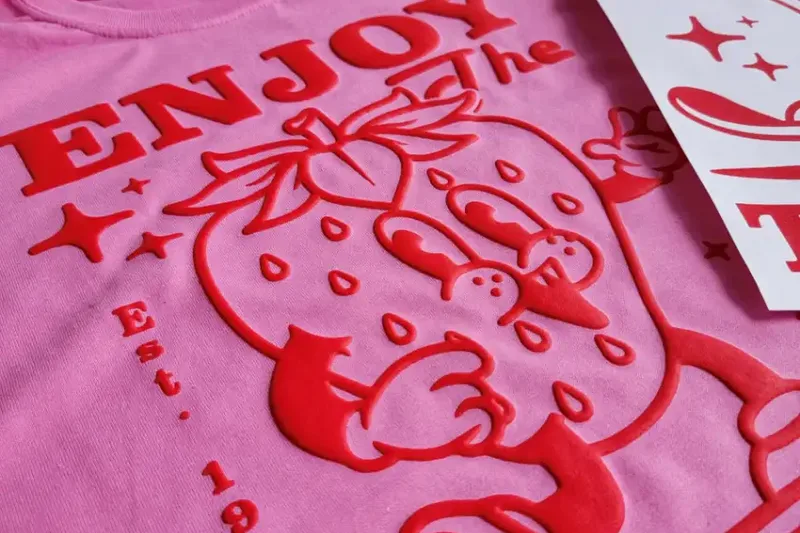
Puff
Raised and three-dimensional: a foaming agent in the ink expands it under heat.
How it’s applied
- Printed like a standard screen print
- Then passed through heat so the ink rises off the surface
Best for
- Streetwear graphics and logo treatments
- Where the print is meant to be felt as texture
Watch-outs
- Heavier build, with less fine detail than a flat print
- Thin linework does not survive it well
The technique is settled alongside the artwork, and it is what decides how the print reads after repeated washing.
Request a QuoteSpecialty inks
Specialty Inks, When a Standard Spot Colour Is Not Enough
Four inks that change what a print does rather than just what colour it is. Each one is a decision about the base garment as much as about the artwork.
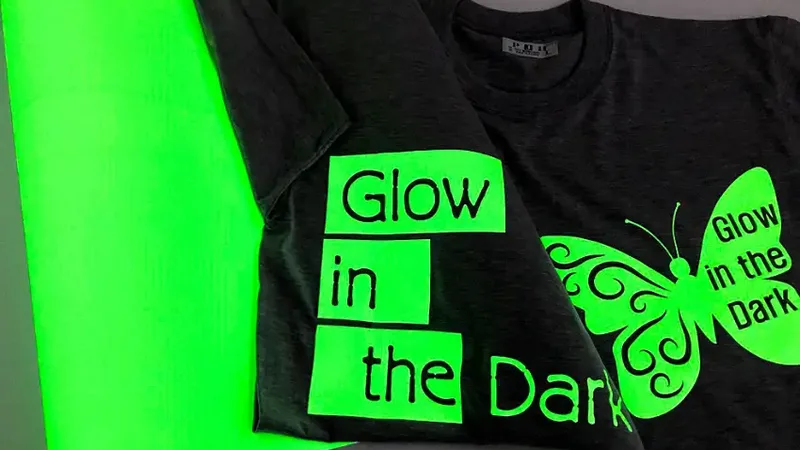
Glow-in-the-Dark
Charges in the light, and reads again in the dark: the ink carries a pigment that stores light and releases it once the surroundings go dark.
Best forNightlife, kids and event graphics — anything meant to be seen after dark.
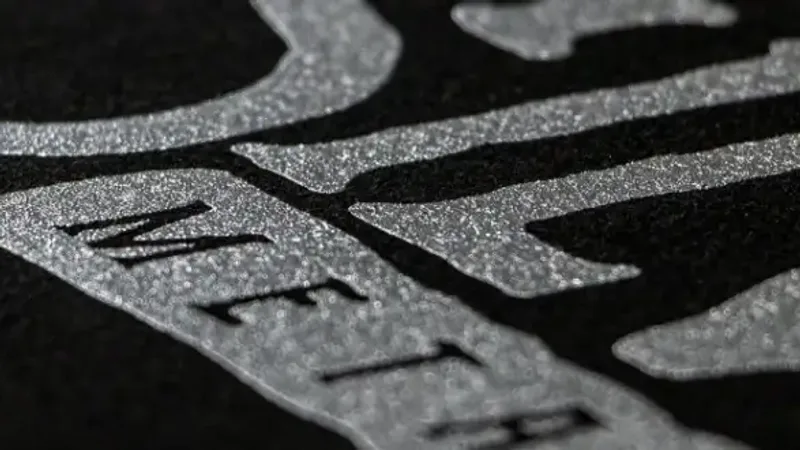
Metallic
Small flakes of metal carried in the ink give the print a reflective sheen, rather than printing a flat colour and calling it gold.
Best forLogos and lettering where the metallic finish is the whole point.
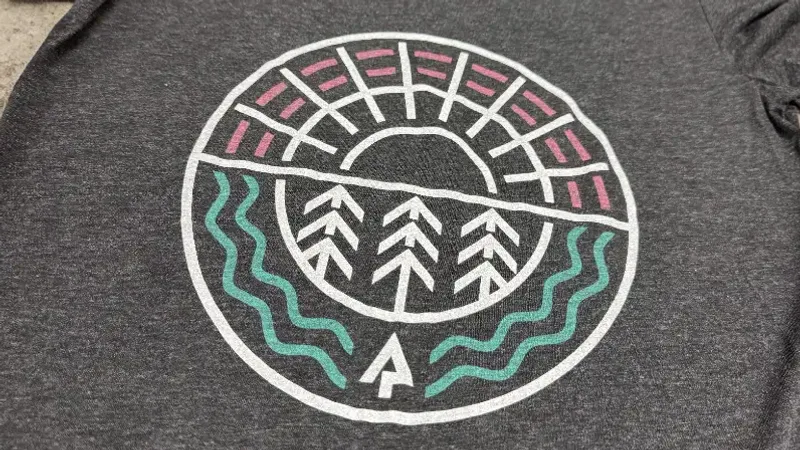
Discharge
Takes dye out of the cloth rather than laying ink on top of it. The water-based paste is printed through the screen, and the dyed ground is lifted where it sits.
Best forVintage and faded treatments on dark cotton, where the print should feel like part of the cloth.
It leaves no raised layer — it is the cloth that changes colour, not a film printed over it.
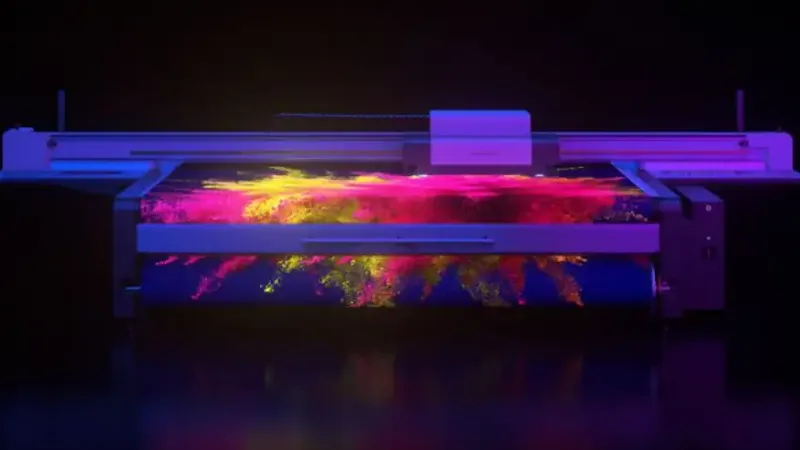
Neon & Fluorescent
Inks that read as a striking glow under bright natural light, taking colour further than a standard spot colour will go.
Best forBold graphics that are meant to shout rather than sit quietly on the garment.
The palette is limited to neon pink, yellow, orange and green.
Screen printing or something else
When Screen Printing Is the Right Call, and When It Is Not
Screen printing is not always the answer. Telling the two cases apart is the first useful thing a print programme does.
Run it on a screen
Screen printing is the right call when
The artwork is a logo, a wordmark, or a small number of spot colours.
The print sits on part of the garment — a chest, a back, a sleeve — rather than covering the whole panel.
You want a print the wearer feels as cloth rather than as a layer sitting on top of it.
The order runs in a colourway you can approve once and repeat.
Reach for a different process
Screen printing is the wrong call when
- Sublimation
Photographic artwork, or an all-over pattern with gradients and continuous tone. Sublimation dyes it into the fabric, not onto the surface; on a low order it routes to a print partner.
- Sublimation
Patterns that have to run edge to edge across a whole panel rather than sit inside one placement.
- Embroidery
Small, textural marks — a cap front, a crest, a monogram — where a stitched mark reads better than a printed one.
The two are not competitors — plenty of collections use both on the same garment. Send the artwork and we will say which process it should run on.
Artwork and colour
What to Send, and How the Colour Is Handled
The print is only as good as the artwork behind it. Three steps stand between your file and a garment that matches it.
01
Send vector artwork, or a reference garment
Vector artwork is the cleanest starting point. If all you have is a garment you like the print off, send the garment — the artwork is worked up from whatever you can give us.
02
The artwork is separated into spot colours
Each separation becomes one screen and one pass at the press. That is what decides the print, and it is what makes a spot-colour design cheaper to run than a photographic one.
03
The print is proofed on your actual cloth
Before the run starts, the print is proofed on the fabric your order is cut from — the same cloth, not a stand-in.
How it is priced
Screen printing is priced per spot colour per order, so you pay for the separations your design actually uses. There is no minimum print volume tacked on.
Questions
Frequently Asked Questions About Custom Screen Printing
01How many pieces does a screen-printed run start at?
From 100 pcs per colour. Colourways, not designs, are what the minimum counts — so putting the same artwork on a tee in three colourways is a 300-piece order rather than three separate minimums.
Ask how the minimum is counted02How long does a screen-printed order take from artwork to delivery?
Count a 7–10 working-day prototype window from the tech pack locking, including 3–5 fit revisions, then a 7–15 working-day bulk run. Air adds 5–7 days and sea 30–45; every stage carries its own date on the quote.
Ask about lead times03How many colours can you print on one garment?
The ceiling is 6 spot colours on one design. Screen printing runs one screen and one pass per spot colour, so each colour in the artwork is its own separation — and every separation is proofed on your own cloth before the run.
See customization options04What do you need from us to quote a screen print?
Vector artwork, or a reference garment if that is all you have — the artwork is worked up from whatever you send, alongside your target quantity and size breakdown.
See how we work from a brief05Which garments can the print run on?
Tees, hoodies, sweatshirts, jackets and workwear. The garment is cut and sewn in-house from your locked tech pack, so the print programme and the garment spec are one order rather than two.
See named client projects06What does a prototype sample cost?
US$80–150 per style, and that fee comes off the invoice once a bulk order passes 500 pieces. On a smaller first run it stays a one-off cost, itemised on the quote.
Ask about samples07What quality standard applies to a printed order?
AQL 2.5 at final inspection. Certificate cover follows the fabric you pick: OEKO-TEX 100, BSCI and GRS where it qualifies.
See the certifications behind the printing08How do you keep the print consistent across a whole bulk run?
One approved colour reference and one QC standard cover the entire order, and the print is proofed on your own cloth before the run starts, so the last garment is printed the way the first was approved.
See projects we have runNext step
Prove the Print on One Garment, Not on a Thousand
Artwork, a print you like the look of, or a rough drawing is enough to start. The quote carries the costed sample and both dated lead times.