For golf brands, club pro shops & team programmes

Custom Golf Apparel Manufacturer — Kits for Brands, Golf Clubs & Tournaments

We make cut-and-sew golf apparel crafted to your unique brief and measurements, rather than standard stock patterns. Collaborate with us to build polos, trousers, mid-layers and outerwear. Approve a physical sewn sample first, then we manufacture in scalable batch sizes perfect for brand product lines, club pro shop stock and tournament team programmes.

50+

UV Protection

3X

Moisture Wicking

98%

Colour Fastness

OEKO-TEX 100BSCIGRS

Order facts

What a golf line is priced against, before a brief or a sketch has been drawn.

Minimum order

100 pcs / colour

Prototype sample

7–10 working days

Bulk production

7–15 working days

Final inspection

AQL 2.5

All four are fixed terms rather than ranges · they hold for a first order and for a reorder

Why buyers start here

Six Things a Golf Line Gets That a Stock Range Cannot

These are the differences a buyer notices between the first order and the third, rather than a list of what the floor owns.

First orders sized to a real test

One colourway can be proved on its own before the rest of the range is committed, so a new line opens against what actually sells rather than a forecast.

SolutionEntry is 100 pieces on a single colour, with sizes mixed inside it, so a test run is spent on a colourway rather than a size.

One sample carries every decision

Fabric, cut, collar, mark and trim are settled on a single sewn piece, so nothing is left to be discovered once the line is running.

SolutionPrototype sampling runs 7–10 working days from a locked pack, with 3–5 fit revisions before the sewn set is signed.

Your chart, not a stock block

Sizes are graded from your own measurements, so a club list and a brand range both fit at the ends of the run rather than only in the middle.

SolutionGrading follows the block and size chart you supply, so the run holds your measurements at the smallest and largest sizes, not only the middle.

Colour that matches the second order

Each colourway is dyed as a single lot and held to the sample you signed, so a restock reads as the same piece as the first delivery.

SolutionColourways are dyed as single lots against the sample you signed, and the recipe is kept on file for the restock.

Each method chosen against the cloth

Crests on a knit and on a woven are specified differently, because the decoration is matched to the panel it lands on.

SolutionDecoration is specified per panel, so a crest on a knit and a mark on a woven are costed and proved separately.

Dates carried on the quote

The sampling and run windows are written into the quote, so progress can be checked against a document rather than an email thread.

SolutionBulk runs in 7–15 working days after the sample is signed, and the sampling and production windows are printed on the dated quote.

The collection

Nine Pieces, Drafted to the Block You Work From

The tiles say what every piece does, and the numbers beneath them are graded from your chart rather than a stock block.

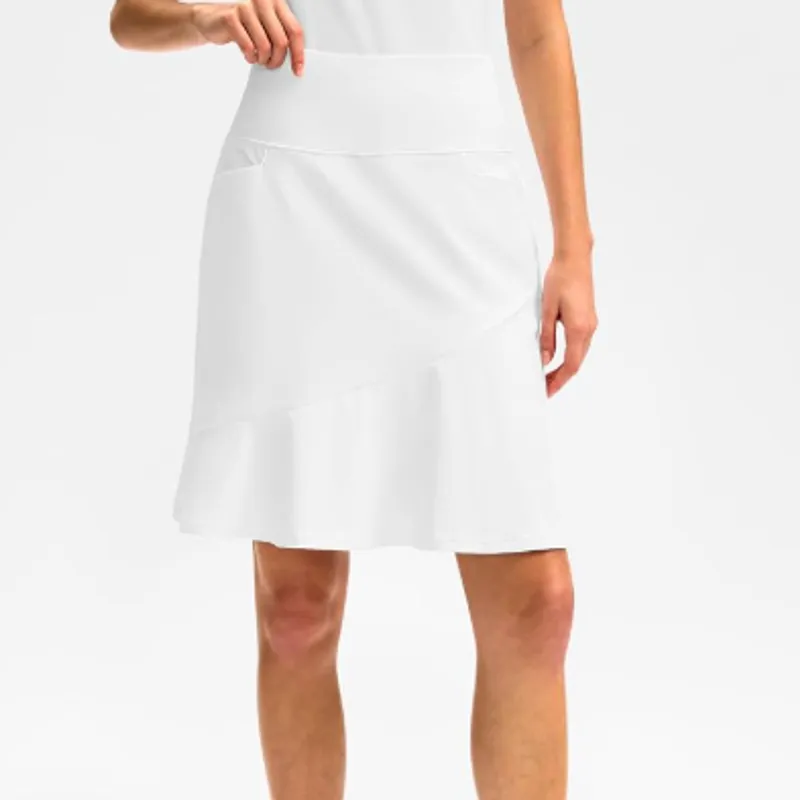
Flared white skort worn over bare legs, a hand resting on the waistband above a soft ruffle at the hem

Skorts and Skirts

An inner short is carried under the skirt, so the piece plays as well as it photographs.

Cut
A-line or straight, cut to your rise
Detail
Inner short, waistband and vent set by you
Finish
Liner attached at the waist, hem finished to swing
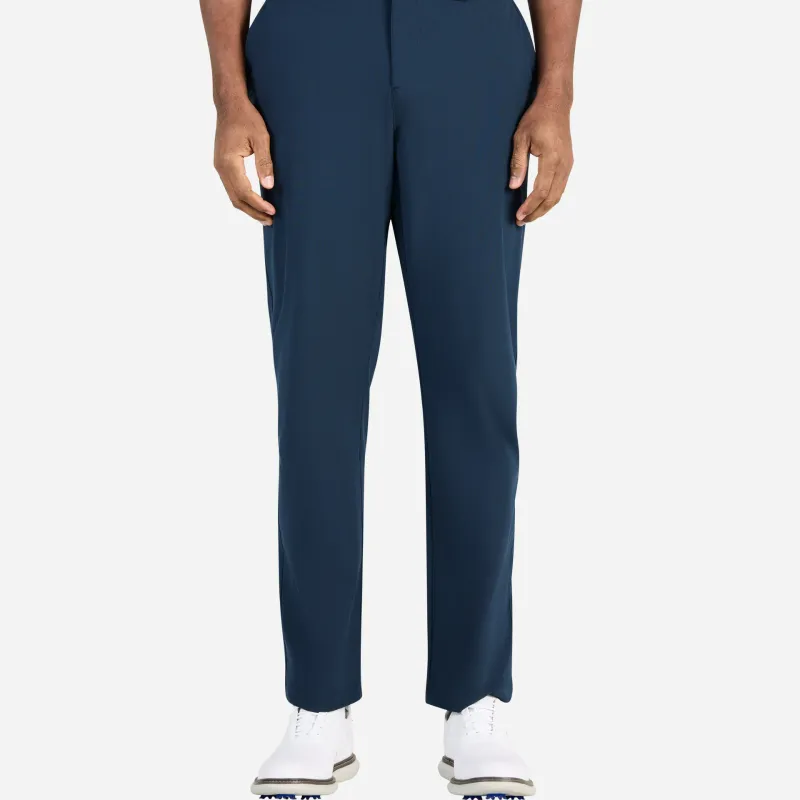
Full-length navy trousers worn with a white belt and white spiked golf shoes, shot from the waist down

Pants

Full-length coverage that has to move through a swing without pulling at the knee.

Cut
Straight, tapered or slim, cut to your rise
Detail
Waistband, belt loops and pocket bags to your spec
Finish
Gusseted at the crotch, hem taped or plain
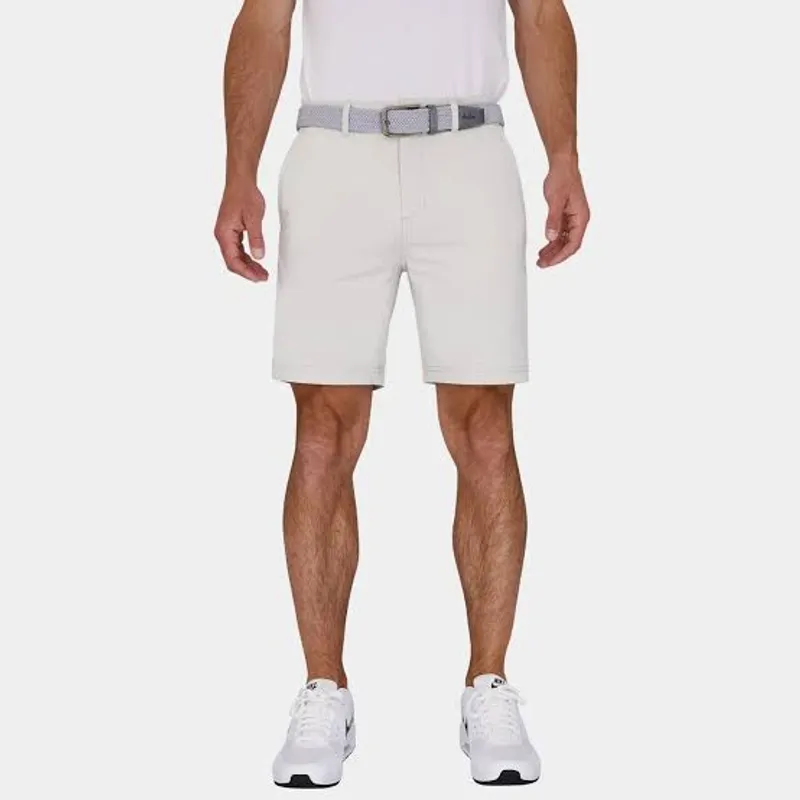
Golf shorts in off-white worn with a pale woven belt under a white tee, shot from the chest down

Shorts

Short, cut above the knee, with a rise that holds through a round of walking.

Cut
Mid-thigh, flat front or pleated
Detail
Inseam, pocket depth and vent placement
Finish
Bound hems, bar-tacked at the stress points
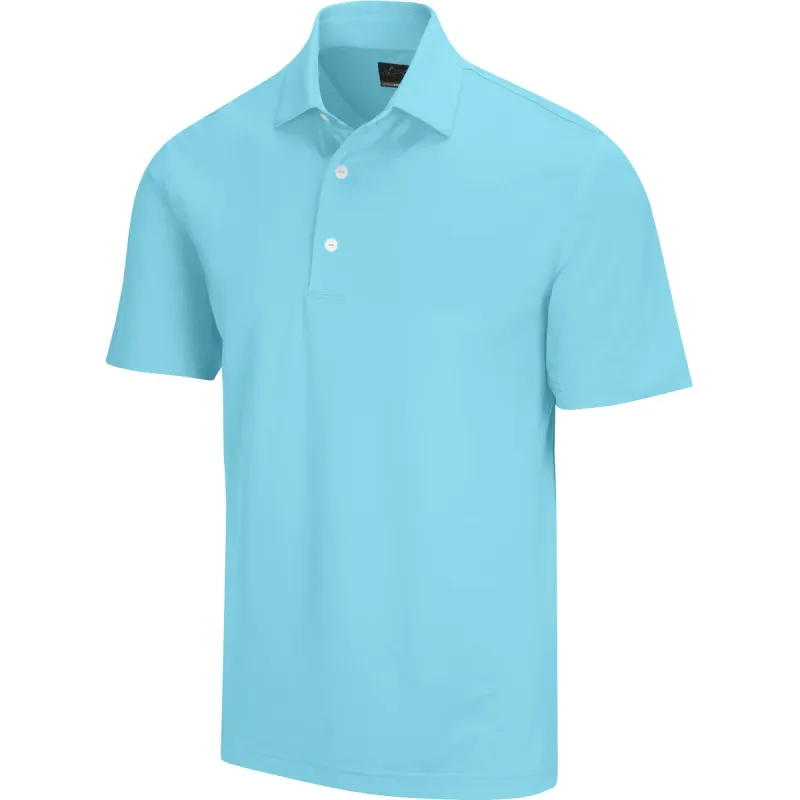
Polo in light blue shown alone on a white ground, three white buttons down the placket and a dark neck label inside the collar

Polos

The piece a golf line leads with, and the one a club puts its crest on.

Cut
Set-in or raglan sleeve, on your own block
Detail
Collar stand, placket depth and button count set by you
Finish
Side vents, hem kept level through a swing
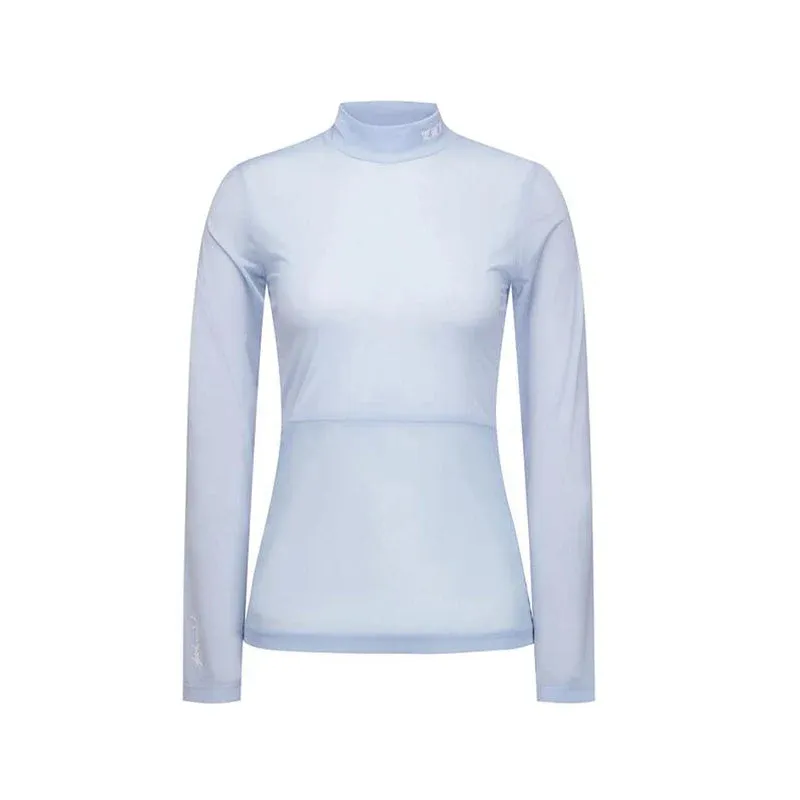
Mock-neck base layer in pale blue photographed alone on white, long sleeves with a wordmark near the left cuff

Base Layers and Mock Necks

Worn under a polo, close enough that two pieces still read as one.

Cut
Slim, with a shoulder that clears a swing
Detail
Neckline height and sleeve length chosen by you
Finish
Flatlock at the shoulder, hem kept light
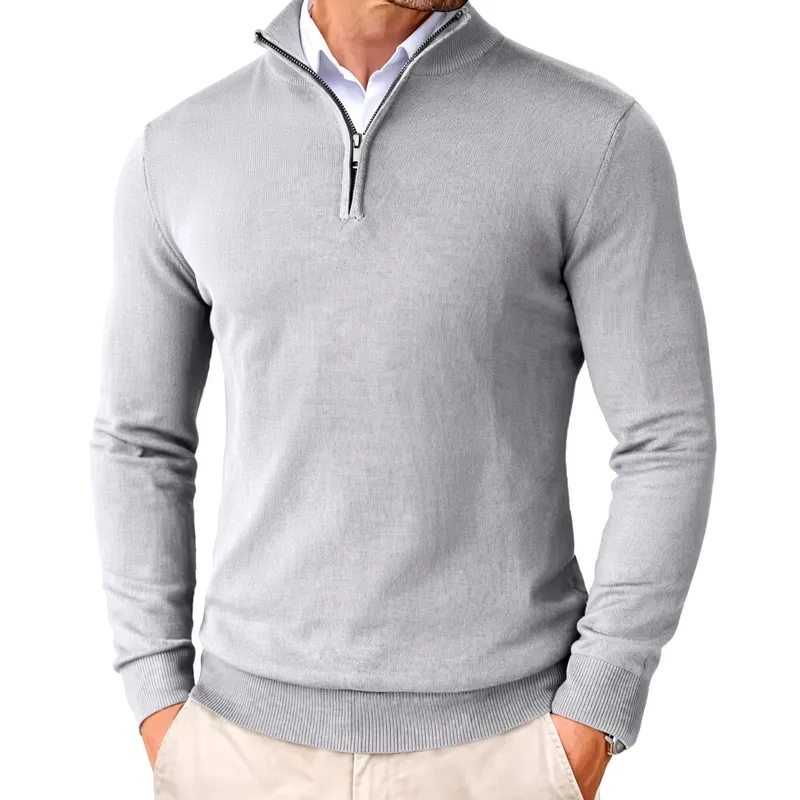
Quarter-zip knit in light grey worn over an open shirt collar, hands resting in the pockets of beige trousers

Quarter-Zip Pullovers

Pegged open or zipped to the throat, the layer for the first tee to the turn.

Cut
Fitted through the body, roomy at the shoulder
Detail
Zip length, collar stand and underarm panels
Finish
Ribbed cuff and hem, puller guarded at both ends
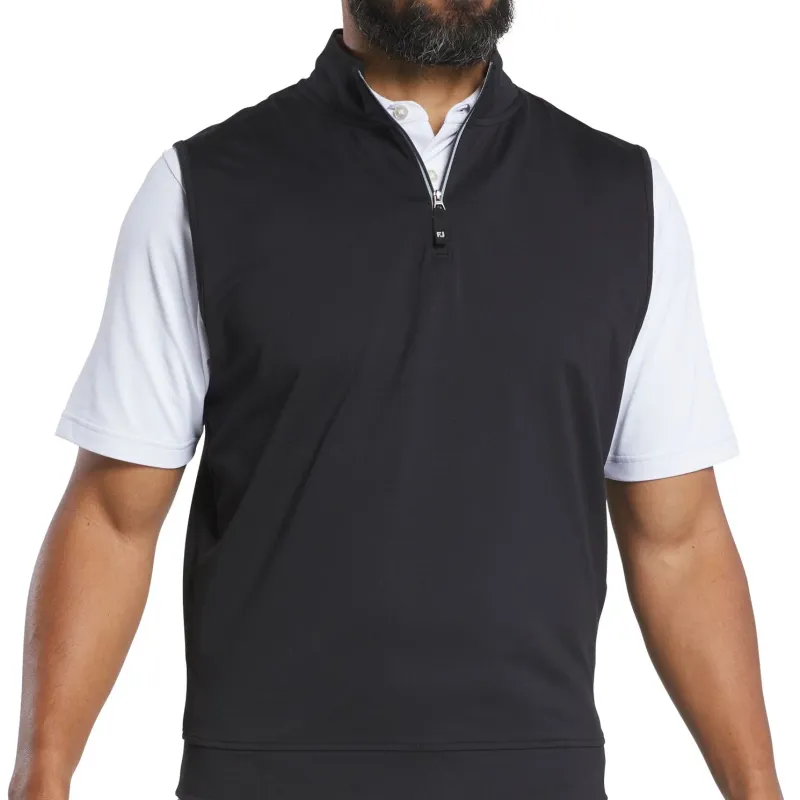
Black sleeveless zip-neck vest worn over a white polo, photographed from the chest down to the hem

Vests

Warmth over the chest with the arms left free to swing.

Cut
Sleeveless, sized to sit over a polo
Detail
Quilting, lining and pocket position to your spec
Finish
Armholes bound, hem held flat at the front
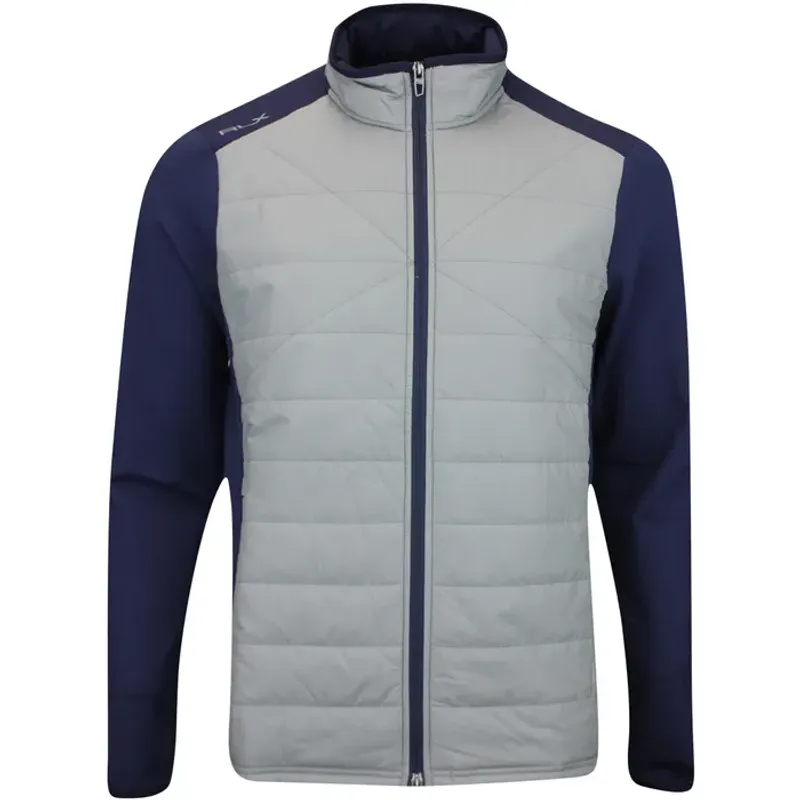
Quilted jacket with a grey body and navy sleeves shown alone on white, a full-length zip down the front

Jackets

The outer layer for a wet front nine, cut to come off between shots.

Cut
Roomy enough to sit over a mid-layer
Detail
Shell, lining and collar or hood set by you
Finish
Seams taped at the shoulder, placket sealed
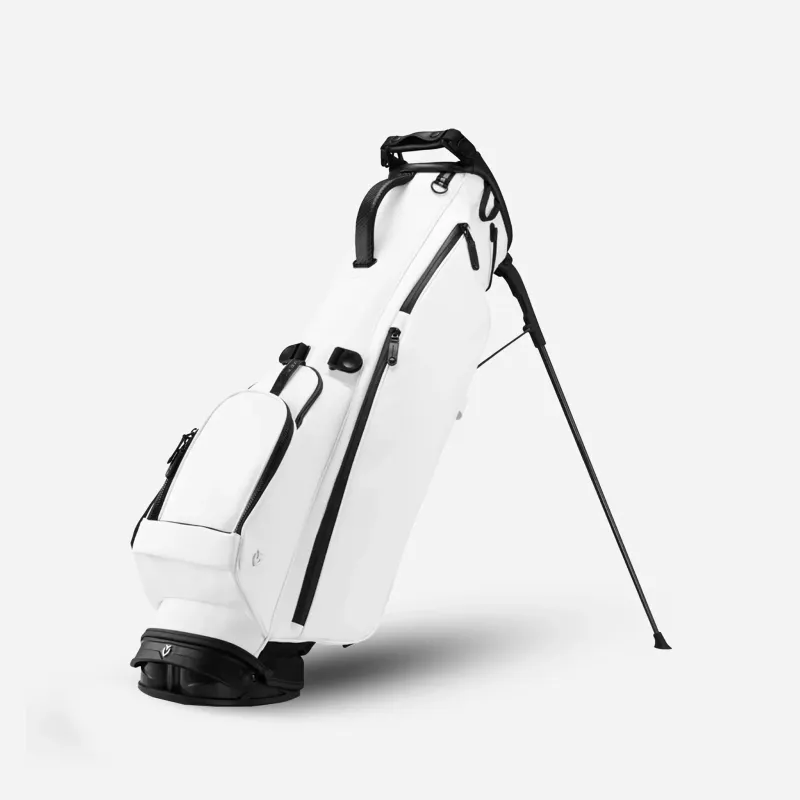
Carry bag in white with black trim photographed on white, its stand legs extended behind it

Golf Bags

Carrying the rest of the set, and made to the same standard.

Cut
Panels and base cut from your chosen cloth
Detail
Pockets, dividers and hardware to your spec
Finish
Edges bound, base reinforced and studs set

Fabric directions

Six Cloths, and the Round Each One Is Cut For

Pick a cloth and the panel follows: what it is for, and the pieces it usually goes onto. Weight, blend and hand are set on the tech pack afterwards rather than read off a sample card.

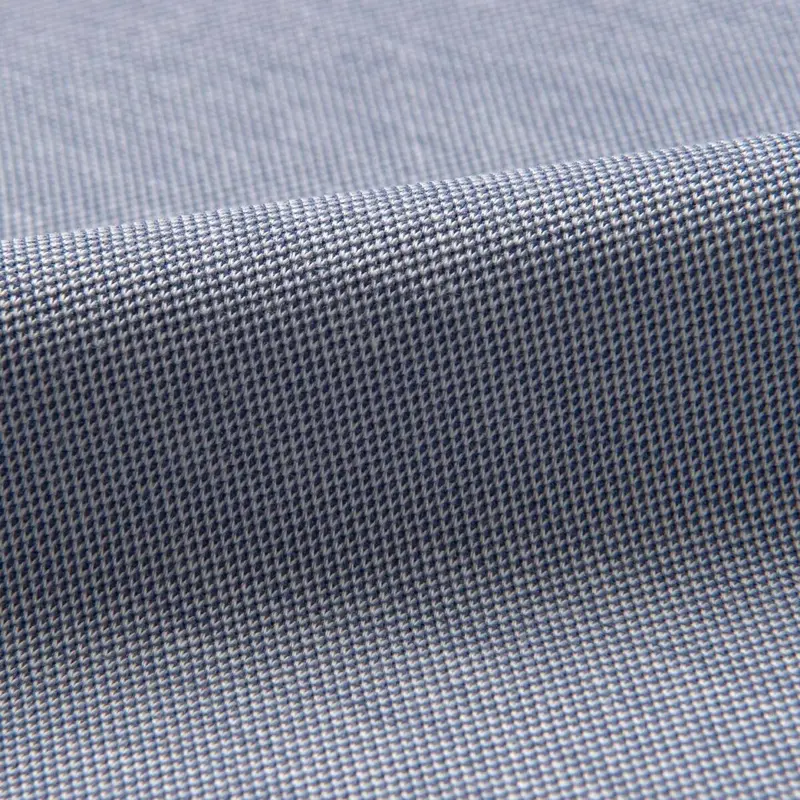
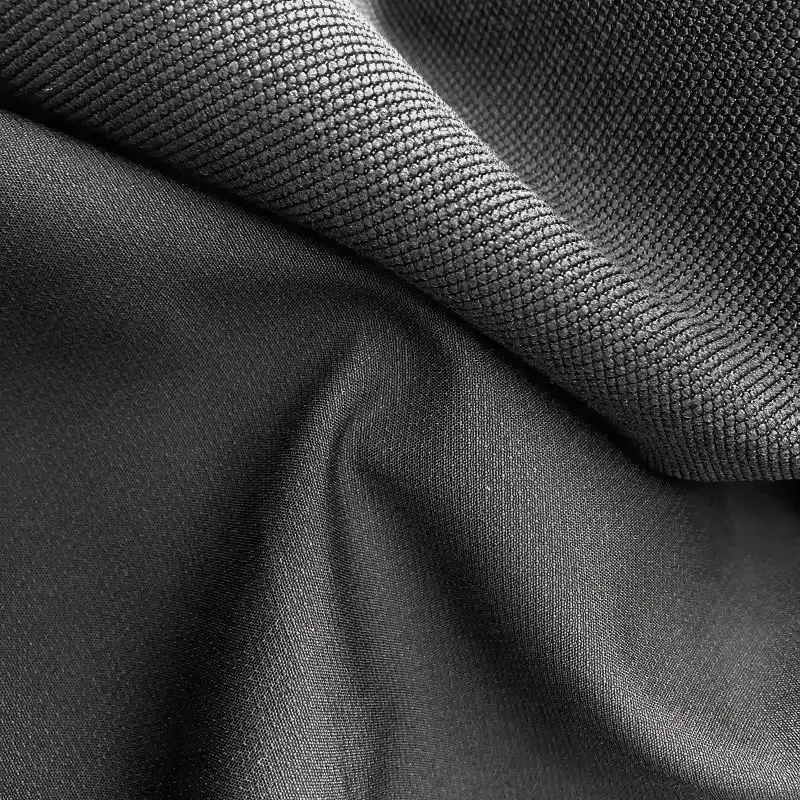
Pique knit macro in blue-grey filling the frame, an even grid of raised squares running diagonally under a soft ridge01

Selected cloth

Performance pique knit

The polo cloth: a raised pique face that holds its shape through a round and lets air move through it, woven in the 160–200 GSM band a golf shirt is usually cut in.

  • Raised squares lift the cloth off the skin, so a shirt worn through a hot round does not cling.
  • Sits flat under a jumper without putting a line across the shoulders.
  • Holds a collar stand, so the points stay where the iron left them instead of curling.
  • Reads as a crisp polo rather than a soft knit, which is what a club crest wants to sit on.

Usually matched toPolos · Tournament kit · Team wear

Stretch woven in mid grey folded across the frame, a fine diagonal rib above a smoother matte face02

Selected cloth

Stretch woven

Stretch runs across the cloth as well as down it, so trousers and shorts recover rather than bag at the knee after a round of walking.

  • Gives in both directions, so a knee that bends through a putt does not leave a mark behind.
  • Cut into trousers, shorts and skorts off the same roll, so a set matches across the pieces.
  • Crisp enough for a pleat, firm enough to hold one through a round.
  • Dries off quickly after a shower, so the rest of the round is not played in wet cloth.

Usually matched toTrousers · Shorts · Skorts

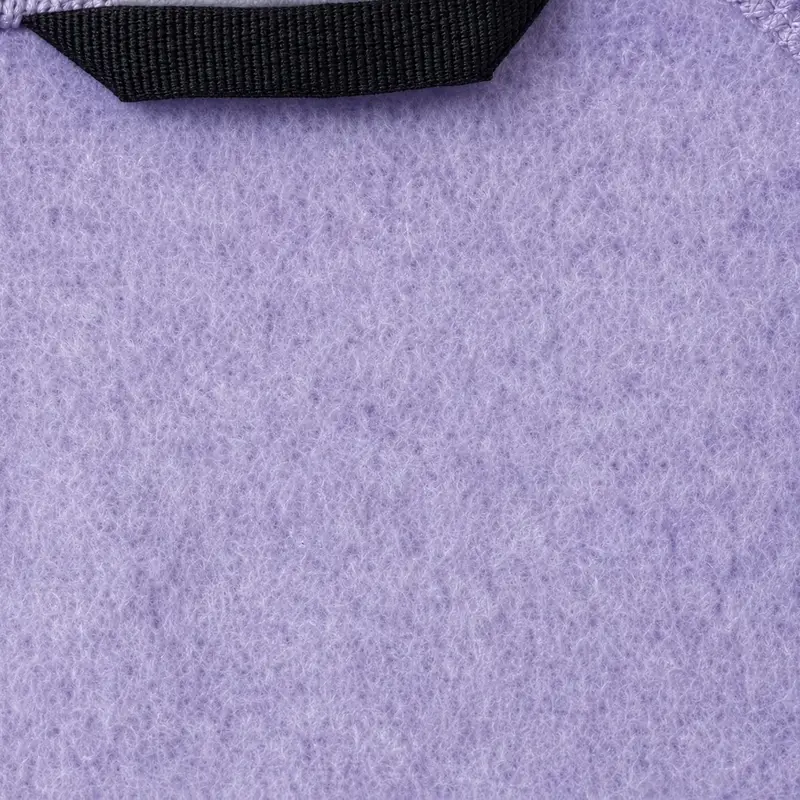
Brushed fleece macro in lavender filling the frame, its napped face catching light below a black hanger loop03

Selected cloth

Brushed mid-layer knit

Fleeced on the inside and smooth on the outside, for the layer a round is played in when the morning is cold and the afternoon is not.

  • Warmer than its weight suggests, so the swing stays free instead of stiffening under a heavier jacket.
  • The brushed side faces the body, so the warmth is felt at the collar and cuffs straight away.
  • Smooth face side, so a crest or a wordmark presses flat and the cloth does not pill beneath it.
  • Made to take a quarter-zip, a half-zip or a full placket, and to be worn open once the afternoon warms up.

Usually matched toQuarter-zips · Vests · Mid-layers

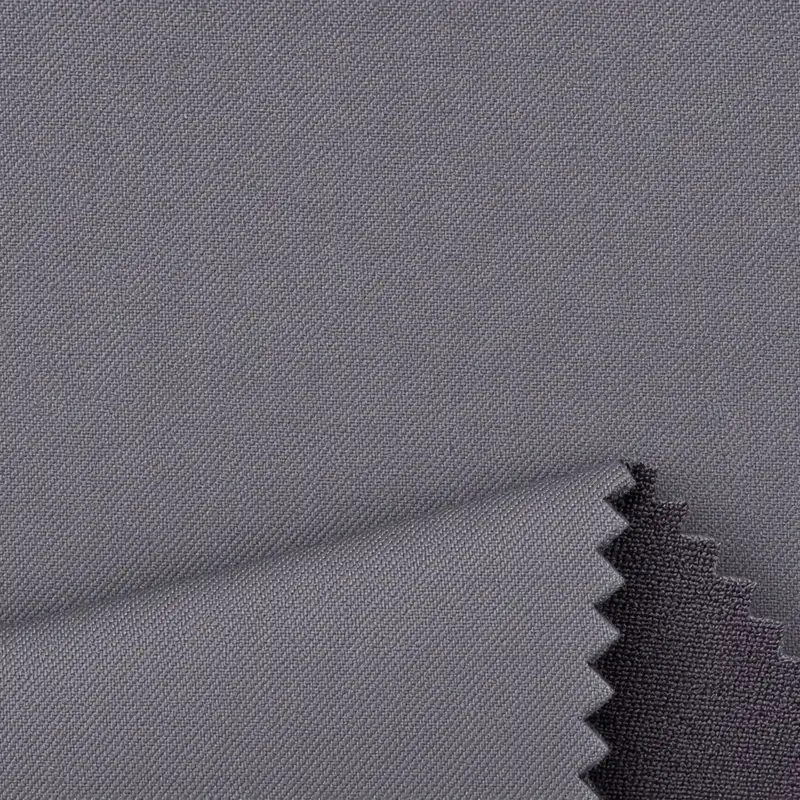
Bonded softshell in grey filling the frame, a zigzag cut edge lifting to show the darker backer behind it04

Selected cloth

Bonded softshell

Woven face bonded to a light backer, so wind is turned at the front without the piece going stiff across the shoulders.

  • Turns the wind at the front while the back still lets heat out.
  • Light enough to fold into a bag and take out again at the turn.
  • Stays quiet when it moves, rather than crackling the way a heavier shell does.
  • Follows the shoulders through a swing instead of standing away from them.

Usually matched toJackets · Outer layers

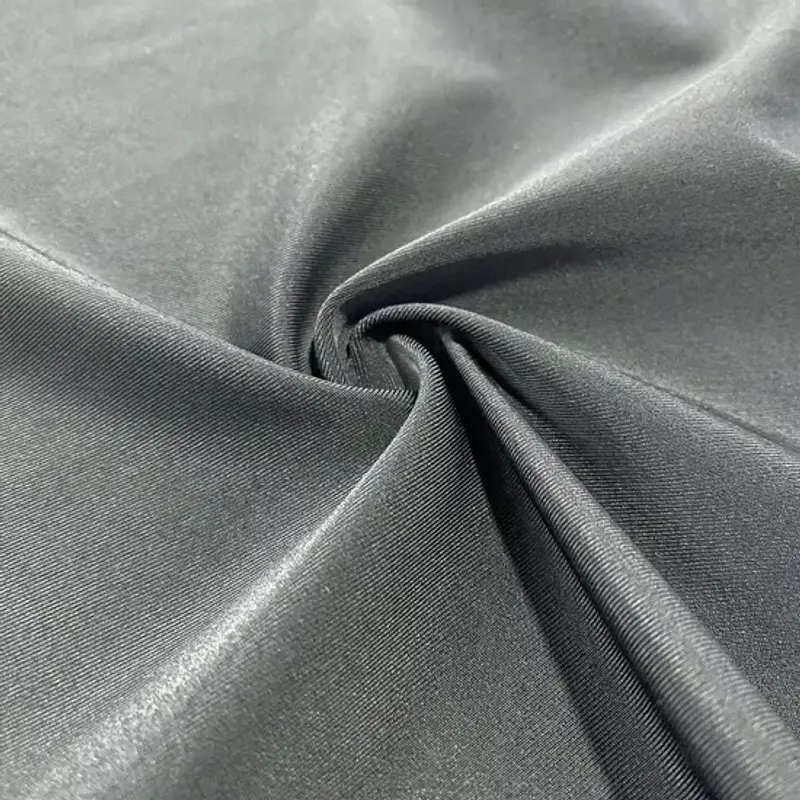
Recycled polyester in grey-green twisted into a spiral at the centre, a bright sheen catching across the folds05

Selected cloth

Recycled polyester (rPET)

Spun from reclaimed plastic instead of new polymer, and dyed on a lower-impact route, for a range built on what it is made of.

  • Comes from reclaimed plastic, so the material story is in the cloth rather than on the tag.
  • Takes a lower-impact dye without losing depth, so a darker colour stays dark.
  • Feels the same in the hand as the conventional cloth, so nothing is traded for the story.
  • Suits a brand that has to answer for its fibre, because the answer is already in the piece.

Usually matched toRanges built on their own material story

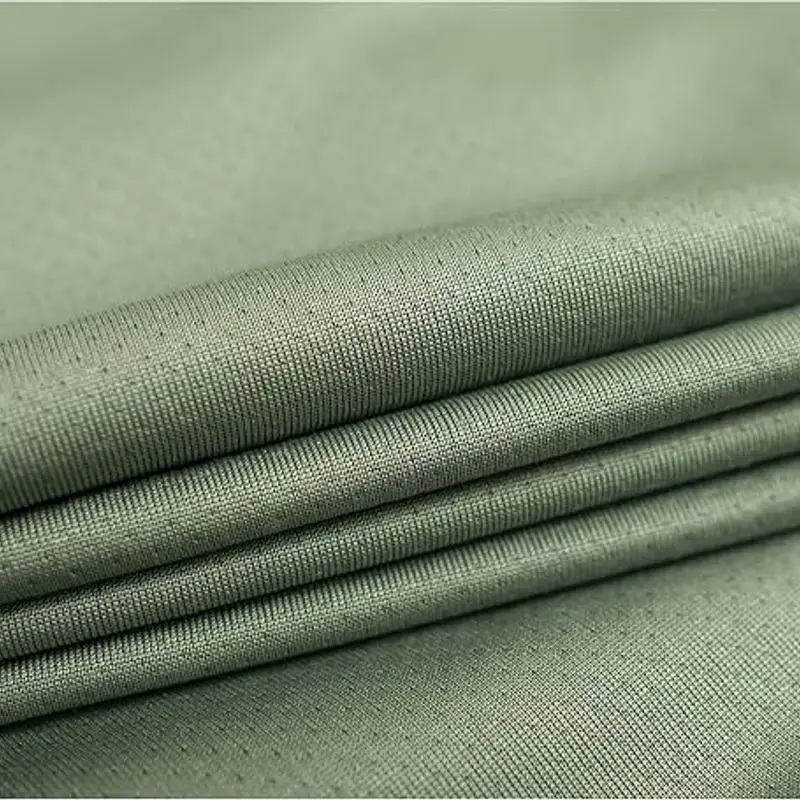
Sun-blocking knit in pale sage green folded in four even layers, its fine weave catching the light06

Selected cloth

Sun-blocking technical knit

Cut for the pieces worn through a full round in the open: the knit blocks UV at UPF 30–50+ and dries fast between holes.

  • Built for the pieces with the most exposure: sleeves, collars and the back of the neck.
  • Keeps the sun off without the clammy feel a coated fabric has.
  • Thin enough to layer, and it does not show through a pale polo.
  • Washes back to the same tone, so a white sleeve does not turn grey.

Usually matched toSleeves · Base layers · Summer rounds

GSM, blend and hand are set on your own tech pack · none of the six is a stock line

Match a cloth to the course

Fit & sizing

Five Decisions That Decide Whether a Size Run Fits

Each one is set from your chart and your reference garment rather than a house rule, and every one of them is proved on the sewn set.

Collar

Flat knit, ribbed polo, button-down, Johnny or zip mock neck, set to the stand height you want and proved on the sewn set rather than a drawing.

  • The stand height sets whether the collar sits open or buttoned at the throat.
  • Flat knit holds a press, where a ribbed collar springs back on its own.
  • Set before the sample, because the stand changes the whole neckline.

Sleeve

Sleeveless, cap, short, three-quarter or long with a thumbhole. The armhole is drafted so the sleeve clears a swing instead of pulling across the chest.

  • Sleeve length is measured from the centre back neck, not from the shoulder.
  • Raglan moves the stress away from the top of the shoulder.
  • Three-quarter and long sleeves take a thumbhole if the brief asks for one.

Hem

Straight, drop tail, side-vented or a curved athletic hem, cut so it stays level when the player bends over a putt.

  • Side vents let the hem move instead of pulling across the hip.
  • Dropped at the back, so the shirt stays tucked when a player crouches to the ball.
  • Curved athletic hems sit level over a grip rather than riding up.

Block

Classic, slim, relaxed or athletic, drafted from your own block or from a garment that already fits the way you want it to.

  • Drafted as one block, so a size is not enlarged from the one below it.
  • Chest width is measured below the armhole, the way a factory drafts it.
  • Slim or relaxed is a draft decision rather than a measurement change.

Sizing

Graded from the chart you supply, across the ranges you sell, so a men’s, women’s, youth or unisex run comes off one set of measurements.

  • Sizes grow in steps you set, rather than on a fixed scale.
  • Cut for a club’s mixed membership as much as for a brand’s own range.
  • Each size is checked on the sample before the line starts.

All five are signed off on the sample · one chart carries every piece in the run

Decoration

Four Ways a Brand Mark Gets onto a Golf Piece

The method follows the panel rather than the other way round. The mark that stretches differently from the cloth beneath it is the one that goes first.

Embroidered golf crest with two crossed clubs over a ball, a green laurel wreath and red GOLF lettering on white

Crest embroidery

  • The club badge or the brand mark on the left chest, stitched rather than printed.
  • Dense enough to hold an edge on a pique face, which is what a badge needs.
  • Kept off the stretch panels, where a heavy stitch would stiffen the cloth.

Usually chosen forCrests · Caps · Club kit

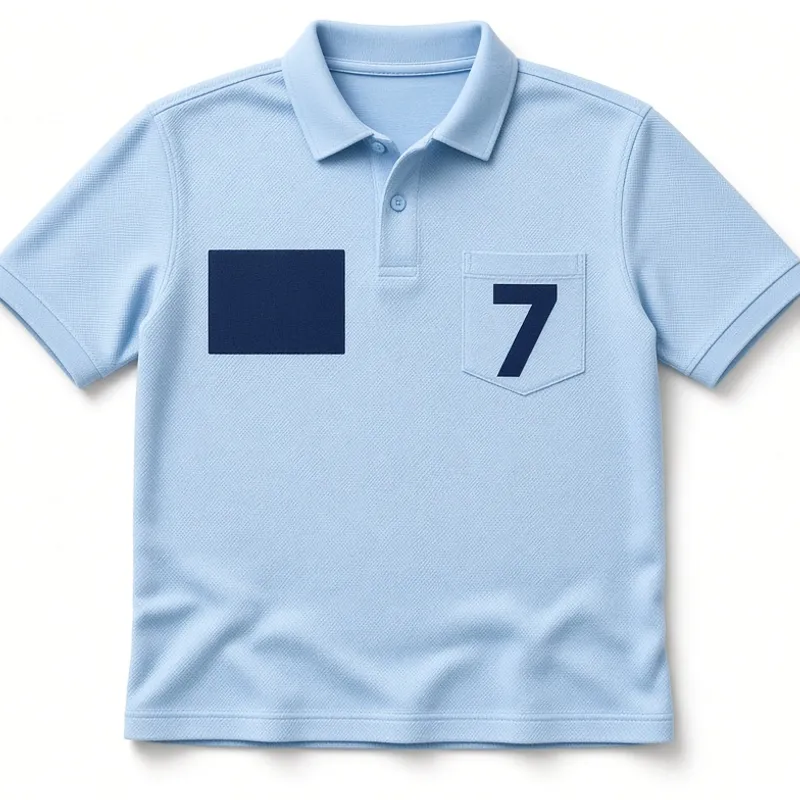
Pale blue pique polo laid flat, a solid navy block printed on the chest and a large 7 on the pocket

Screen printing and heat transfer

  • Solid ink for a sponsor block or a tournament wordmark, flat and opaque.
  • Heat and pressure lay the finer marks: a name, a number, a one-off.
  • Pressed on after the piece is sewn, so it can cross a placket or land on a pocket.

Usually chosen forSponsor marks · Names and numbers · Short runs

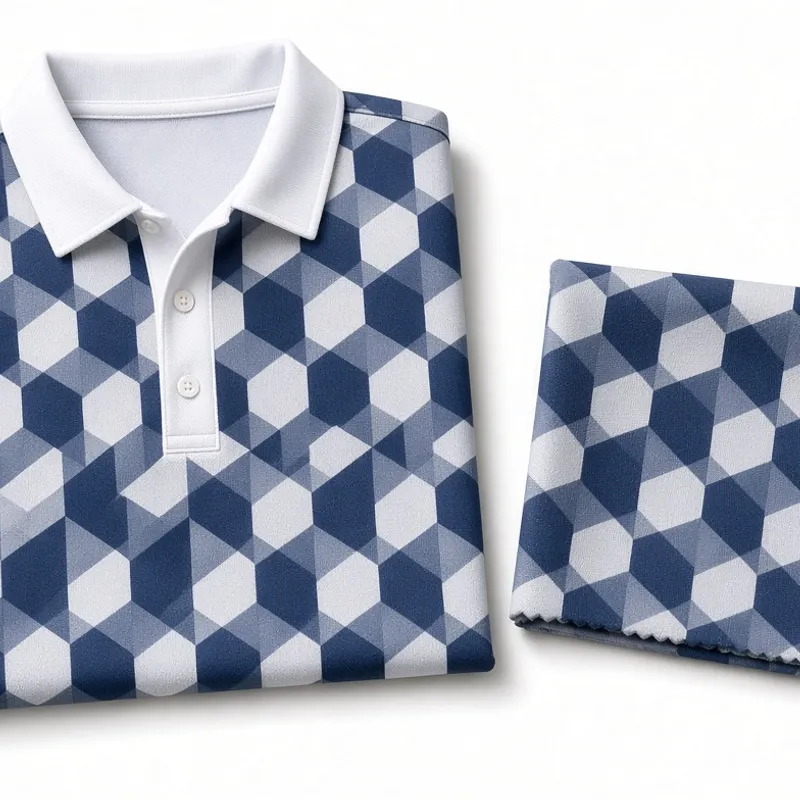
Navy and white geometric print covering a folded polo beside a folded length of the same printed cloth

All-over sublimation

  • Pattern is dyed into the fibre before the panel is cut, so there is no layer to peel.
  • Polyester only, which puts it on the performance polos and the mid-layers.
  • Carries a repeated or all-over design across a whole event kit, not a single logo.

Usually chosen forAll-over graphics · Tournament kit

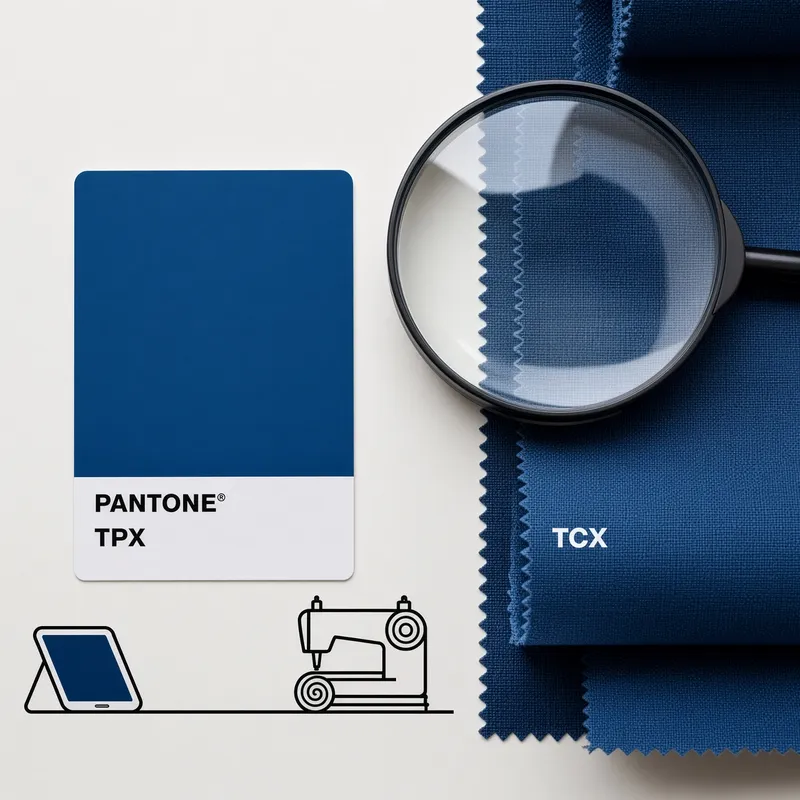
Pantone TPX swatch card beside a magnifier held over a stack of navy cloth, tablet and sewing-machine icons below

Brand assets

  • Pantone TPX or TCX codes matched on the cloth, so a polo and a cap agree.
  • Placement and spacing taken from your own guidelines rather than a house default.
  • Your brand kit is what keeps the mark reading the same on every piece.

Usually chosen forColour matching · Placement specs · Guidelines

Every mark is proofed on the cloth it lands on · the method is fixed on the sewn set

Fix the sample first

Collar, Cloth and Mark Agreed on One Sewn Set

Only the sample is committed to up front, and the bulk schedule opens the day it is signed, with no second approval holding it back.

Finishing

What Goes onto the Piece, and What It Survives

The trim a golf line is judged on sits at the neck, the tag and the bag. Both halves below are set on the same pack as the garment itself.

Added to the piece

  • Player names and numbers, embroidered or heat-sealed, in the font and the placement you choose.
  • Woven or printed neck labels carrying your own mark alongside the care wording.
  • Hangtags built with a size chart, a product story or a code that a buyer can scan.
  • Polybags, tissue or a rigid branded box, packed to the retail spec rather than a plain carton.

How it holds up

  • Cut and finished to come through repeated swings without twisting, shrinking or sagging.
  • Smooth-faced and tight, the knit resists pulls where a sleeve meets a strap or a bag.
  • Deep-dyed colour that keeps its depth under strong sun rather than fading to a lighter version of itself.
  • Trim and decoration proved on the same sewn set, so nothing behaves differently in the wash.

All of it is specified on one pack · nothing is added to a piece once the set is signed

How it runs

Four Stages between a Course Brief and a Loaded Pallet

Nothing opens until the stage before it has closed, so a change of cloth, collar or placement is settled while one set is still on the bench.

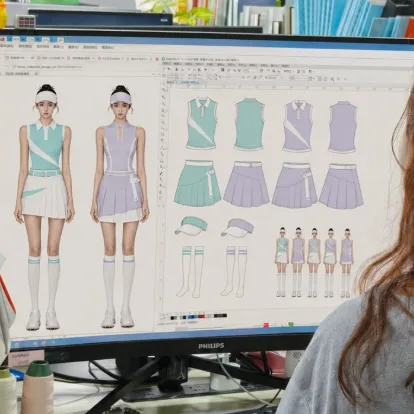
  1. Seen over a seated designer’s shoulder, a monitor showing a polo and skort in green and lavender with the matching cap and socks.

    Send the brief and lock the pack

    Brief & pack
    • Give us the piece list, the size breakdown per colour and the course they are worn on.
    • Cloth, trims and the mark are chosen against the way the piece is worn.
    • Measurements come from your chart, and the whole lot is written onto one pack before anything is cut.
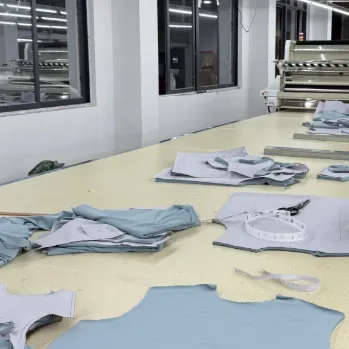
  2. Laid out on a cutting table, layers of pale fabric while a worker runs a straight knife across the stack.

    Make up the sample set

    7–10 working days

    One set is made up in your own fabric, so the fit, the collar stand and the placement can be judged on a person rather than on a flat drawing.

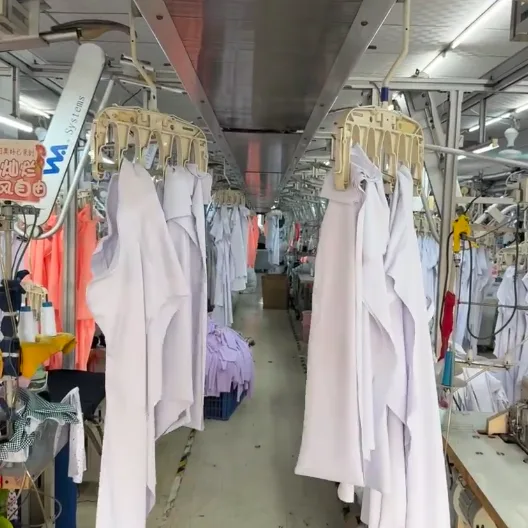
  3. Moving along an overhead rail, white and pale lavender garments on hangers above a factory aisle.

    Run the bulk and finish it

    7–15 working days

    The signed set is the control the whole run is held to — cut, sewn and packed against it, carton by carton, before anything leaves the floor.

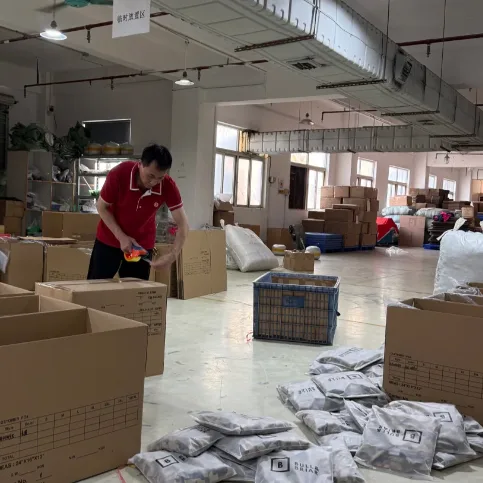
  4. Packing a carton, a worker in a red polo surrounded by stacked boxes and grey polybags.

    Ship it to the door

    Dispatch

    Cartons go out labelled by size and style, on the freight term agreed at quote, so what arrives is the thing that was signed off.

A photo-realistic 3D sample of the fit and the placement is sent within 48 hours of the pack locking · the sewn set follows it

On the record

Two Golf Orders, Described by the People Who Placed Them

One tournament set and one clubhouse retail line — the problem, how it was solved, and the buyer’s own words.

Case 01

Annual corporate golf tournament

Pain points

The client required 500 custom golf polos for a fixed-date annual client tournament. They struggled with common bulk-order risks: inconsistent logo embroidery positioning, batch colour shading issues, and low-performance fabrics that failed to keep players cool during all-day outdoor play. Strict event deadlines left no room for delayed delivery or inconsistent quality.

Solutions

Precise embroidery positioning calibration kept the logo uniform across all units, full Pantone colour matching aligned the shades with brand standards, and a premium moisture-wicking performance fabric was chosen for long-hour golf activities. Multi-stage QC inspections were implemented during production to eliminate defects, ensuring stable quality and on-time full delivery.

We ordered 500 custom golf polos for our annual client tournament. The team delivered exceptional quality with the logo embroidery landing exactly where it should. Colours matched our brand guidelines, and the moisture-wicking fabric performed brilliantly across the day. Production arrived on time, and every piece passed our quality standards.

Richard L GriegoRichard L GriegoTournament client
Case 02

Clubhouse retail & welcome package

Pain points

One high-end golf community needed upscale custom apparel for new homeowner welcome kits and clubhouse retail sales. The client faced two main challenges: ordinary generic designs lacked premium texture and fine embroidery details, and conventional fabrics could not meet the community’s environmental sustainability requirements for high-end residents. Inconsistent craftsmanship would damage the club’s luxury brand image.

Solutions

Sophisticated, premium-tailored designs with refined embroidery details were delivered to match high-end club aesthetics. GRS-certified recycled performance fabrics were adopted to support eco-friendly concepts and satisfy environmentally conscious customers. Strict checkpoint quality control was executed throughout manufacturing to ensure every finished garment maintained consistent premium retail-grade quality.

Our golf community needed upscale custom apparel for new homeowner welcome packages and for clubhouse retail. The designs came back sophisticated, with the embroidery detail we had asked for. The recycled fabrics impressed our environmentally-conscious residents, and the checkpoints meant every piece reflected the standard we set. Quality control held throughout.

Hertha H FreemanHertha H FreemanClubhouse retail partner

Customers

Clients We Have Produced For

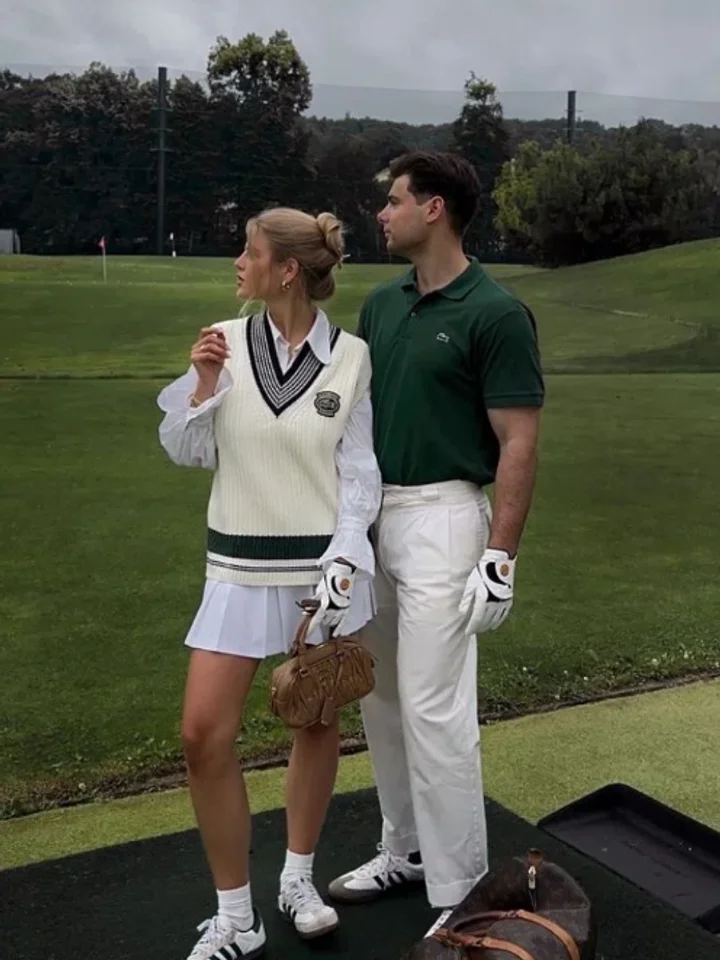
Standing on a black tee mat in front of a treelined fairway, a white sweater vest with green trim beside a dark green polo and white trousers
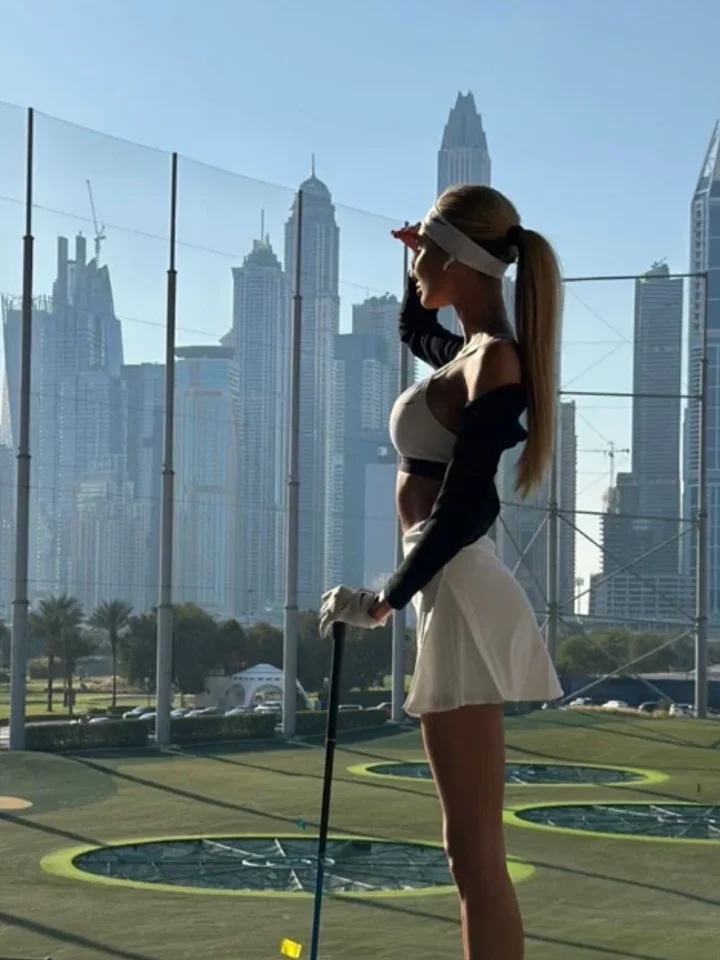
Shielding her eyes at a floodlit driving range, a white visor and pleated skort against a wall of city towers
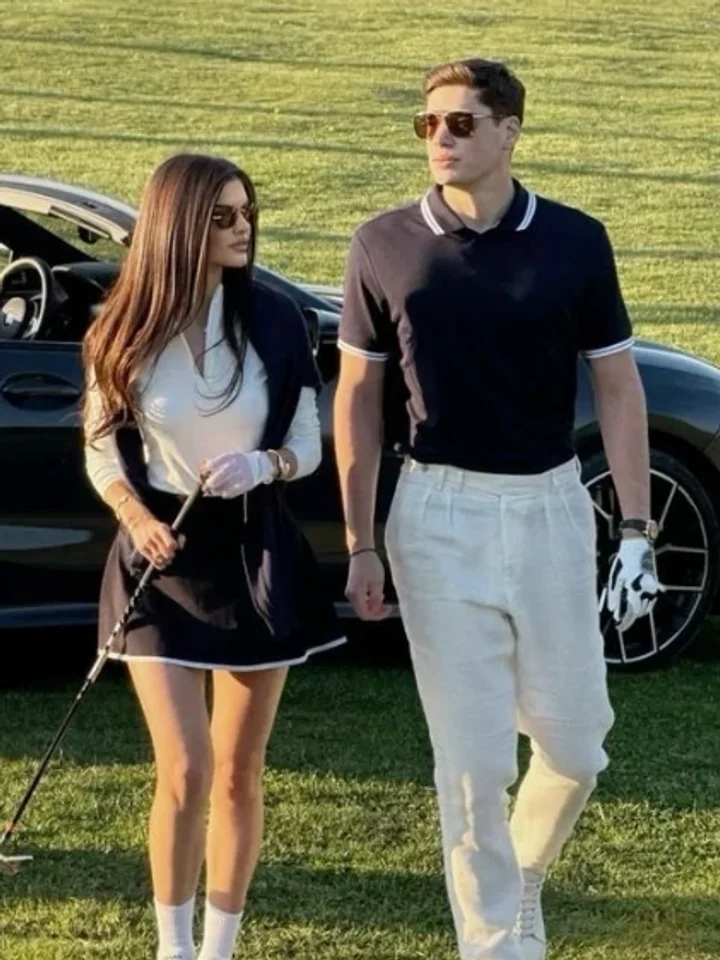
Walking past a black sports car on the grass, a white top with a sweater over the shoulders beside a black polo and cream trousers
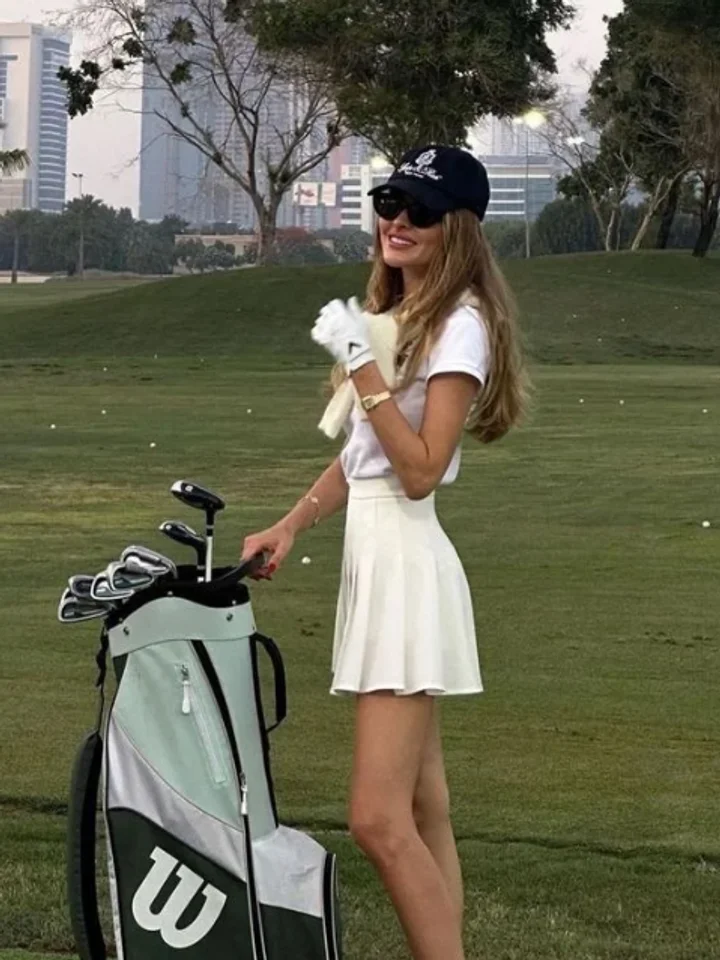
Smiling beside a golf bag on the fairway at dusk, a black cap and sunglasses over a white tee and cream pleated skort
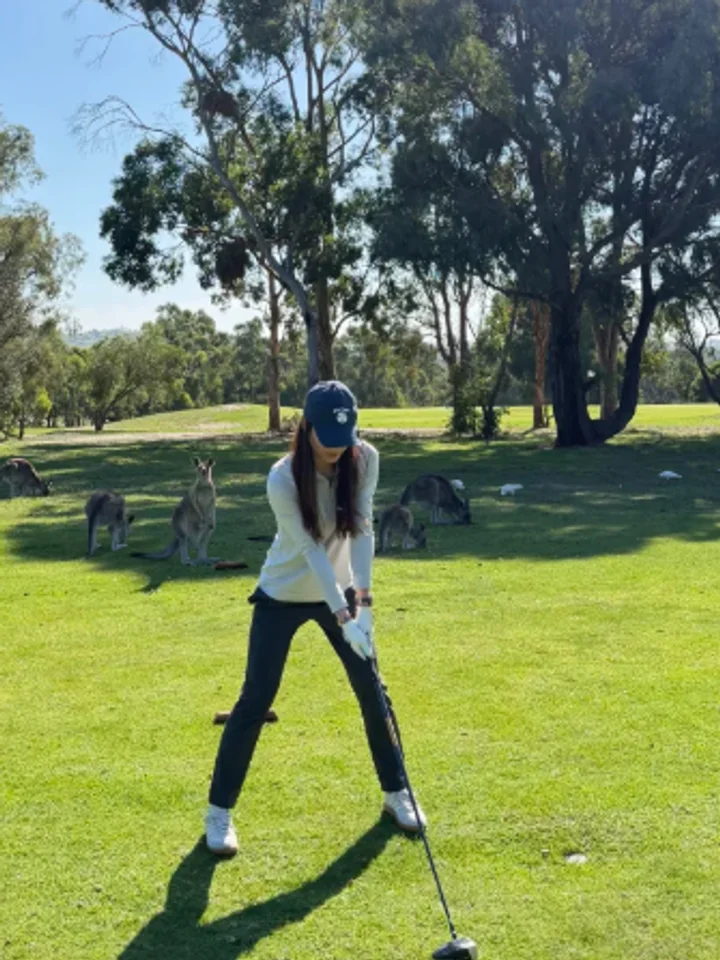
Swinging a driver on a fairway with kangaroos grazing behind, a navy cap over a white long-sleeve top and dark trousers
Viewed from behind mid-backswing over a lake and bunkers, a burgundy polo with white trim and cream trousers
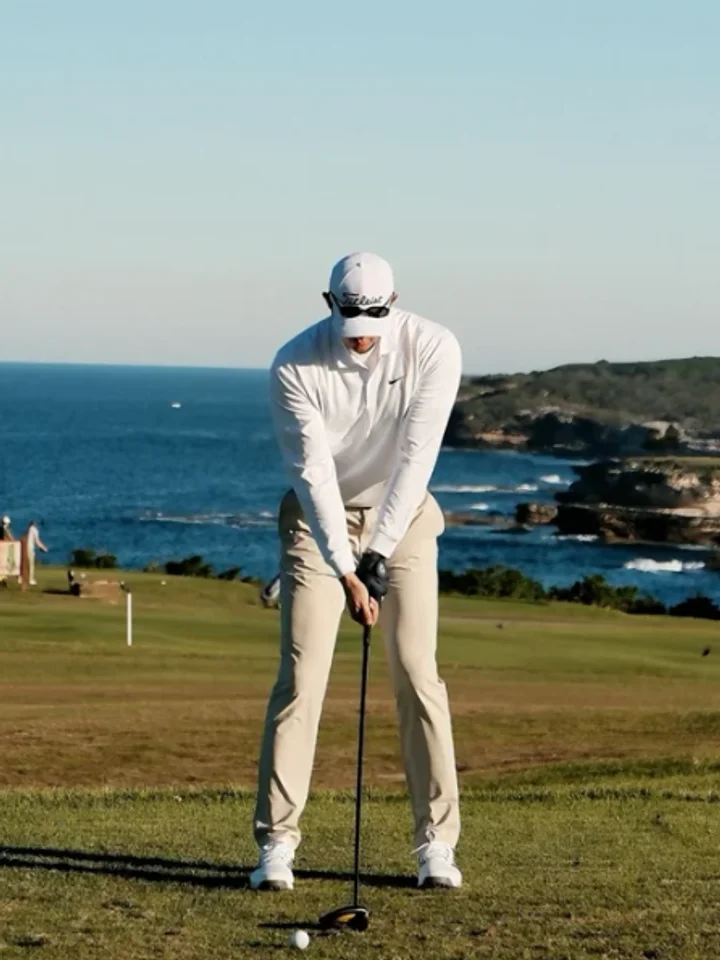
Addressing the ball on a clifftop tee above the sea, a white cap and long-sleeve top over stone-coloured trousers

Questions

Frequently Asked Questions About Custom Golf Apparel Manufacturer

01What is the smallest golf order you will take?

One hundred pieces in a single colour is where a golf order opens, and every colour added afterwards carries a floor of its own rather than sharing one with the order. Sizes mix freely inside a colour, so an order split across three sizes is not three times the count.

Start on one colour
02Can men’s and women’s cuts share one order?

Cuts for men and women can share one colourway, so a men’s polo and a women’s polo in the same cloth count toward a single minimum between them. Each further shade is counted separately, and either cut runs its own sizes.

Ask how cuts are counted
03Do we approve a sample before the run?

Set aside for the sample first: one made-up set in your own fabric, on a window of 7–10 working days that opens when the tech pack locks. Inside it sit 3–5 fit revisions, and sampling is US$80–150 per style, credited once a bulk order reaches 500 pieces.

Cost a sample set
04How long is the line once the set is approved?

The line runs for 7–15 working days from the moment the set you approved reaches it. Any colourway added later re-enters at cutting, on a block that is already locked, so nothing after it moves.

Plan the season around it
05What is checked before a golf order ships?

Sealed cartons are opened one at a time and held to AQL 2.5 against the signed set. Collars that have lost their stand or marks that have drifted are caught while the cartons are still on the floor, which is why the check happens there rather than after they have left it.

See how a carton is checked
06Which documents come with the goods?

Every order leaves with its own paperwork: the material list, the laundering instructions and the test results, handed over with the cartons rather than held back. Anything your importer still needs for their file can be asked for while the quote is open.

Trace the paperwork
07Can the trim carry our own branding?

Trim is built from your own artwork: the woven or printed neck label, the heat transfer, the hangtag and the polybag. The label run is counted separately from the garment minimum.

Count a label run
08How does a golf order reach us?

DDP, DAP or DPU, whichever the destination allows. Air takes 5–7 days and sea 30–45, and the applicable term gets a line of its own so the landed cost is agreed before anything moves.

Choose a freight term

Next step

Give Us the Range and the Colourway, and the Quote Follows

You get the construction, the decoration and the trim costed line by line, with the sample standing on its own, so nothing is bundled before you have decided.

Prefer email?info@jaceapparel.com

Request a quote