
For DTC brands and fashion founders

Small-Batch Cut & Sew Apparel — Validate Designs and Filter Risky Concepts

Test up to 6 distinct SKUs within a single low-volume order and run multi-colourway style tests in one production batch. Eliminate underperforming designs early — our clients typically keep only 50% of tested designs for bulk release, advancing only customer-approved silhouettes into full-scale seasonal manufacturing and filtering risky concepts before heavy investment.

OEKO-TEX 100BSCIGRS

Behind the low minimum

A low minimum is only real where a floor this size is already running. These four say how big that floor is.

Floor space

20,000 sqm

Workforce

400+ people

Annual output

~1,000,000 pcs

Operating since

2015

Freight is quoted as DDP, DAP or DPU to most countries, itemised on the order rather than bundled into the piece price.

Where a test run goes wrong

Five Things That Stall a Small Batch, and the Answer to Each

Pick a stop. Each one is a real problem, not a complaint, and the panel shows what we do about it — named before anything is sent.

The problem

The minimum is bigger than the test

  • Buying a season’s worth of pieces turns a test into a bet.
  • Budget is committed to thousands of units before one of them has sold.
  • A first order that guesses wrong leaves the brand holding stock it cannot move.

Our answer

  • Start at one colourway, and let the sizes mix inside it.
  • Add a second colour, or a larger run, only once the first has earned it.
  • Raise volume on the styles that sell rather than on the whole range at once.

The gain

  • Capital is tied to a single colourway rather than a full season.
  • Demand is read off real sales before any scale-up.
  • Proof of what sells arrives before a season is committed to it.
The problem

Sampling drags and the launch slips

  • Weeks pass before a prototype returns, and the launch date moves with them.
  • The fit reads the spec differently to the drawing, with no earlier sample to measure against.
  • Corrections found after the bulk is cut are paid for twice — in cloth and in time.

Our answer

  • Fit revisions sit inside the sample stage, so the shape is settled before the run starts.
  • The spec is agreed on the sewn piece, which keeps correction out of the bulk.
  • One review round settles the shape, so the calendar is not rebuilt for a second sample.

The gain

  • Dates hold, because the sample carries the revisions.
  • Settling the shape takes one review round, not two between bulk and delivery.
  • What is approved on the table is what arrives in the carton.

The problem

Quotes that grow after they are agreed

  • Extras arrive after the rate is agreed — pattern drafting, grading, a further revision.
  • Each is real work with a real cost, landing once the budget is already set.
  • Sampling lands as a charge rather than a line on the quote.

Our answer

  • Pattern and grading are quoted as their own lines before any work starts.
  • Fees ride the same document as the goods, so the price approved is the price invoiced.
  • Every charge is named before the deposit, not discovered after it.

The gain

  • One number to plan against, fixed before the deposit.
  • Nothing is added after the fact, so the budget holds to the invoice.
  • Terms that do not change between the quote and the invoice.

The problem

Trims and labels are a second supply chain

  • Even a limited drop still needs its own labels, swing tags, buttons and a bag.
  • Separate suppliers usually own each, with their own minimum and lead time.
  • Late labels hold a finished garment on the floor.

Our answer

  • Trims travel on the garment’s own order rather than beside it.
  • Everything is quoted with the goods and made to the same schedule.
  • Branding is built into the same run, so no trim waits on a second factory.

The gain

  • Finished goods leave together, rather than waiting on the last component.
  • No smallest component can hold the whole order back.
  • Branding arrives with the goods, so the range is shelf-ready on one date.

The problem

Quality problems only surface on arrival

  • Between the cutting table and the carton there are a dozen places a fault can start.
  • Without a view of them, the first fault is the one a customer opens.
  • Rework at the end of a run costs more than a check at the start.

Our answer

  • A named producer owns the order from brief to shipment.
  • Inspection happens before packing, on our own floor, so a fault is caught on the table.
  • Sampling and shipping stay with one team, so nothing is handed to a stranger.

The gain

  • Defects are caught before the carton rather than in the returns.
  • Quality is signed off on the sample, so the run matches what was approved.
  • Small faults are fixed where they happen, at the machine rather than the warehouse.

How a small batch works

Built to Test a Style, Not to Bet the Season on It

Our solution

The program is built around one test run. We read the tech pack, draft the pattern, proof the fit sample and run the production itself — trims, branding and updates included — so the launch date holds.

What you gain

  • Prove one silhouette at the cost of a colourway, not a season of inventory.
  • See the whole cost on one quote before anything is cut.
  • Keep a single named producer across the whole run.
  • Get updates while the run is still moving.

Is this your brief?

What a Small Batch Suits, and What It Does Not

Two columns: the briefs we can start on, and the ones that belong somewhere else.

This is a fit

  • A capsule or a single silhouette to test ahead of a season — one style, not a whole range.
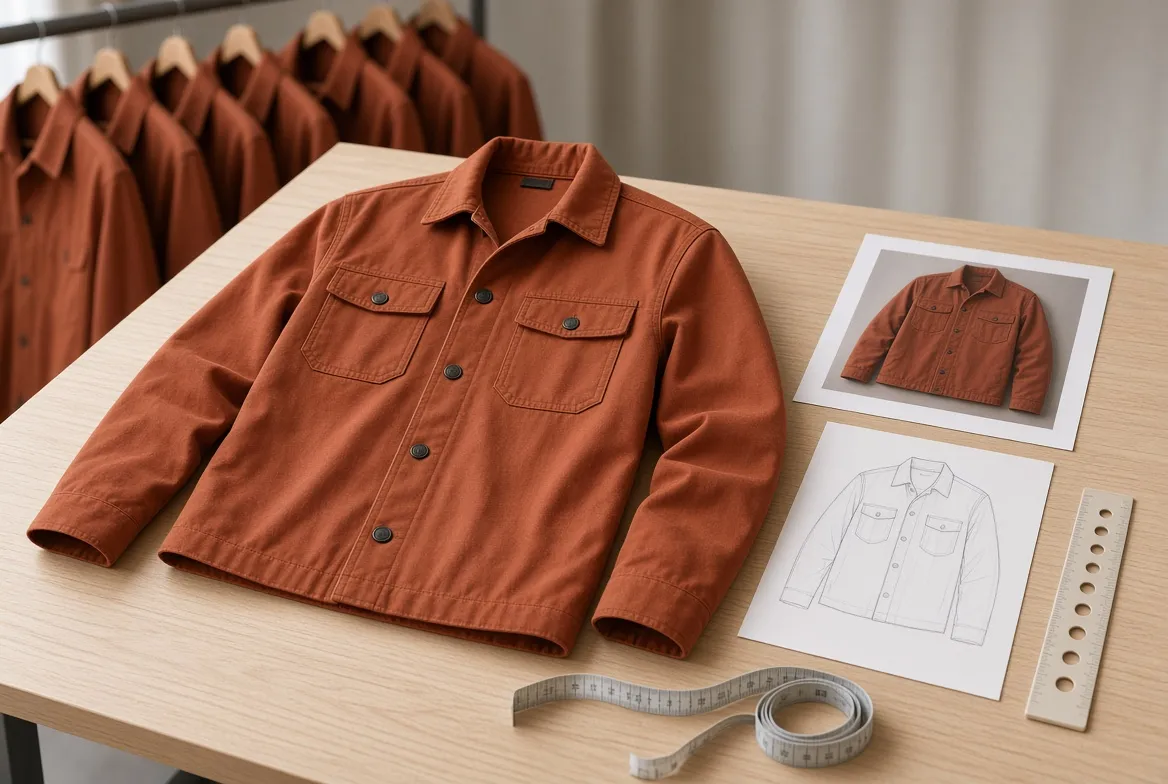
  • Whatever shows the shape, whether that is a reference garment, a photograph or a rough drawing.
  • One colourway to prove the style, instead of a full colour run.
  • Sample budget set aside, and a bulk run planned behind the test rather than a one-off order.
  • Your own size chart, or the appetite to set one from a size run already trusted.

This is not a fit

  • One-piece fulfilment — a single printed blank is a print shop’s job, not a cut-and-sew run.
  • Sampling on the house — the prototype is charged, and priced on the quote before work starts.
  • Colour count still being decided — the palette has to be settled before the run is quoted.
  • Fabric named in adjectives rather than a GSM or a blend to quote against.
  • No intention to scale — a small batch is a first step, not a finished product.
  • Pricing that only closes at thousands of units.

What the brief comes back as

Six Deliverables, from the Tech Pack to the Packed Carton

Every stage is a line on the quote, so nothing arrives as a surprise after the run.

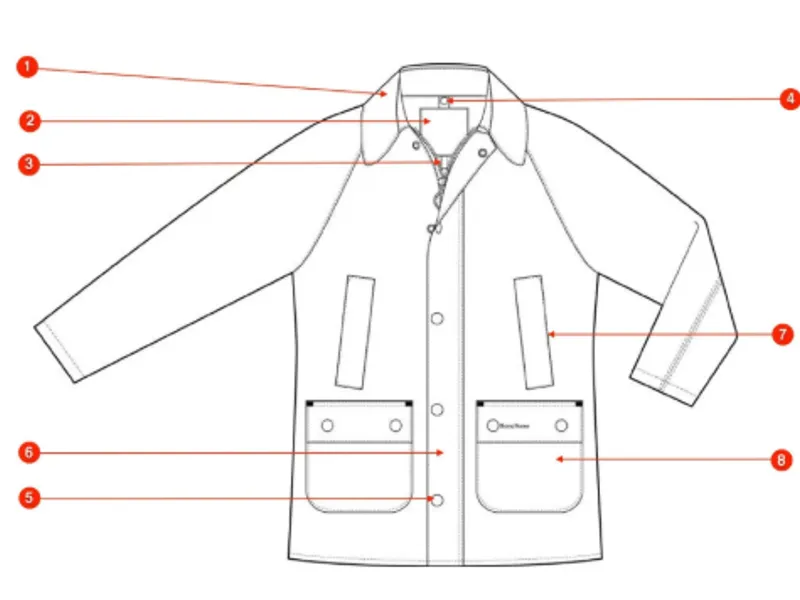
  1. A tech-pack drawing of a jacket with numbered construction callouts

    Tech pack review

    Each pack is checked against what the floor can sew, and the risky details are raised before cutting starts.

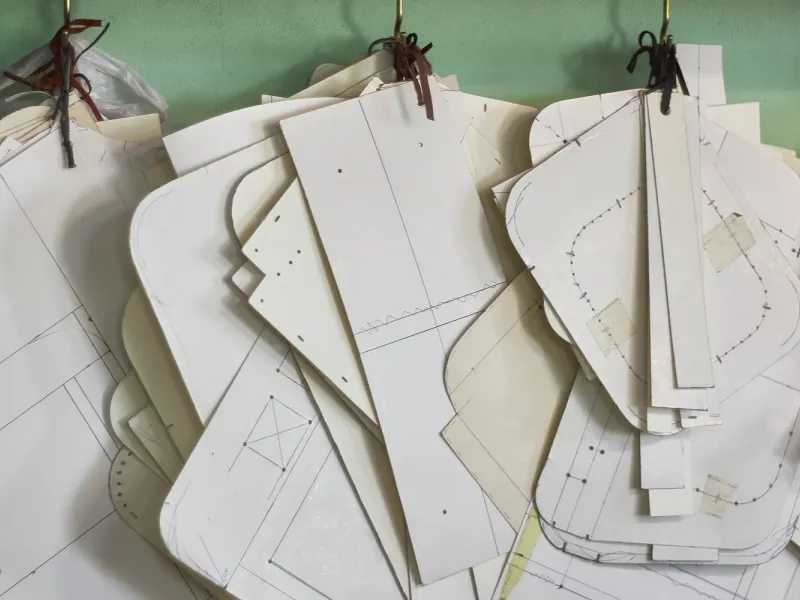
  2. Cardboard pattern pieces hanging from hooks above the cutting table

    Pattern and grading

    Drafting and grading turn your size chart into the block the run is cut to.

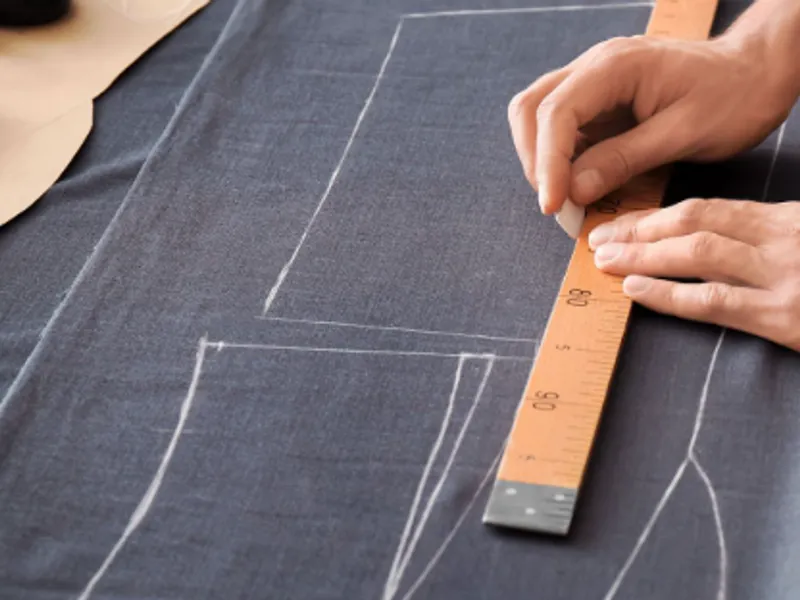
  3. Chalk and a tape measure marking a trouser block onto cloth

    Fit and pre-production samples

    Proofed on the body, the sewn prototype is revised until the fit is right, then sealed as the bulk sample.

  4. Cut jacket panels stacked beside a sewer at an industrial machine

    Small-batch cut and sew

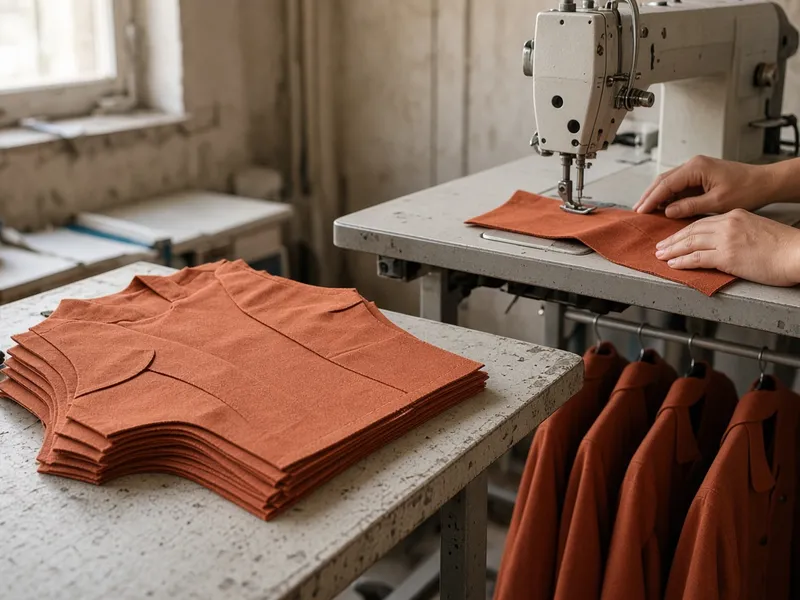
    The run is cut, sewn and finished in-house at the low minimum, on the same floor as the sample.

  5. Woven labels, drawcords and branded elastics laid out for selection

    Custom trims and branding

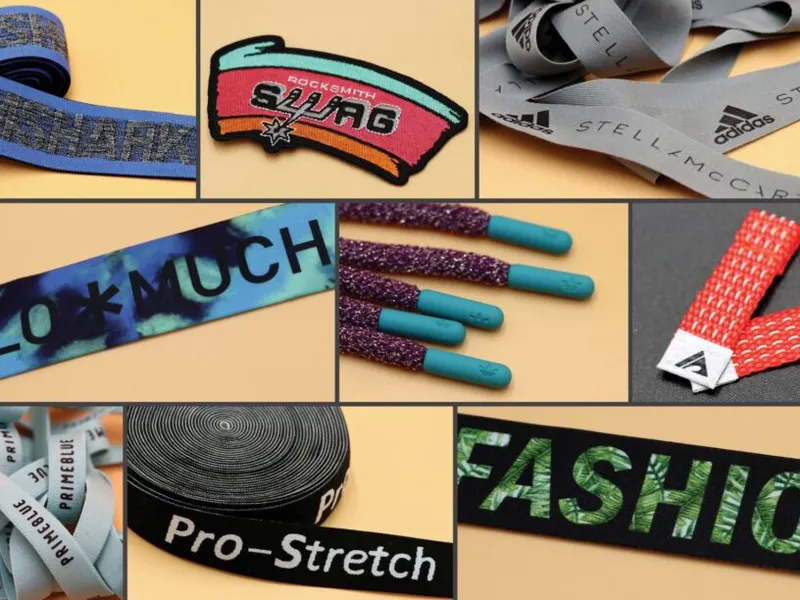
    Woven labels, hang tags, buttons and the packaging are produced with the garment rather than sourced separately.

  6. Garments checked and tagged for the packing stage

    QC and packaging

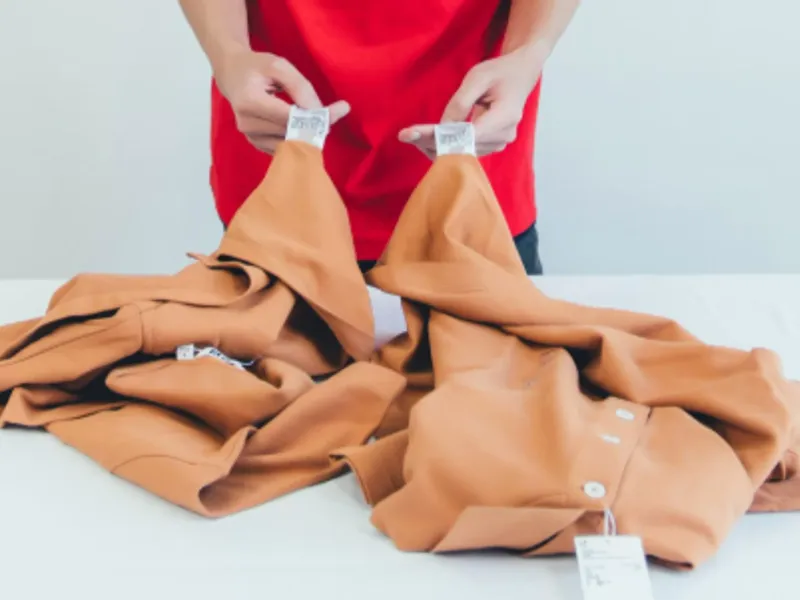
    Every unit passes final inspection on the agreed standard before it is packed and the shipment leaves.

Case studies

Two Brands That Tested a Capsule before the Season

One is a five-style debut; the other runs limited monthly drops. Both started at the low minimum and took the styles that sold into bulk.

CS-01Canada

Terra Thread Apparel

Liora Voss · Merchandiser & Co-founder

Canadian DTC womenswear — linen-blend tops and relaxed trousers, sold on Instagram and Shopify.

Customer pain points

  • Their prior supplier held a 1,000-unit minimum per style — about CAD$110k frozen into five unproven designs, with every fit revision billed again as a fresh sample.
  • Trims were refused on a short run — the woven labels, hang tags and polybags each sat with a different supplier.
  • The summer launch date could not move, and the fabric shades were only visible after the goods had shipped.

Our solution

  • Full tech-pack audit, then drafting and grading for all five styles, with two fit-sample revision rounds.
  • 150 pieces a style — 750 across the capsule, rather than 5,000.
  • Labels, branding and in-line QC handled on the same order, then one consolidated sea shipment to Vancouver.

Customer benefits

  • Per-style minimum cut from 1,000 to 150 units, taking 85% off the upfront inventory outlay.
  • Three of the five styles sold out inside eight weeks, and the two best sellers re-ordered as a 1,800-piece bulk run on the same patterns.
  • No sampling or trim charge arrived after the quote, and final inspection kept defects under 1.2%.

“JaceApparel let us test our first collection without gambling the whole budget. We could validate demand before scaling the styles that worked.”

Liora Voss, Merchandiser and Co-founder, Terra Thread Apparel
CS-02US

Onyx Street Studio

Marcus Reed · Founder & Product Merchandiser

US streetwear, running limited monthly drops — hoodies, heavyweight tees and cargo pants, sold on Shopify and at pop-ups.

Customer pain points

  • Each drop arrived as its own bulk order, with fresh pattern, grading and trim setup fees that priced a short run out of budget.
  • Sampling ran 22–30 days, long enough to miss the window a drop was built around.
  • One colourway per style was the only option, so a short drop was forced into a colour it could not sell.
  • Stitching faults surfaced only once the goods reached the US warehouse, while volumes swung from 100–120 pieces on some drops to 3,000 on a winner.

Our solution

  • Retained pattern files, re-cut for later drops, so a repeat style carries no new drafting fee.
  • Fast-track sampling — a fit sample in 10 working days, with several colourways sharing one order at 100 pieces each.
  • Decoration and QC run inside the same production pass, with a clean handover to bulk once a style earns it.

Customer benefits

  • Sample lead time fell from 28 days to 10, putting each drop back on its campaign calendar.
  • Reusable patterns took about $2,400 of repeat drafting fees out of every collection, and four drops ran back to back with sell-through averaging 86%.
  • The hoodie that went viral scaled from a 120-piece batch to a 3,200-piece bulk order, with defects down from 7% to 2.1%.

“Being able to run several colourways in one short batch — and reuse the patterns — changed how we plan a drop. We can test a bold design without betting the season on it.”

Marcus Reed, Founder, Onyx Street Studio

Questions

Frequently Asked Questions About Small-Batch Cut and Sew

01What is the minimum for a small-batch cut and sew style?

The minimum is 100 pcs per colour, and it does not move with the fabric or the style. Sizes mix inside a colour; each colourway is counted separately.

02Will you review my tech pack and flag manufacturability risks?

Yes. The pack is read before a pattern is cut, and anything that will not sew cleanly — a seam that will not hold, a grade that will not close, a construction the cloth will not take — comes back to you before sampling starts.

03Can custom woven labels and hang tags be included on a small batch?

Woven labels, hang tags and the packaging are produced on the same order as the garment, at the same minimum, so a limited drop still ships branded rather than waiting on a second supplier.

04How long does the sample take to reach us?

Prototypes reach you in 7–10 working days once the tech pack locks, with the fit revisions in the same round of review. Bulk runs in 7–15 working days; air freight is 5–7 days and sea is 30–45 days.

05Is the sample free on a small batch?

No — a prototype is $80–150 per style, credited back when that style reaches a bulk order of 500+ pcs. Below that volume it stays a one-off cost, itemised on the quote.

Put the first style on a date

Test the Style Small. Scale the One That Sells.

Send the capsule idea — a sketch, a reference garment or a range plan — and what comes back is dated and priced. Nothing is cut until the sample is approved.

Request a quote