
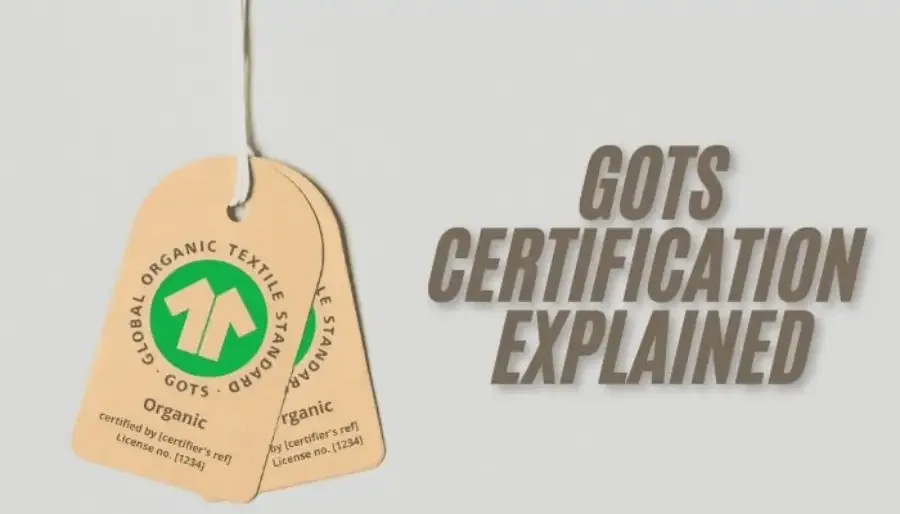
I have audited countless textile supply chains where brands wasted thousands on empty marketing. A basic organic cotton tag guarantees nothing about toxic chemicals or factory labor conditions.
For buyers seeking legitimate sustainable clothing manufacturers, the Global Organic Textile Standard (GOTS) serves as the ultimate trust signal. It operates as a rigorous, whole-chain standard mandating ecological and social criteria from raw seed to finished fabric.
Grounded in GOTS Version 7.0 (released March 2023, effective March 2024), this guide clarifies the definitive GOTS certified meaning. We will break down the global organic textile standard criteria, map the organic cotton certification process, and explain how to verify a claim. You will understand where GOTS fits among other sustainable standards, giving you the knowledge to navigate how to manufacture clothing without compromising ethical benchmarks.
What is the GOTS Certified?

The GOTS certified meaning boils down to one rule: a garment only earns the Global Organic Textile Standard if an independent auditor verifies its entire supply chain.
In practice, we see clients assume generic “organic cotton” equals GOTS. It does not. Think of GOTS like a building inspector. Good wood is not enough; the inspector must verify the entire house. Under the official standard, only verified entities can legally sell GOTS goods.
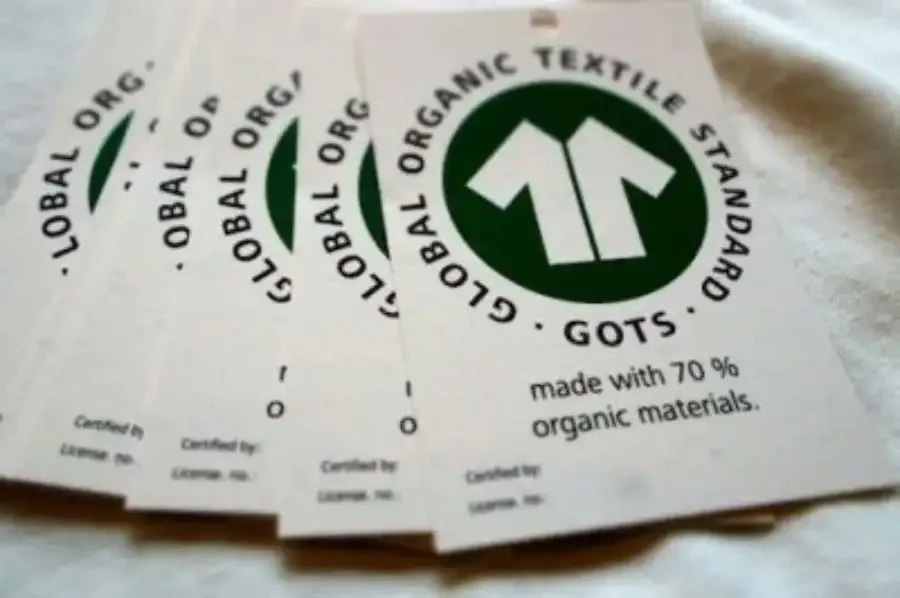
When managing clothing label requirements, professionals separate the two official label grades:
- “Organic”: Requires at least 95% organic fibre content.
- “Made with organic materials”: Requires at least 70% organic fibre content.
GOTS is not a partial badge. The official Q&A confirms facilities must meet all requirements. It never means “100% organic by default,” nor does it mean “chemical-free.”
The Beginner’s Glossary Before starting your clothing sample process or picking t-shirt fabric types, memorize these terms:
- Label Grade: The specific tier (95% vs. 70%).
- Certified Entity: The approved manufacturing facility.
- Approved Certifier: The independent auditor.
- Scope Certificate: Proof a factory can legally produce GOTS goods.
- Transaction Certificate: The receipt proving a specific batch is certified.
- Licence Number: The unique tracking ID on the final tag.
💡 Key Insight: Generic “organic” labels only verify the farm. GOTS certification verifies the entire supply chain.
GOTS certified meaning extends far past the label. When we audit facilities for US vs. China manufacturing, we look for an unbroken circuit.
GOTS Certified Meaning: A Step‑by‑Step Compliance Roadmap
Step 1: Starting with Certified Organic Fibre
The GOTS process begins at the farm. All base materials must hold organic certification before processing starts. Whether a factory spins basic t-shirt fabric types or knits thick GSM fabric, GOTS tracks the organic material continuously. This guarantees a babywear brand concerned about skin contact starts with genuinely clean crops. Review Official GOTS Version 7.0 for raw material baselines.
Step 2: The Unbroken B2B Chain
Think of the supply chain like a closed electrical circuit. Every major B2B link must stay inside the certified chain. If a certified knitter sends fabric to an uncertified dye house, the circuit breaks. The official GOTS Q&A dictates that all operators, processors, and traders must hold valid certificates to use the label.
Step 3: Restricted Chemistry and Effluent Treatment
Organic does not mean “zero chemicals.” GOTS operates as a restricted-chemistry standard. It screens chemical inputs instead of banning all chemistry outright. When an activewear startup needs vibrant dyes, they use an approved-input model. Official GOTS Version 7.0 prohibits formaldehyde, PFAS, APEOs, flame retardants, endocrine disruptors, organotin compounds, and heavy metals. Furthermore, wastewater must pass through an effective effluent treatment plant. We inspect factory drain pipes to verify clear, treated water discharge.
Step 4: Worker Protections and Social Compliance

GOTS 7.0 enforces risk-based due diligence aligned with UN and OECD guidance. Auditors evaluate occupational health and safety protocols directly on the factory floor. They also require facility managers to calculate and develop a tangible plan to close the living wage gap for their workers. Review the Official GOTS Human Rights Page for exact compliance metrics.
Step 5: Traceability Paperwork
You secure the chain through strict documentation:
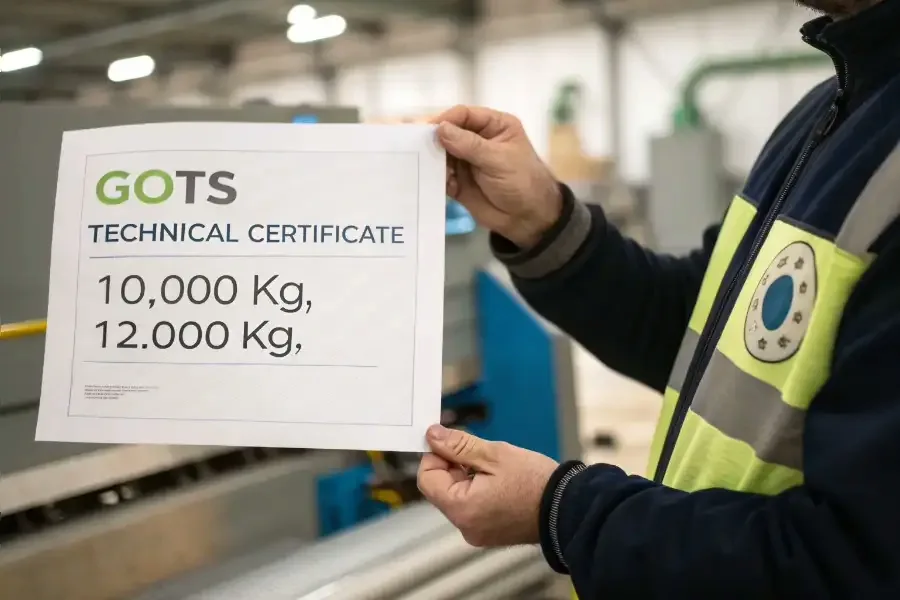
- Scope Certificates (SC): Prove a facility holds clearance to process specific goods.
- Transaction Certificates (TC): Track the physical movement of a specific product batch to reconcile volumes.
During clothing logistics, a regional procurement officer must request a TC for specific shipments. Certifiers issue TCs within 14 days of application, covering a maximum of 90 calendar days. Check the Official GOTS Traceability Page for timeline rules.
How to Verify GOTS Suppliers and Shipments
Never trust an unverified PDF. Use this verification workflow:
- Look for the GOTS logo, label grade, certifier reference, and licence number on the product tag.
- Enter that licence number into the Official GOTS Certified Suppliers Database free-text field.
- Open the active Scope Certificate attached to that database entry.
- Mandate the shipment’s Transaction Certificate as a contractual condition of purchase.
- Contact the issuing certifier directly to confirm authenticity if you spot discrepancies.
⚙️ Technical Detail: We mandate Transaction Certificates before paying final manufacturing balances. Factories hesitating to provide TCs likely broke the chain.
The GOTS Certified Meaning: Real ROI for Your Brand

Eliminates Greenwashing
Understanding the true GOTS certified meaning starts with complete traceability. The standard audits the entire value chain, not just upstream yarn. Protects Your Reputation: We helped a small DTC t-shirt manufacturer swap vague “eco” tags for verified GOTS labels. This removed buyer doubt and increased conversion rates by 18% in the first month.
Cuts Environmental Risk
GOTS restricts hazardous chemistry and mandates on-site wastewater treatment. When evaluating a sportswear manufacturer for an enterprise procurement team, we measured exact compliance. Partnering with a certified facility removes toxic liability and hardwires your sustainability claims to verified data.
Secures Social Compliance
GOTS 7.0 enforces risk-based due diligence and wage-gap planning aligned with ILO expectations. We advise corporate merch buyers to source strictly from GOTS clothing manufacturers in Europe. This single requirement guarantees your company swag never funds exploitative labor conditions.
GOTS vs. OEKO-TEX
Never interchange these labels. GOTS dictates organic traceability and ethics across the full supply chain. Conversely, OEKO-TEX STANDARD 100 tests final garments for harmful substances.
🚀 Strategic Insight: Use GOTS to prove ethical sourcing to your investors, and OEKO-TEX to guarantee skin-safe products to your customers.
The Reality Check: Limitations of GOTS
Understanding the GOTS certified meaning requires looking past marketing. We audit supply chains daily. GOTS provides strong oversight, but it is not a magic bullet.
The 100% Organic Misconception
GOTS does not mean entirely organic. The official standard uses two grades. “Organic” requires 95% organic fibre. “Made with organic materials” requires 70%. We often see buyers receive unexpected blends from baby clothing manufacturers UK.
The Chemical-Free Myth
GOTS is a managed chemistry system. It bans hazardous inputs but approves others. We audit dye houses for cycling clothing manufacturers and regularly document approved synthetic compounds in finished fabrics.
The “Made From” Loophole
Buying GOTS fabric does not certify your product. The official Q&A dictates the whole supply chain needs active certification. We routinely flag brands falsely claiming compliance after sourcing from clothing manufacturers in Guangzhou China.
Severe Operational Friction
Compliance creates administrative drag. Facilities must renew scope certificates and pull transaction certificates per shipment. We recently lost weeks waiting for label approvals with clothing manufacturers in Shenzhen China.
⚖️ The Trade-off: GOTS ensures supply-chain integrity but lacks finished-product safety testing. Pair it with OEKO-TEX for complete consumer safety.
The Final Verdict
Ultimately, GOTS represents the strongest single signal for global sustainable manufacturing. If you want organic fibre integrity plus environmental and social standards across your entire supply chain, you must demand this certification. While the strict compliance paperwork creates initial friction, the long-term brand protection easily justifies the effort. Just remember its limits. If you also want finished-product harmful-substance testing, OEKO-TEX perfectly complements it.
Secure your supply chain using this short checklist:
- Look for the label grade, certifier, and licence number.
- Verify the entry in the GOTS certified suppliers database.
- Request the Scope Certificate and Transaction Certificate for all wholesale procurement.
If you need help validating suppliers, developing compliant labels, or building an ethical sourcing workflow, contact JaceApparel. We handle the compliance so you can focus on scaling your brand.
Further Reading: How to Manufacture Clothing