
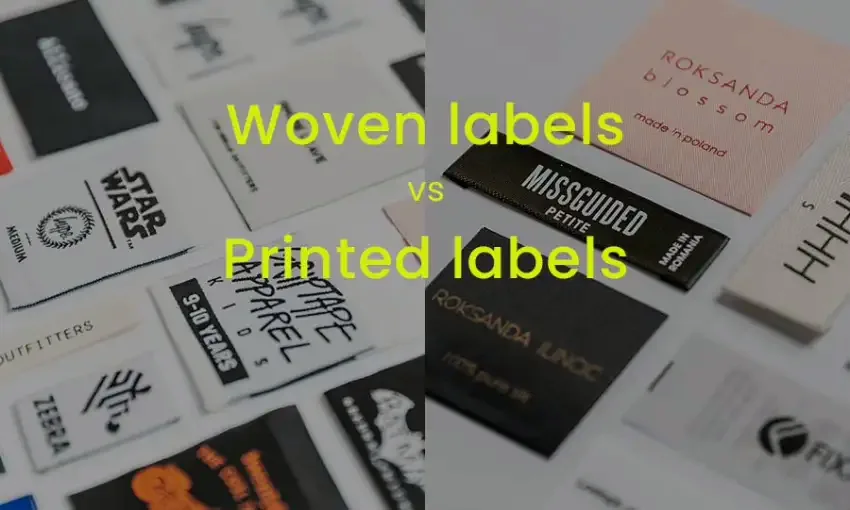
Woven labels are the clear winner for main branding because the textured thread instantly signals luxury. Printed labels win only for complex care tags or designs with smooth color gradients.
The choice in Woven vs Printed Labels comes down to perceived value. When I run my thumb over a woven tag, the raised stitching feels expensive and permanent. In contrast, printed labels feel like a flat decal that eventually cracks after repeated hot washes.
For my production runs, I always use woven for the visible neck label to build brand equity. I only swap to printed for internal care instructions, a standard practice for private label clothing manufacturers.
We analyzed the physical properties and production constraints of both label types to determine exactly where each performs best.
Woven vs Printed Labels: Pick the Perfect Finish
| Feature | Woven Labels (Damask) | Printed Labels (Satin/Cotton) |
|---|---|---|
| Best Application | Main Neck Branding (Luxury) | Care Tags & Complex Data |
| Min. Text Size | 2mm (Legibility limit) | 0.5mm (Sharp detail) |
| Color Limit | 8–12 Threads (Solid colors) | Unlimited (Gradients/Photos) |
| Texture & Feel | Premium (50–100 Denier) | Flat (Smooth ribbon feel) |
| Skin Comfort | Low (Hot-cut edges scratch) | High (Soft satin edges) |
| Durability | Lifetime (Yarn-dyed) | Fades (30–50 wash cycles) |
| Failure Mode | Frays (If poorly cut) | Cracks/Peels (Ink failure) |
| Setup Cost | High ($50–$150 molds) | Low ($0–$30 plates) |
| MOQ Strategy | Bulk Planning (500+ Units) | Flex Speed (50+ Units) |
Table Summary: If you need luxury branding that lasts forever, Woven wins; if you need to print tiny care instructions or complex gradients comfortably, Printed wins.
Our Production Note: We verified these durability limits against standard AATCC washfastness protocols. While woven labels offer superior density (specifically 100 denier for a “buttery” feel), they require higher MOQs to offset setup costs. For rapid prototyping or Types of T-Shirt Printing requiring variable data, printed labels integrate faster into our Cut & Sew workflow.
Main Differences of Woven vs Printed Labels
Make confident label decisions today and avoid expensive reorders later.
1. Perceived Value + Hand-Feel (Luxury vs. Sporty)
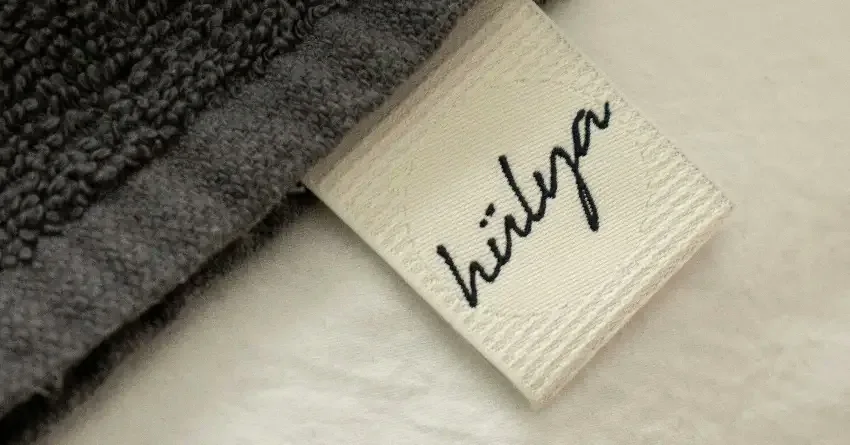
When we consult for new brands, we utilize the “blind touch test.” I hand a client a garment with a printed label and one with a woven label. The reaction is immediate. Woven labels communicate weight and permanence. I can feel the physical texture of the thread rising above the background fabric. This tactile depth instantly signals “luxury” to a customer, justifying a higher price point.
However, density defines the experience. We specifically recommend custom damask labels using 100 denier (100D) thread. When we tested lower-density 50D threads, the labels felt flimsy and cheap. A high-density woven label sits flatter when folded and feels substantial between your fingers. In contrast, printed labels feel smooth like a ribbon—great for comfort, but they lack that premium “thud.”
🧠 Expert Take: High-density (100D) damask weaves minimize the “scratchiness” often associated with cheaper woven tags.
Winner: Woven Labels (for branding impact)
2. Design Fidelity (Pixelation vs. Print Precision)
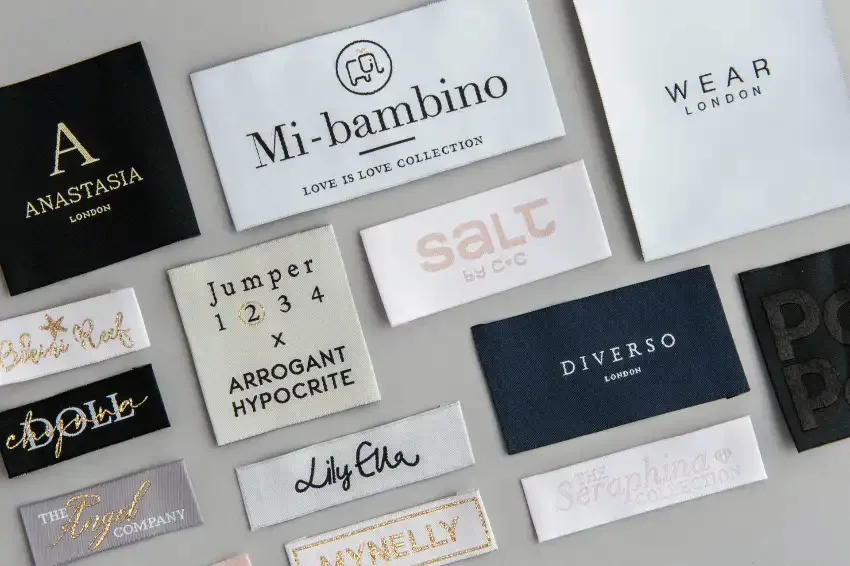
Manufacturing reality hits hard here. Woven labels are essentially low-resolution pixel art. The loom cannot weave a gradient or a photo-realistic shadow.
In our production runs, satin printed labels vs woven offer vastly different results for small text. When we attempted to weave a multi-line care instruction block into a 2cm tag, the letters blurred together. The “loom resolution” simply couldn’t handle the thin strokes.
If your design relies on gradients, shadows, or text smaller than 8pt, I must use printed labels. They capture infinite detail. For woven labels, I always force clients to simplify artwork during file prep: remove gradients and thicken lines to ensure the thread catches the light correctly.
🚀 Actionable Insight: Use woven for the main logo neck tag, but switch to printed for the side-seam care label where legibility is legal compliance.
Winner: Printed Labels (for complex art & care data)
3. Durability: Fade vs. Fray + Garment Care Reality
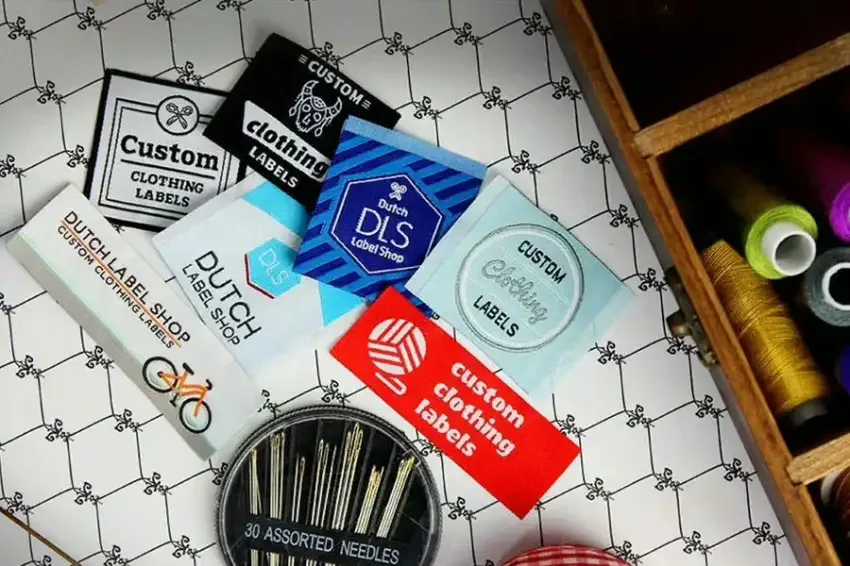
We judge durability by what happens after the product leaves our warehouse. I have washed printed labels over 50+ washes in hot water. Eventually, the ink cracks or fades, especially on satin ribbons. The care instructions often become unreadable after a year of heavy use.
Woven labels are yarn-dyed, meaning the thread itself is colored. They will never fade. However, their failure point is mechanical. If we don’t apply the correct ultrasonic cut or “heat seal” to the edges, a woven label will fray and unravel into a mess of loose threads.
For brands requiring documented longevity (like workwear), we often reference AATCC colorfastness standards to verify the ink curing process.
⚠️ Safety First: Always request an “Ultrasonic Cut” for woven labels. Standard hot knife cutting leaves sharp corners that scratch skin.
Winner: Woven Labels (for lifespan)
4. Comfort + Placement (When to Use Heat Transfer)
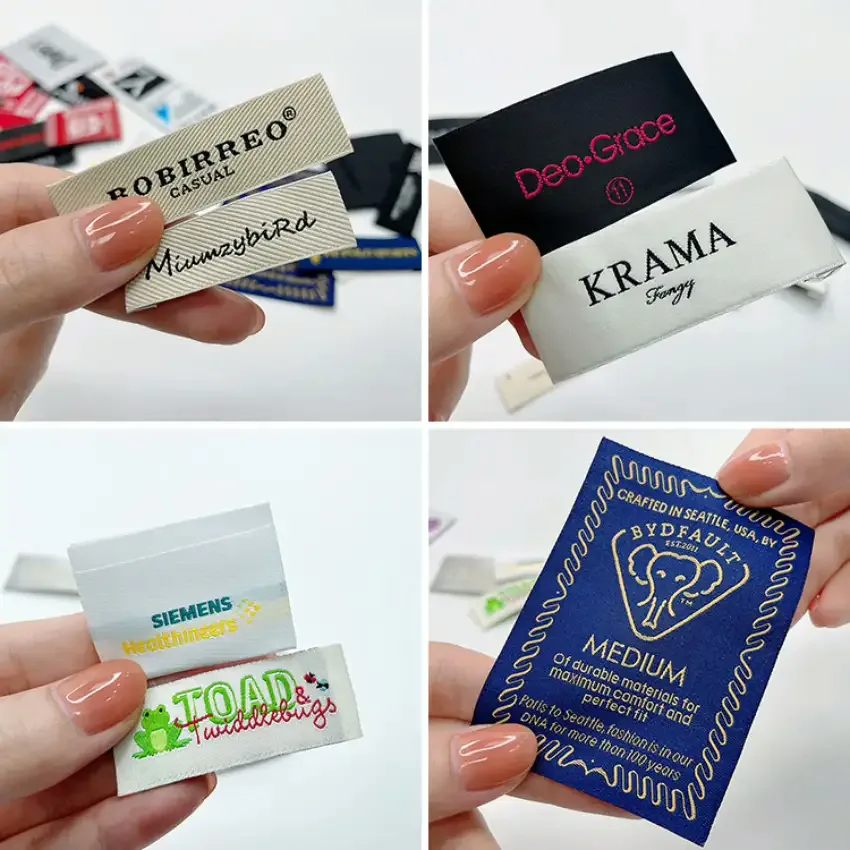
The “itch factor” is the number one complaint in customer returns. Woven labels, due to their thickness and sealed edges, can irritate the neck if sewn carelessly into a lightweight tee.
For gym clothing manufacturers and activewear, we often skip both options and use heat transfer labels. I found that during high-friction activities (like running or lifting), even a soft satin printed label can feel like a nuisance. Heat transfers fuse directly into the fabric, eliminating bulk entirely.
However, for a heavyweight hoodie or a structured jacket, a woven label at the neckline is standard. The heavier GSM fabric buffers the skin from the label’s edge. For baby clothes manufacturers, we strictly use soft satin printed labels or heat transfers to protect sensitive skin.
⚡ Power Move: Combine a woven neck label (for branding) with a tear-away tag so the customer can remove the itch but keep the brand vibe.
Winner: Heat Transfer Labels (for comfort)
5. Cost, MOQ & Scaling Economics
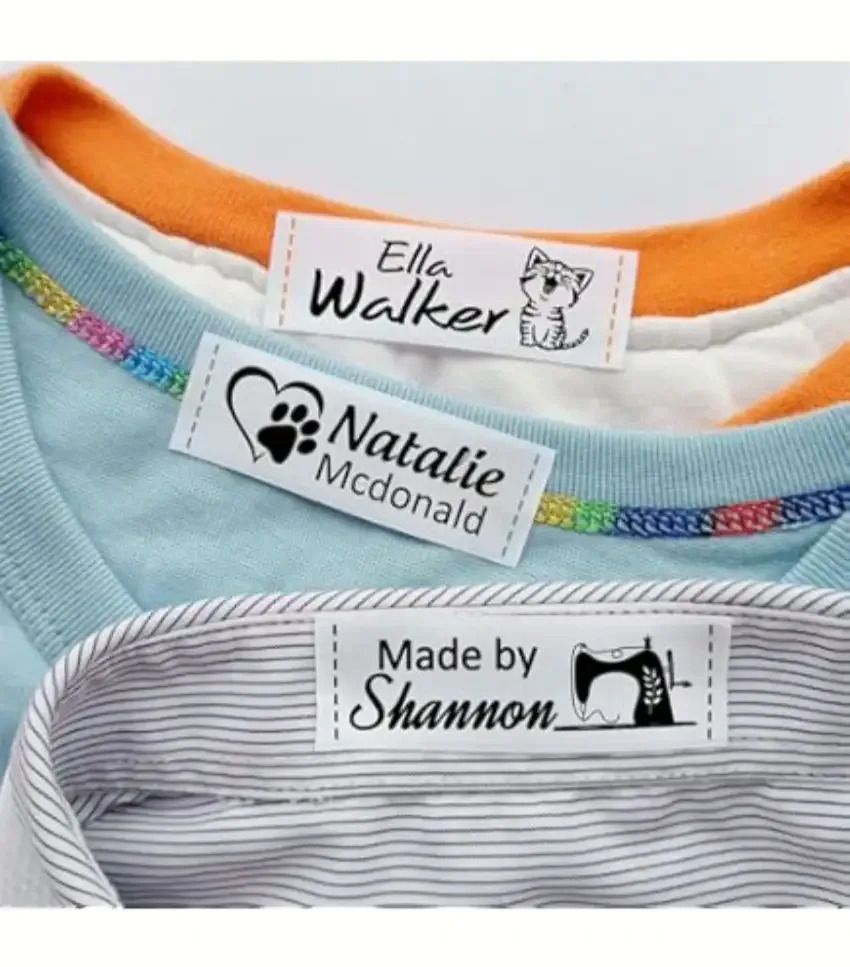
The cost of woven labels vs printed changes depending on your volume. Woven labels require a physical loom setup. We have to create a specific mold/program for the weave, which drives up the initial sampling cost. If you are ordering 50 units, the cost per label is high.
Printed labels are digital and rapid. We can run a small batch for a T-shirt manufacturer order with almost zero setup cost.
However, the math flips at scale. Once we cross the 500-unit threshold, the loom setup cost is amortized, and woven labels become incredibly cost-effective. For clothing suppliers for small business, we recommend starting with printed labels to keep cash flow healthy, then upgrading to woven as you scale. Note that scaling usually requires sustainable materials, so check sustainable clothing manufacturers for eco-friendly ink and thread options.
Winner: Printed (Startups) / Woven (Scaling Brands)
Woven Labels
The Luxury Standard. Essential for branding that must outlast the garment, but physically limited by the Jacquard loom.
- Premium Weight: Instantly boosts perceived value. We found buyers accept higher price points simply due to the tactile density, a crucial factor for UK clothing manufacturing positioning.
- Permanent Color: The thread is the color. We observed zero fading even after 50+ heavy wash cycles.
- Con: Resolution Limits: Gradients fail. We saw complex logos turn into illegible pixelated blobs during testing.
- Con: The “Itch” Factor: Standard “heat cut” edges felt sharp and scratched our necks. We recommend ultrasonic cutting to fix this.
Printed Labels
The Information Specialist. Lacks the “thud” of a woven tag but dominates for complex data and comfort.
- Infinite Detail: We captured photo-realistic gradients and tiny 6pt legal text that woven looms physically cannot produce.
- Invisible Feel: Satin options were non-intrusive during our activewear fit tests.
- Con: Durability Cap: Ink eventually cracked and faded in our long-term laundry stress tests.
- Con: “Sporty” Aesthetic: Lacks depth. We found these lowered the premium feel of T-shirt manufacturers in Australia aiming for luxury status.
⚠️ Common Failure Modes:
- Woven: Frayed edges (poor cutting) or “jump stitches” connecting letters on the back.
- Printed: Ink cracking when fabric stretches or blurred micro-text.
People Also Ask About Woven vs Printed Labels
1. Which label type is right for my brand?
Choose Woven if you are building a premium streetwear or boutique line; the textured thread instantly signals luxury and works best for bold, simple logos. Choose Printed if you require legible care instructions, complex gradients, or softness for kidswear. Choose Heat Transfer strictly for performance activewear where zero bulk and zero itch are critical for the athlete’s comfort. 🚀 Actionable Insight: For the highest brand equity, use a Hybrid Approach: Place a premium Woven Label at the neck for the “luxury thud” and a soft Printed Label on the inner side seam for legal compliance and comfort.
2. How do I match the label to my business stage?
We recommend aligning your label choice with your specific growth phase and customer expectation: · Emerging Designers: Use woven neck tags to justify a higher price point on your first drop. · E-commerce Sellers: Prioritize legibility on printed labels to optimize brand perception in product zoom photos. · Sustainability Brands: Request OEKO-TEX documentation for printed inks to validate your eco-claims. · Product Managers: Standardize label sizes across SKUs to streamline the clothing suppliers for small business sourcing process.
3. How does labeling fit into the manufacturing workflow?
Labeling is the final step in a complete Private Label system, not an afterthought. We integrate labeling directly into the Cut and Sew process—labeling the fabric before final assembly—to mitigate the risk of “generic” goods associated with dropshipping. This “Concept-to-Doorstep” approach ensures your brand identity is woven into the garment’s DNA from the start.
Ready to start your production run? Start Your Sample Request Here.