| Metric | Detail |
|---|---|
| 14 days | Approved mockup to dispatch |
| 100% | Cartons landed before the retreat opened |
| 0 | Critical defects; majors within AQL 2.5 |
These figures come from the project’s dispatch log and final inspection report.
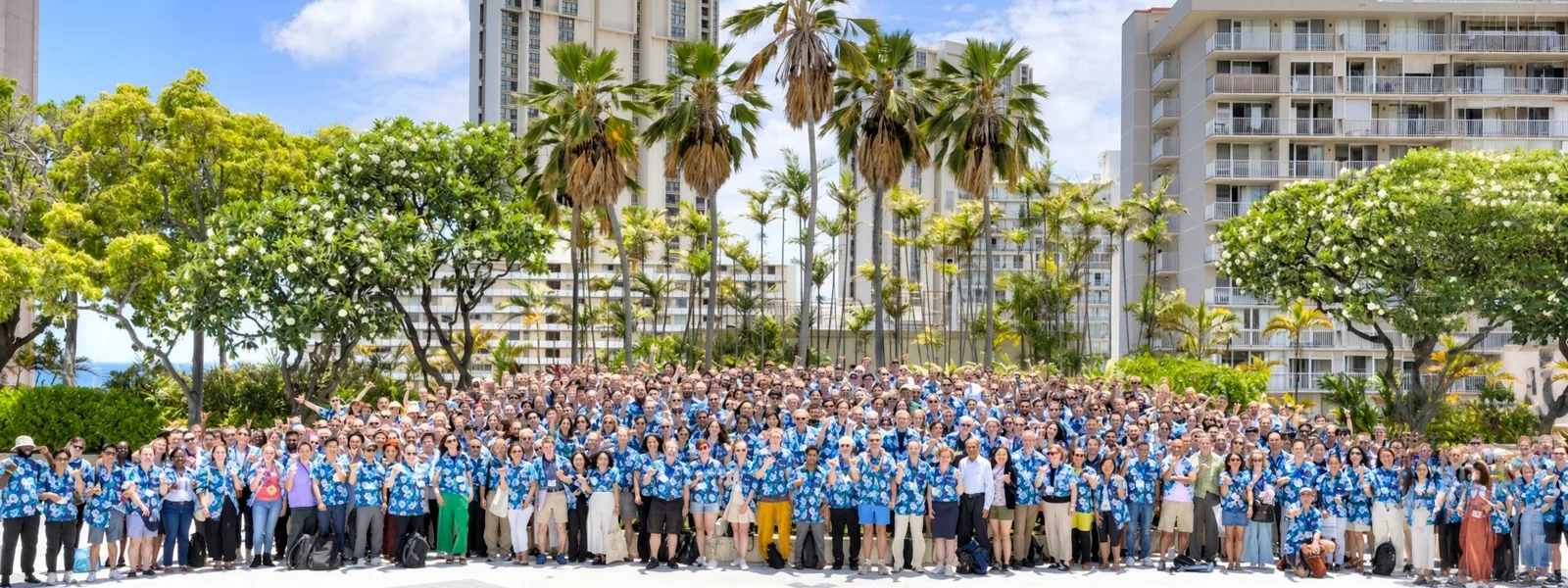
Lumina Group planned an executive retreat around a date the venue had already fixed. The apparel belonged to the programme: custom aloha shirts the leadership team would wear on site, in photographs, and at the sessions between.
Savannah O’Connor, the company’s Event Sourcing Lead, brought the brief with a ten-to-twenty-one-day window. She had ruled out treating the retreat as a normal production job, and she had ruled out the other shortcut — cheap blanks with a logo pressed on.
What follows covers the constraints the brief set, the sequence built around them, and what reached the venue.
At a Glance
| Item | Detail |
|---|---|
| Company | Lumina Group, Canada |
| The event | An executive retreat with a fixed in-hands date |
| The range | Custom aloha shirts, XS to 4XL |
| Scope | In-stock woven shirting, full-print, embroidery, virtual sampling, dedicated sewing lines, packout and air freight |
| The goal | Leadership-grade clothing on site inside the brief |
The Challenge
Six problems sat on one short calendar:
- The calendar set by the venue. The retreat drove the schedule, not the factory: artwork approvals, venue changes and travel plans all moved around it, and none could push the in-hands date.
- Lead time that could not be absorbed. Every pre-production stage adds days, and the brief could not hold all of them at once.
- Long quoted windows and rush surcharges. Many suppliers quote a slower calendar for custom-printed shirts; reaching an event deadline often means paying a surcharge the budget had not planned for.
- Generic blanks that would photograph wrong. Give-away merchandise reads as merchandise: shallow hand-feel, a flat silhouette and an applied mark that looks pressed on in a leadership photo.
- Sizing still in flux. Attendees ranged from XS to 4XL across varied body types, and the breakdown could shift up to five days before the retreat. The first grid was missing 2XL and 3XL.
- Deliveries to a moving venue. The retreat moved from a resort to a hotel and then to a multi-stop destination, so the order had more than one address to survive.
What they had in common. None of the six was a sewing problem. Each was a decision settled before cloth was cut — and each stayed cheap only if settled early.
What each stage would have added:
| Stage | Typical addition |
|---|---|
| Custom dyeing | 5–7 days |
| Courier sample round | 3–4 days |
| Artwork cleanup and cure | 2–3 days |
| Customs clearance | 3–5 days of uncertainty |
No single addition is unusual. The compression came from needing all of them inside three weeks, with the venue still free to change.
Weighing Three Fabric Paths
The first decision on an order this fast is where the shirt fabric comes from, because it fixes both lead time and how different the finished garment can look:
- Pre-stocked blanks. Quick to cut and cheap to replace, but the stock shirt and stock print give the event the same garment every other company hands out.
- Custom dyed or fully cut-to-order. The most distinctive path, and the slowest — a lab-dip and a dye lot spend days the calendar had already committed.
- Hybrid, on in-stock shirting. Woven fabric bought ready-made and checked before cutting, with the difference carried by an all-over print and an embroidered logo instead of a bespoke weave.
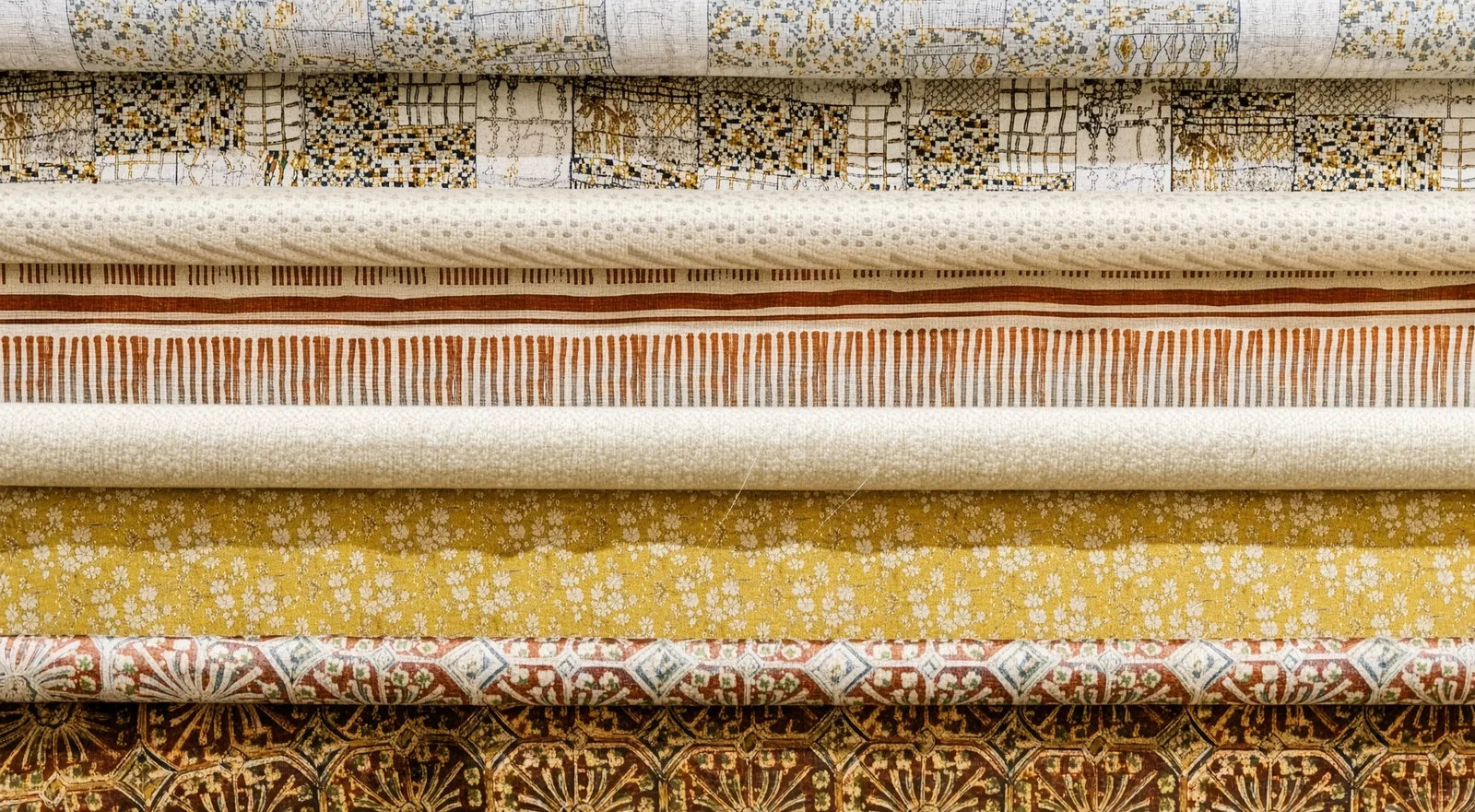
Lumina took the third path: fabric already in stock, with the pattern and the logo carrying the difference. That protected the hand-feel a leadership team would notice and removed the development stage, without falling back to a blank anyone could buy.
Our Solution
Nothing about the shirts was simplified to reach the deadline. The work went into settling the decisions that could not wait, then sequencing the rest backwards:
- Sampling settled in software first. CLO 3D renders let Savannah’s team approve fit and logo placement in hours rather than wait for a parcel to arrive. Hand-feel was confirmed on a physical piece once the digital sample had settled the geometry.
- Sequenced backwards, with an owner on every step. Production was mapped into fourteen steps, each with a deadline and a named owner. With a single mockup approval and a locked size grid, a late decision moved the plan, never the retreat.
- Bulk inside the standard lead time. Once the pre-production sample was confirmed, bulk ran inside the standard seven-to-fifteen working-day window. Dispatch followed the terms agreed in the quote, not an estimate.
- Progress visible, problems flagged early. In-process photos were sent at every stage, and cut-offs were named in the quote. The team could watch the shirts advance, and a late approval surfaced while the plan could still absorb it.
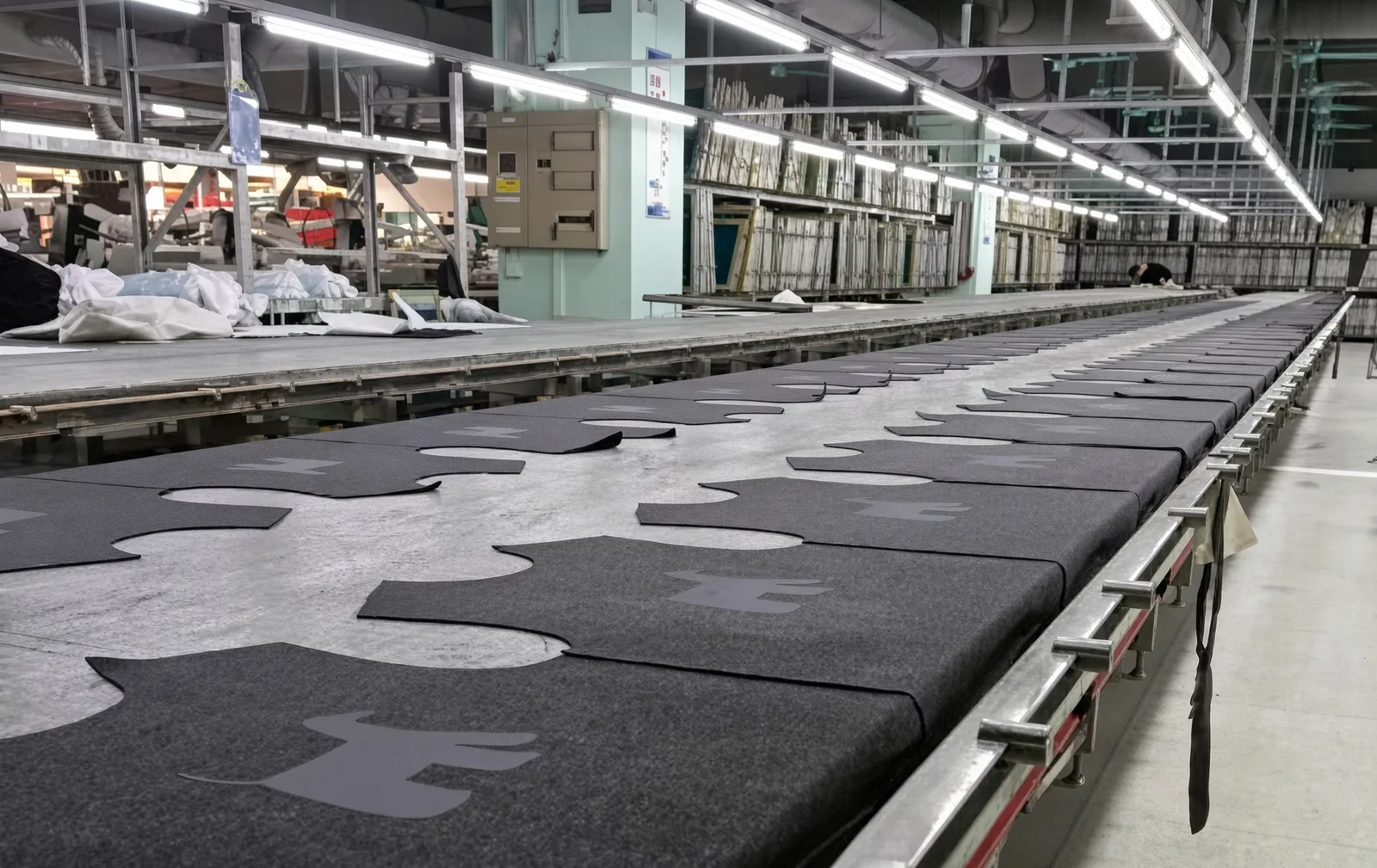
- Lines booked before the fabric landed. Two modular cut-and-sew lines were reserved, so work began on arrival rather than in a queue; they ran 48 hours of stitching across three shifts.
- Spares for the sizes that move. An extra five percent was produced in XL and 2XL, so a replacement never came out of another attendee’s allocation.
- Client-side approvals. Savannah’s team committed to a twenty-four-hour sign-off, with calls scheduled around her time zone.
“We don’t wait for the order to hit the floor. We book the line, the cutter, and the embellishment window in advance. That reservation buys speed without overtime chaos.”
— Production Scheduler
Print and Embroidery Chosen for the Weather
The pattern and the logo were decided separately, both against the factory’s climate rather than a studio sample:
- Full-print went on first. Artwork was printed onto the roll, so the repeat landed the same way on every shirt and the hand-feel stayed in the fabric rather than in a film on top of it.
- Placed plastisol was rejected for the logo. Plastisol screen printing reads sharp on a flat sample, but it cures slowly in humid air. Curing slowly inside a sewing window with no spare hours is a risk the deadline could not carry.
- Embroidery carried the logo instead. Multi-head machines ran the tone-on-tone mark at 1,200 stitches per head per minute, giving the shirt a finish that reads as corporate issue rather than promotional merchandise.
“In an 80% humidity week, a three-colour plastisol print added six hours of cure time per run. We couldn’t risk that on a 48-hour sewing window.”
— Senior Embellishment Technician
One decoration method per shirt is the trade-off that made the timeline work. Events needing five placements and three locations would need a different calendar — the options are set out under customization options.
Artwork That Clears Pre-Press
Rush orders usually lose their first day at artwork, not at sewing. What a file contains decides how long pre-press takes:
- Press files prepared for both processes. The full-print file needs its repeat and placement set; the embroidered logo needs outlined fonts and vector paths rather than a low-resolution raster lifted from a website.
- Simplified stitch paths for embroidery. Direction and density agreed before the sample, so machine time is estimated rather than discovered.
- Colour reference and placement size fixed. The size on the mockup is the size on the bulk goods, and the reference is a physical standard rather than a name in an email.
Clean files clear pre-press in hours. JPEG logos with unoutlined fonts can hold an order for three days while they are traced, which is most of the slack in three weeks.
Packout for the Venue
Packaging is the last production step and the first thing the event team meets. Every shirt was prepared for immediate distribution:
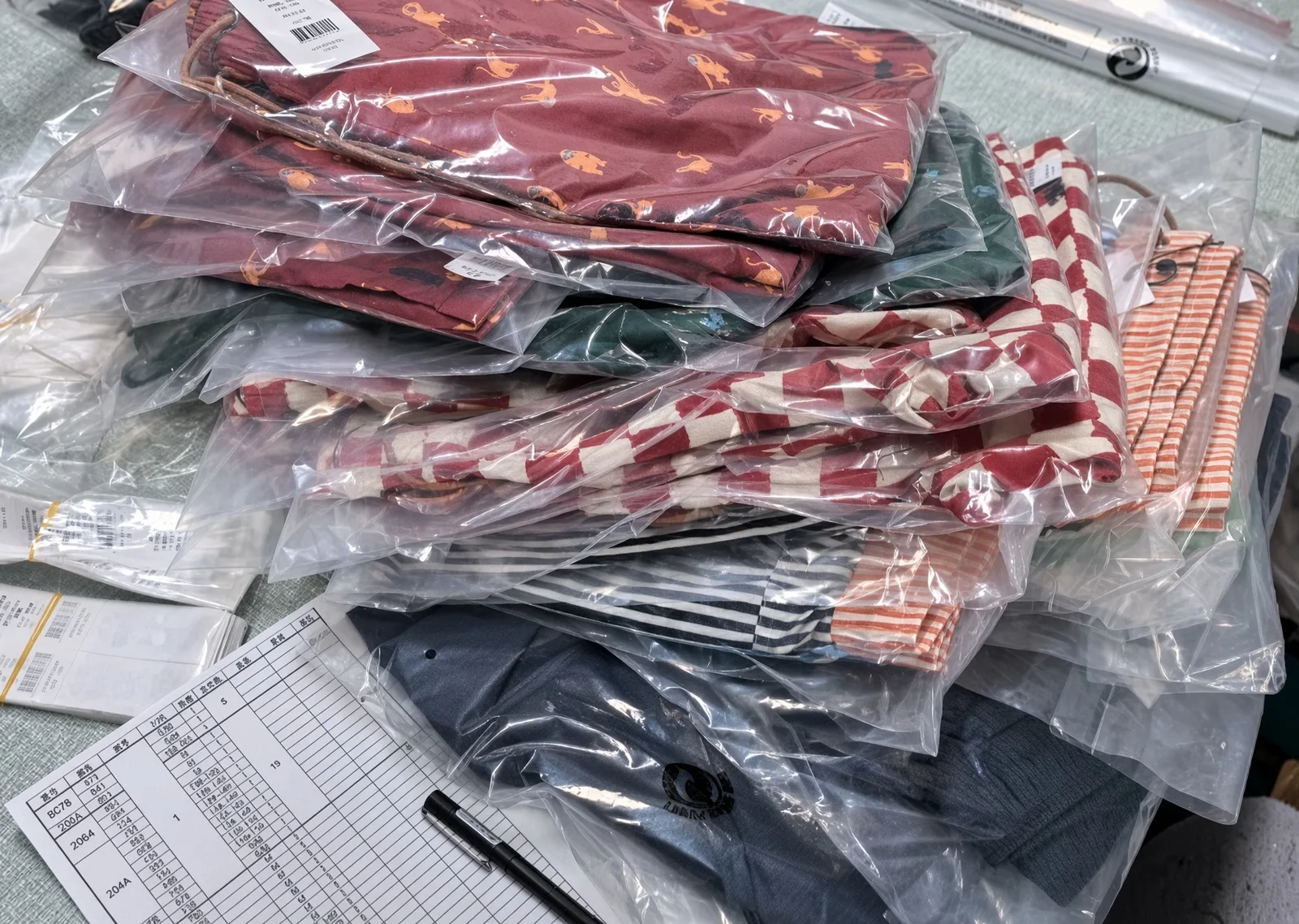
- Garments grouped by size band. S/M, L/XL and 2XL/3XL/4XL bundles turned an hour of onsite sorting into a ten-minute setup at the distribution table.
- Each piece carries a woven neck label and a printed hang tag. Those private-label details make the same shirt read as company issue rather than as merchandise handed out at a conference.
- Every carton holds a master packing list. A coordinator can check a box against the list without opening each bundle to count.
- Welcome-kit options for the leadership pieces. Tissue wrap and a branded belly band for the garments presented directly, with the remaining cartons labelled for the venue’s receiving desk.
Results
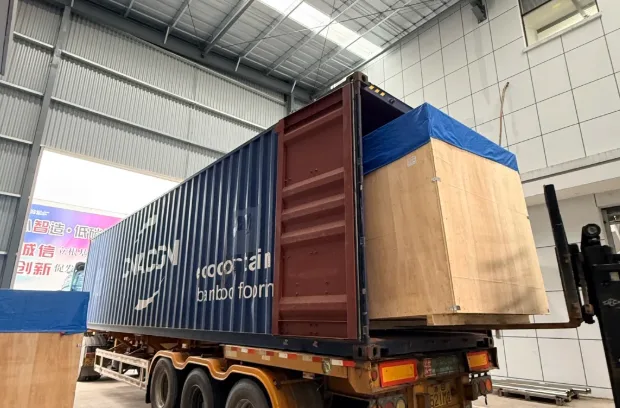
- Delivered on schedule. The order left on day fourteen of the brief, and every carton reached the event address ahead of the retreat.
- Quality confirmed before packout. Final inspection ran to AQL 2.5 and found no critical defects, with checks at cutting, sewing and embellishment catching issues while bundles were still open.
- No repair work on the first night. Counts matched the packing list, bundles opened cleanly, and the distribution table was ready before attendees arrived.
In the Client’s Words
“Our company annual retreat date was locked months in advance, and we only had a short window for finished custom aloha shirts. Other factories quoted lead-times that would not work for us. JaceApparel finished production inside the window we needed, shared progress photos during manufacturing, and the whole shipment arrived ahead of our event. The embroidered-logo details held up great after multiple washes.”
— Savannah O’Connor, Event Sourcing Lead, Lumina Group
Shipping by Risk, Not Sticker Price
Express parcel and a chartered uplift solve different problems, and the gap widens with volume:
| Mode | Handoff risk | Best use |
|---|---|---|
| DHL/FedEx Express | Medium | Small, time-certain orders |
| Dedicated air charter | Low | Bulk orders on a fixed date; Q3/Q4 retreat peaks |
The comparison covers more than 250 expedited corporate orders in our ERP, reviewed with the production scheduler. It is observational rather than a controlled trial and shows our orders only.
Through the Q3/Q4 retreat season, the charter reduced handoff risk. Express stayed competitive on small kits but met more customs and documentation exceptions on bulk orders — the point at which a missed uplift stops being an inconvenience.
Whichever mode is booked, dispatch follows the terms agreed at quote stage, the import file is checked against US Customs and Border Protection import guidance, and the route is planned as part of clothing logistics.
Who This Order Model Suits
It suits a company dressing a team for one fixed date:
- Outfits a group for a date that will not shift
- Wants leadership-facing quality rather than give-away merchandise
- Covers a wide size range, with the breakdown still settling close to the event
- Can approve fit and artwork against a digital sample within a day
What Your Brand Gets
- Fabric chosen to avoid bespoke-weave lead times — the aloha shirt programme behind it.
- Stitching holds through washing where a pressed mark does not — the embroidery route.
- Cartons packed for distribution rather than storage, the packaging habit that keeps a venue calm.
Equipping a Team for a Fixed Event Date
Orders like this are decided in the brief, not on the floor:
- Put the in-hands date and delivery address in the first message, and say how firmly the venue is set.
- Send the size grid with the brief, and name the day after which it stops moving.
- Give print-ready artwork with vector logos — the logo sizing guide covers what pre-press needs.
- Check which decoration methods the factory can cure in the weather expected that week.
- Settle what a late size swap is covered by before production, not after.
- Decide who signs a sample off, and how quickly they can do it.
- Confirm which shipping mode the vendor recommends for your volume and deadline, then ask why.
If the date is already fixed, send the event details through the contact page and we will confirm what the window can hold.