
| Metric | Detail |
|---|---|
| 7 of 10 | Factories that declined the sketches |
| 28% | Sketches taken through to a sample |
| 1,200 | Pieces needed before new tooling could be made |
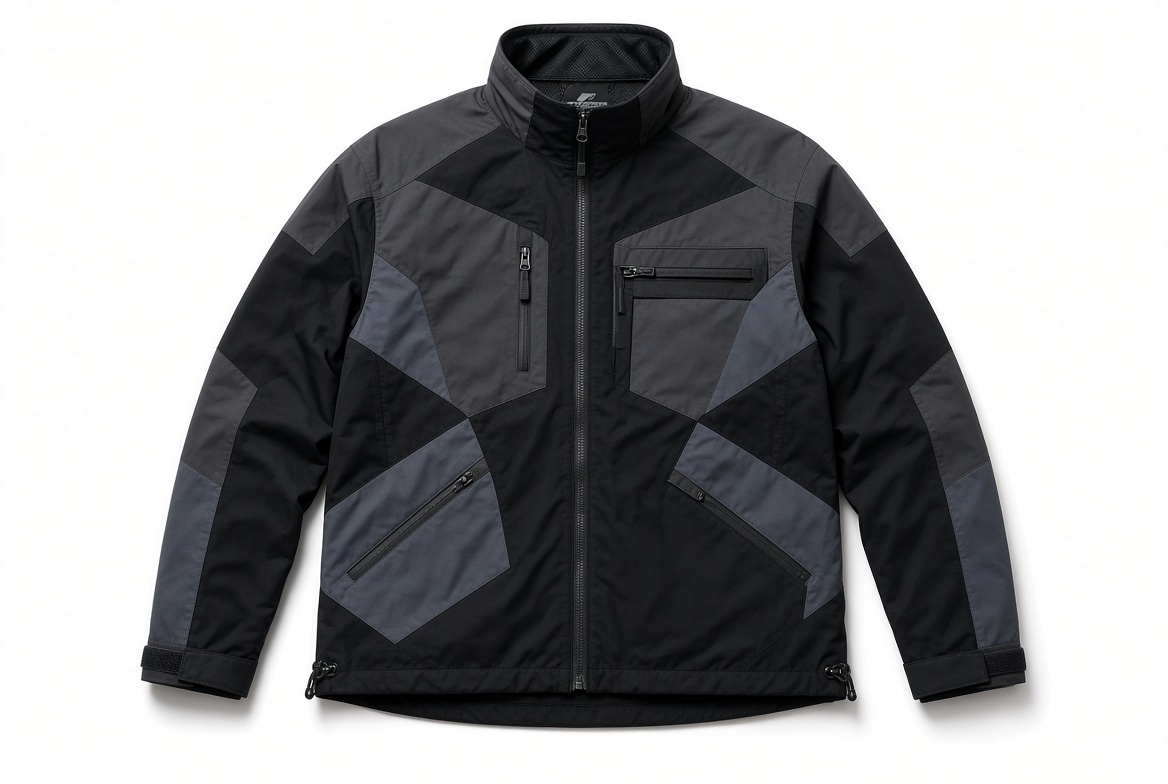
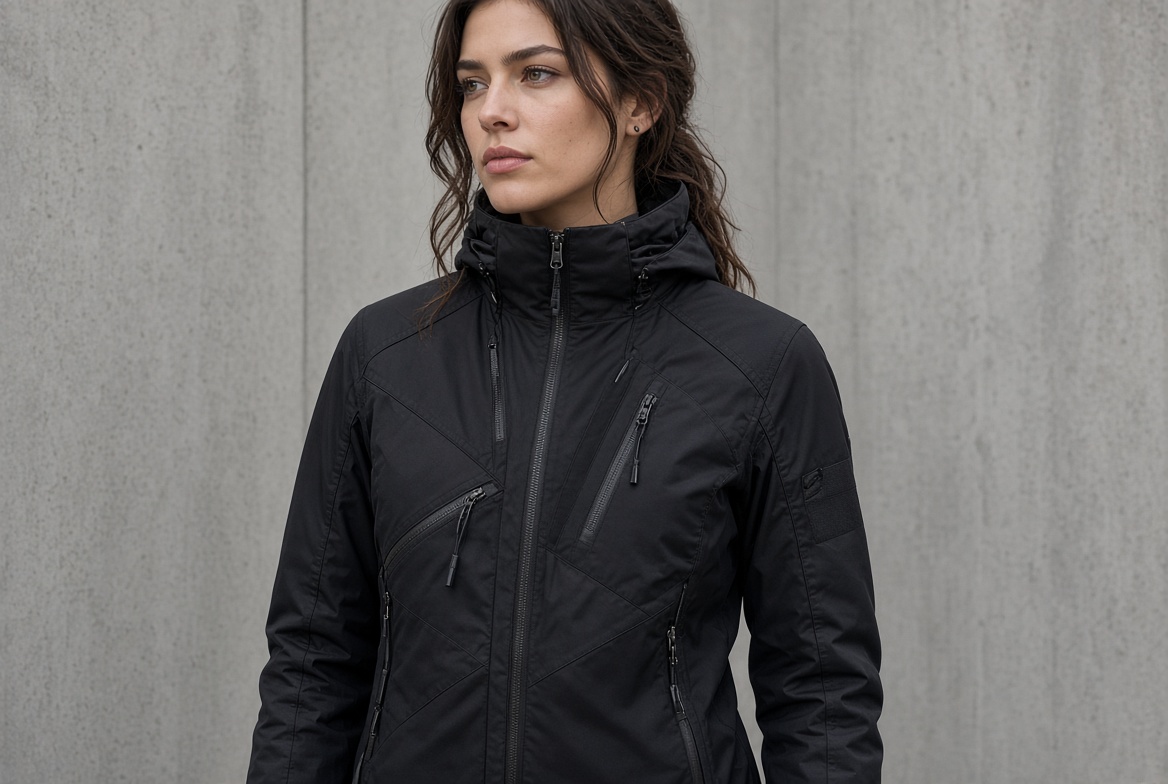
Pièces Uniques is a French avant-garde label built on sculptural silhouettes: garments cut from many small, precisely placed panels, finished with hardware made for that design alone. Edmond Luu, the founder and creative director, draws the collection by hand.
That is also the entire technical brief. The label had no pattern room and no technical team, so each style reached a factory as a stack of sketches.
Complex panelling and one-off components ask more of a drawing than a drawing can give — a factory has to know the panel geometry, the order the seams go in, and the tolerance each fitting has to hold before it cuts anything. Of the ten factories Pièces Uniques approached, seven declined the work.
What follows covers the difficulties it met, the changes that answered them, and how the label’s calendar holds today.
At a Glance
| Item | Detail |
|---|---|
| Brand | Pièces Uniques |
| Founder | Edmond Luu, Founder & Creative Director |
| Based in | France |
| The collection | Avant-garde ready-to-wear: sculptural panelling and bespoke hardware |
| What we handled | Tech packs, panel and component translation, tooling minimums, staged QC, scheduling |
| The goal | Faithful construction, delivered against the drop and pop-up calendar |
The Challenge
Six problems met on the same order:
- No technical team. Each design existed only as a sketch, and there was no pack a factory could build to.
- Construction the floor would not take on. Multi-panel assembly built around fully bespoke components pushed the styles past what a standard line could hold to tolerance.
- Dates that could not move. The business runs on limited drops and in-person pop-ups, so the delivery date was set by the calendar rather than the factory.
- Sampling that ran long. Sample rounds stretched across repeated revisions while panel and fitting faults kept accruing.
- A tooling minimum out of reach. Custom hardware started at 1,200 pieces — enough to rule out prototyping a new signature detail in a short run.
- Inspection the founder did himself. Finished pieces were checked by hand, one at a time, by the label’s small team.
The common thread. Each of the six is a decision made before the first cut, not a fault found on the line — and an open decision surfaces late, as a rejected sample or a date already announced.
The figures below are the label’s own tracking, recorded before the partnership and published with its permission:
| Measure | Before partnering |
|---|---|
| Sketches that reached sampling | 28% |
| Sample lead time | 48–65 days, across 5–7 revision cycles |
| Panel and hardware defects | 21% |
| Orders shipped late | 60%, across 3 missed launch dates |
| Custom hardware minimum | 1,200 pieces |
| Quality inspection | 100% manual, in house |
Most concepts never left the sketchbook, and the ones that did came back for revision again and again. The late rate is the figure that hurt most: a drop or a pop-up carries a date printed on it, and three of them were missed.
Our Solution
Nothing in the silhouette was simplified to make it easier to sew. The work went into translation, validation and scheduling, so the construction could reach the floor unchanged:
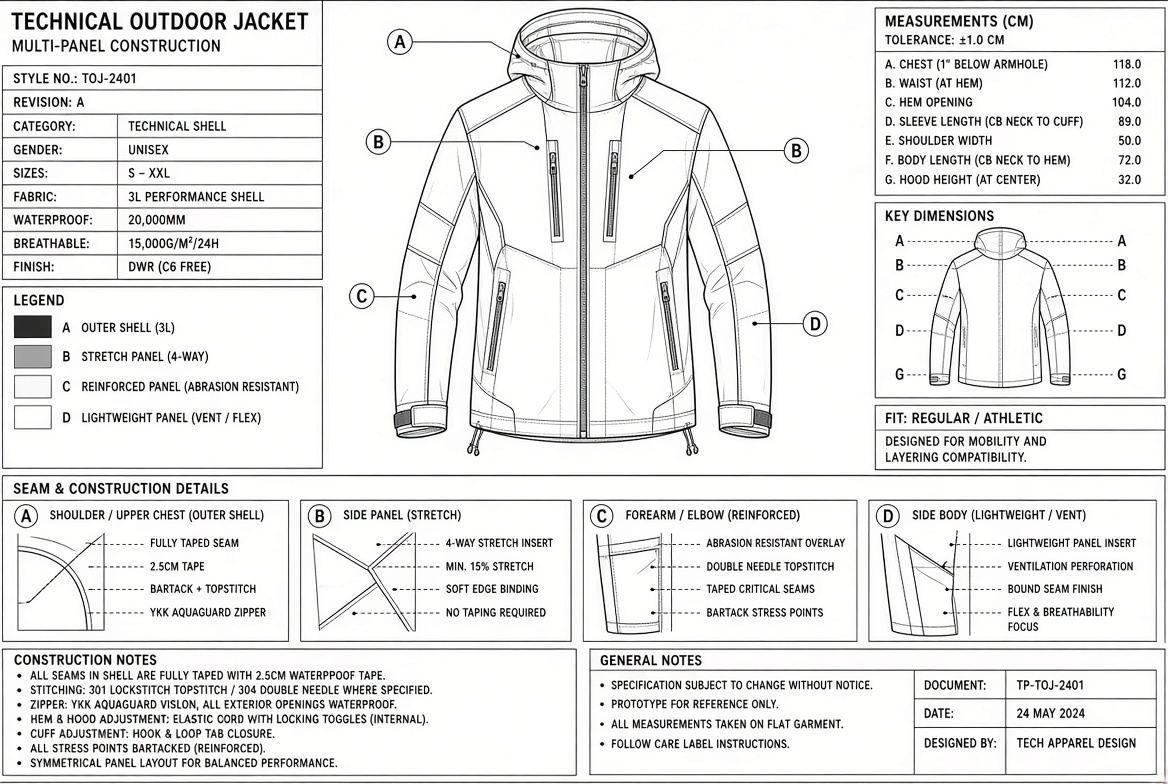
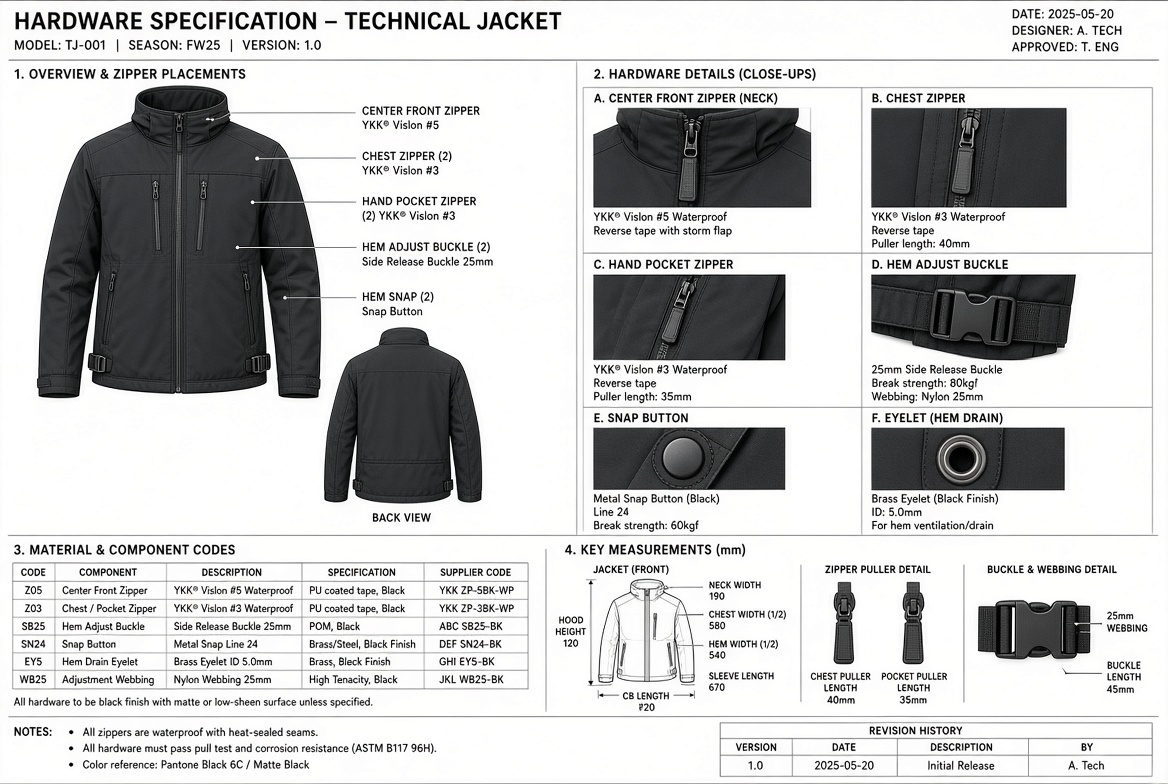
- Tech packs built from the sketches. Our technical designers worked through the drawings with Edmond, capturing panel geometry, seam order, fit notes, component specification and grading. The finished pack carried annotated construction diagrams, hardware callouts and tolerance points, so a factory built to a document rather than reading a drawing.
- Panels and components validated against the artwork. Each multi-panel assembly and bespoke fitting went through technical review, and the assembly sequence and materials were chosen to reproduce the design on a production line without flattening the sculptural form.
- Production slots tied to the launch calendar. Capacity was held against the label’s drop and pop-up dates, with buffer built in for sample revisions and inspection, rather than booking the run as a generic job.
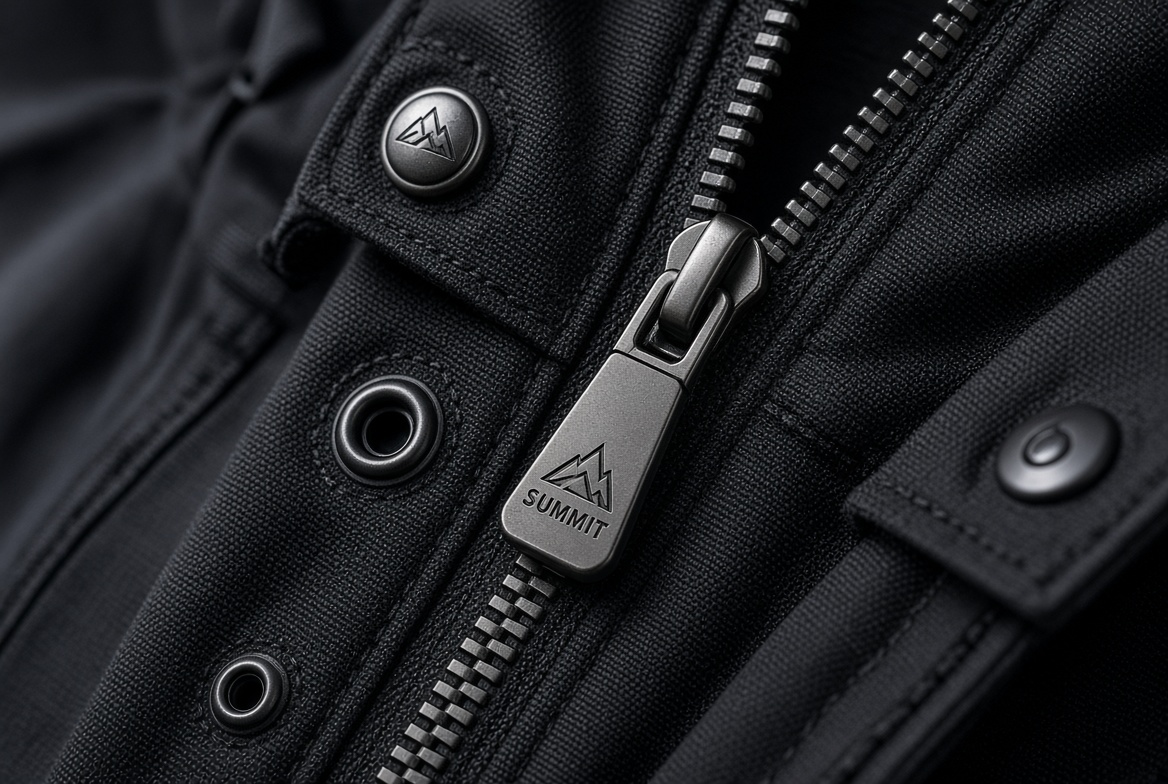
- Lower tooling minimums, tested before bulk. With our hardware fabricators, the 1,200-piece barrier came down for new tooling, and assemblies ran through pre-sample cross-validation so fit, alignment and structural faults surfaced at sampling rather than after bulk.
- Quality control in stages. Continuous in-house inspection became checkpoints at pattern, sample, pre-bulk and bulk, catching panel-matching and attachment faults earlier and taking the constant inspection load off the founder’s team.
Results
- High-concept designs, executed as drawn. The intent survived translation into panel geometry, seams and components, without the simplification a standard factory would have pushed for.
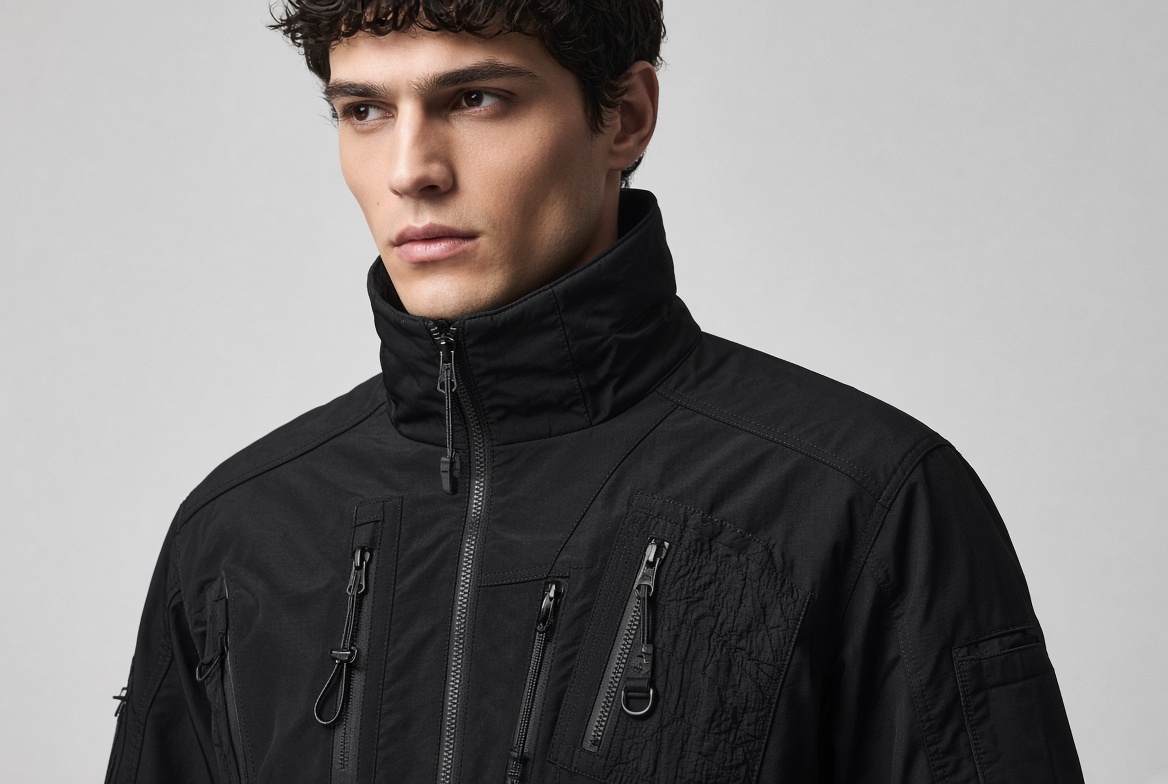
- Signature construction kept intact. Original panel layouts and the label’s bespoke hardware came through sampling and bulk unchanged.
- Goods to spec, on the dates announced. Lead times held against the fixed calendar, so pieces arrived when the label had told its customers they would.
In the Founder’s Words
“We could not bring our sculptural designs to life with standard manufacturers. The ability to turn sketches into usable tech packs and lower custom hardware MOQs let us test new ideas and keep our pop-up and drop commitments without compromising our creative vision.”
— Edmond Luu, Founder & Creative Director, Pièces Uniques
Who This Order Model Suits
This is the shape of work that fits a design ahead of its factory:
- Develops complex, panelled or sculptural garments with non-standard construction
- Builds fully bespoke hardware into the design
- Releases limited-edition drops and hosts pop-ups on launch dates that cannot slip
- Works primarily from sketches, without an in-house pattern or technical team
- Needs low-MOQ custom tooling alongside close quality control
What Your Brand Gets
- A brief a factory can build to, written from your drawings instead of a pattern room you have to hire — the start of the private-label route.
- Sampling planned backwards from your launch date, so a drop keeps the date printed on it.
- One-off hardware tooled below the usual minimum and proven before bulk, so a signature detail stays affordable at short run.
- Panel, seam and fitting faults caught at sample and re-checked through bulk, the staged control the cut-and-sew line runs on.
Briefing a Factory on a Complex Design
A heavily panelled style is quoted or declined on two things — how completely it is documented, and how early the tooling is checked:
- Start with the parts that cannot move — the cloth, the fastenings and the fit points — and write those down before anything else.
- Ask what a new component’s tooling minimum is before you design around it, not after.
- Bring the launch date to the very first conversation, so sampling is planned backwards from a fixed point.
- Say how many revision rounds you expect, and who signs a sample off once one is right.
- Decide what a rejected piece looks like before the first cut, so a fault is a rule rather than an argument.