
| Metric | Detail |
|---|---|
| 42% | Pre-order batches held up at sea |
| 25% | Chargeback rate on delayed drops |
| 31% | Arrivals with print or stitch faults |
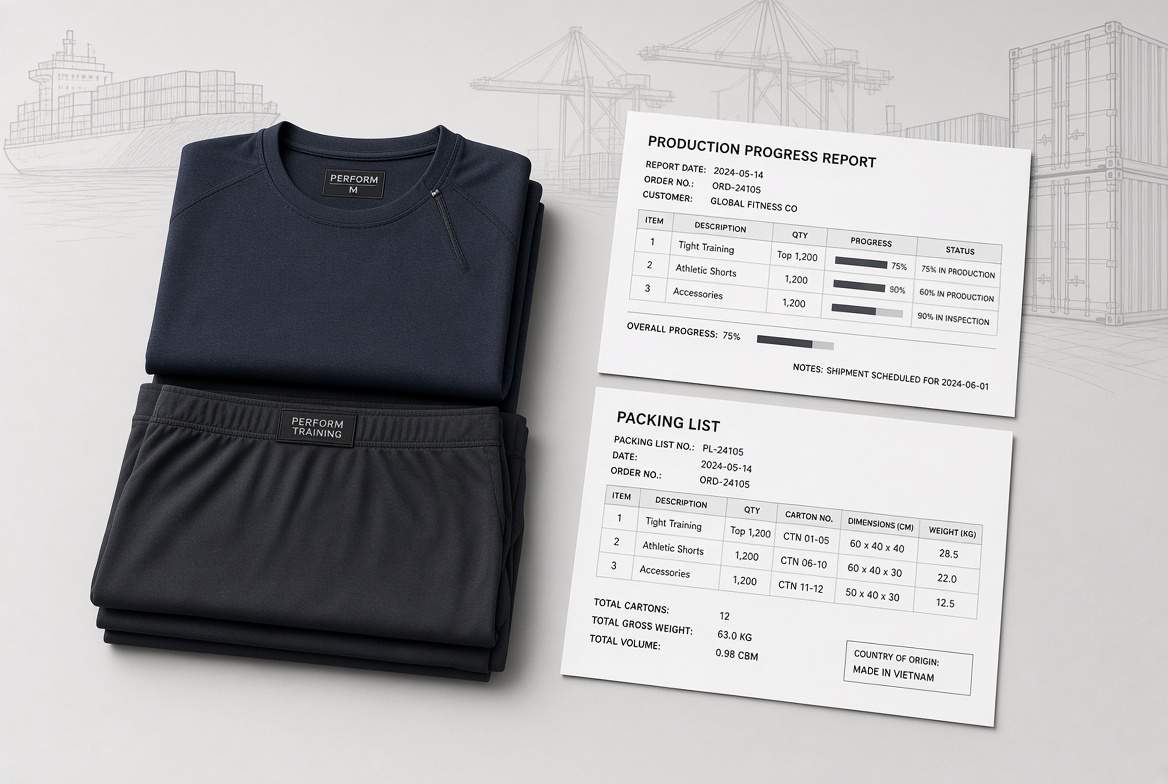
Raskol Apparel sells ahead of production: a design goes up, buyers pay before the goods exist, and the collection is promised for a date the brand has already announced. Pre-orders and limited drops are the whole model, and the date is the product.
Work was handled by makers the label never visited, and once an order left the factory no news came back until a container reached the far side of an ocean.
What follows covers the failures the calendar produced, the schedule rebuilt around them, and how each launch lands now.
At a Glance
| Item | Detail |
|---|---|
| Brand | Raskol Apparel |
| Founder | Omar Isuf, Founder & Creator |
| The range | Gym and graphic-tee lines |
| The model | Pre-orders and limited drops, freighted by sea |
| What we handled | Freight scheduling, dispatch inspection, production reporting |
| The goal | Every launch landing on schedule, in saleable condition |
The Challenge
Six problems met on the same calendar:
- Fully outsourced production. Every run sat with a third party, and the brand saw nothing past the point the order was confirmed.
- A calendar built on pre-orders and drops. Stock was sold before it existed, so each launch carried a promise customers had already paid against.
- Freight that decided the launch date. Sea was the only workable route on these margins, and an unconfirmed vessel could move a whole drop.
- Chargebacks when a date slipped. Buyers who had waited past the promised window disputed the charge, and the refund took the money and the goodwill with it.
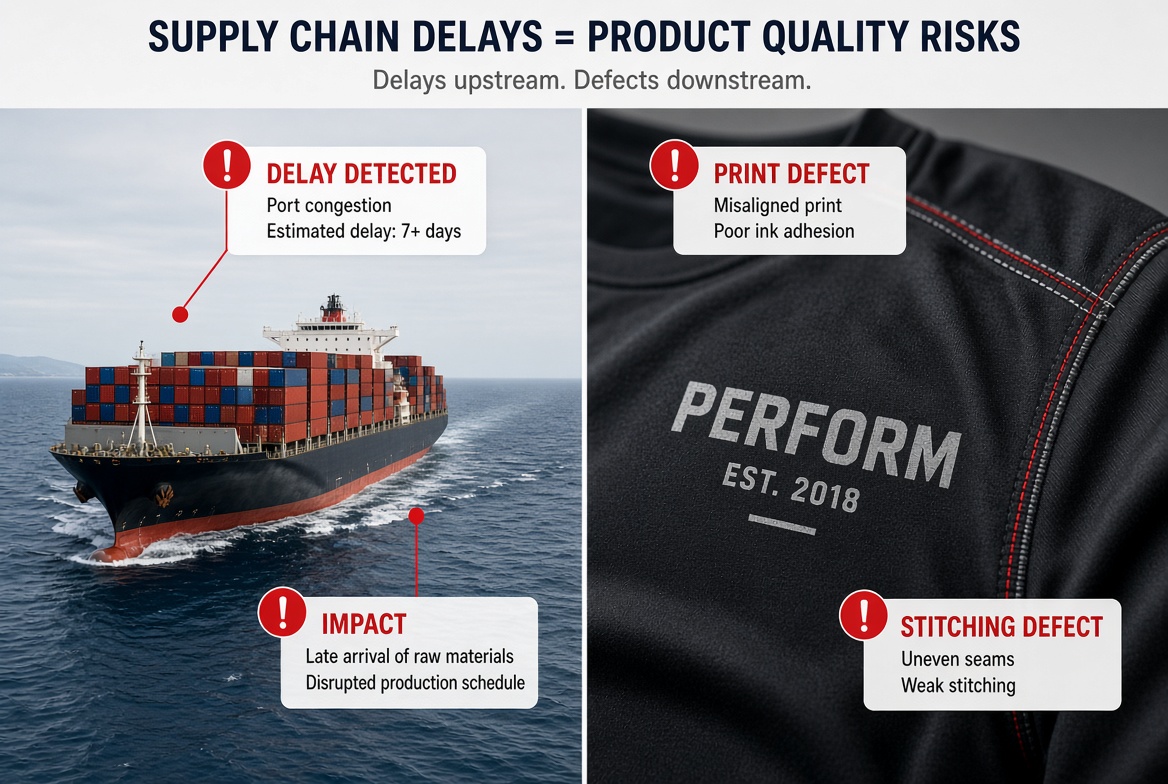
- Quality found on arrival. With nothing checked before dispatch, a print misalignment or a dropped stitch surfaced after the goods had crossed an ocean and could no longer be reworked.
- Silence between ordering and dispatch. Nothing was reported while a run was on the line, so a delay reached the brand only once it had already happened.
The common thread. Every one of the six could have been caught before the goods left the factory — and each only became visible to the brand after the money had changed hands.
The figures below are the brand’s own tracking, recorded before the partnership and shared with us for publication:
| Measure | Before partnering |
|---|---|
| Missed shipping windows on pre-ordered runs | 42% |
| Refund disputes after a missed date | 25% |
| Goods rejected at final inspection | 31% |
| Scheduled launches lost or part-filled | 2 of 5 |
| Launch slippage from late design edits | 14–21 days |
| Production milestones reported | None before dispatch |
Most drops went out later than buyers had been told to expect. The failed launches hurt most: two of the five dates that cycle reached customers as a refund rather than a parcel.
Our Solution
Nothing about the product was altered. The work went into locking the schedule, seeing the goods before they shipped, and reporting every stage in between:
- Ocean windows locked to the drop calendar. Departure slots were booked against each pre-order and limited-drop date, with the sea transit treated as a confirmed term of the schedule rather than a variable discovered after dispatch.
- Photo-supported QC before dispatch. Every run was inspected and photographed on the floor — print placement, stitch quality, labels and packing — and the report sent to the brand for sign-off while the goods were still inland, where a fault can still be fixed.
- Scheduling that absorbs a late edit. Design changes arriving inside the window were routed through defined cut-offs, so an edit moved a production step rather than the launch date.
- Milestone reporting at every phase. Updates were issued at each stage — fabric in, cutting, printing, assembly, packing — so the brand knew where an order stood without having to ask.
Results
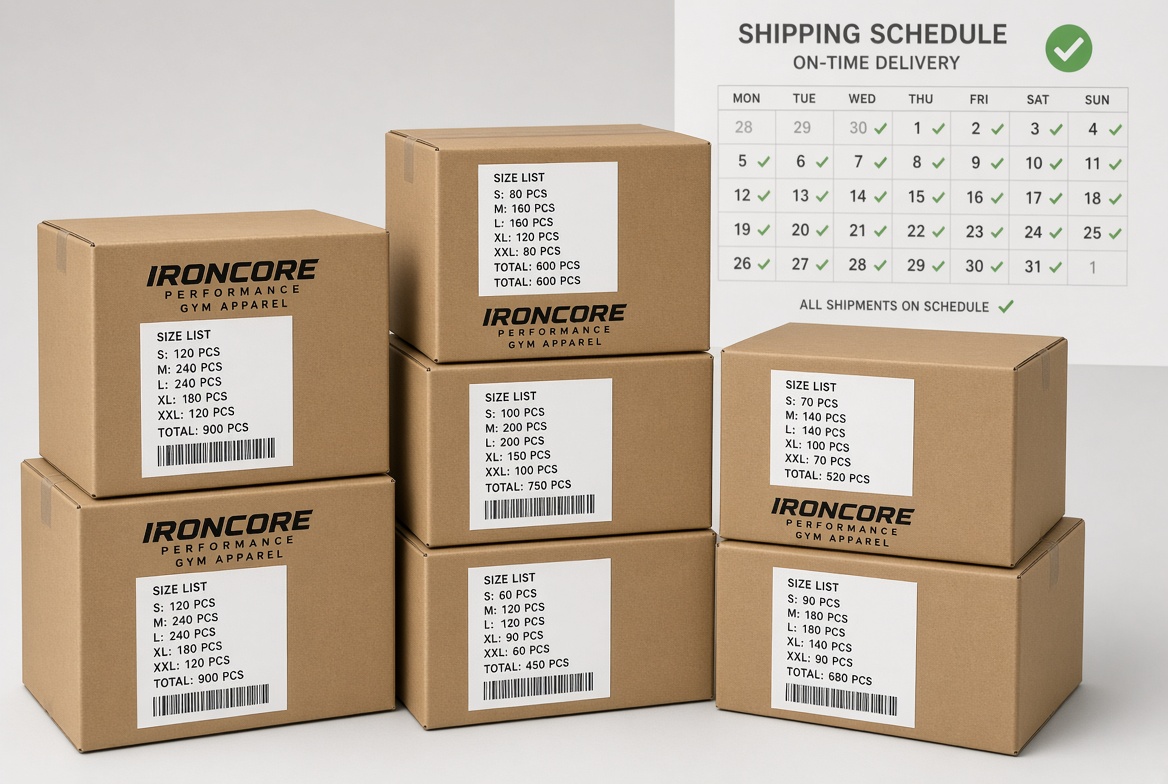
- Drops releasing as announced. The production schedule was built back from the ship’s departure, so a pre-order window closed into goods that left on time.
- Quality settled before the goods sailed. Each batch was approved at the maker, so nothing arrived to be discovered.
- Chargebacks taken out of the cycle. A date that holds and goods that match the promise leave buyers with no reason to dispute the charge — which is what protects a reputation built on drops.
Who This Order Model Suits
The match is a brand selling ahead of the goods:
- Runs pre-orders or limited drops against dates already announced to customers
- Freights by sea and needs a confirmed transit window rather than an estimate
- Needs quality proven at the factory, not discovered at the destination
- Works fully outsourced, without an in-house production or QC team
- Changes the design mid-run, once production is under way
What Your Brand Gets
- A launch date that holds once it is announced, with production sequenced back from the sailing — the gym apparel route.
- Goods inspected and photographed on the floor, so a fault surfaces before the container rather than after it.
- Print registration and stitch signed off while the run is still inland, the discipline behind the screen-printing work.
- Graphic-tee drops that absorb a late edit without slipping the date, planned the way a T-shirt run is.
- Pre-order money protected by goods that match the promise — the handling a private-label programme is built around.
Selling a Run Before It Is Made
A pre-order calendar is built before the sewing starts, so a few things are worth settling up front:
- Promise a delivery window the sailing can support, rather than the one the campaign was built around.
- Put the destination, the incoterm and the in-hand date in the brief before the artwork is finalised.
- Name who signs a batch off before it loads, and what happens to one that fails.
- Cost a second route in advance, so a missed vessel is a decision rather than a scramble.