
Sourcing the Best underwear manufacturers in Turkey requires prioritizing capability fit over vague hype. We vetted ten partners for private label underwear and wholesale lingerie based on production focus and export readiness. Turkey is a manufacturing powerhouse, with textile exports exceeding $19 billion annually according to the International Trade Administration. Use this guide to navigate MOQs and start a lingerie business without quality control surprises.
List of Top 12 Underwear Manufacturers in Turkey
| Manufacturer | Main Focus / Strength | Ideal For | Key Services / Notes | Typical MOQ & Order Style |
|---|---|---|---|---|
| Ayci Tekstil | Bra & everyday lingerie, private‑label programs. | Brands needing full bra ranges & basics. | OEM/ODM, bulk bra services, custom designs, export experience. | Flexible MOQs by style; suitable for capsule collections and repeat orders. |
| NF Seamless | Seamless underwear, sportswear, circular‑knit. | Athleisure, seamless lingerie & start‑ups. | One‑stop seamless production, pattern development, sampling, global shipping. | Works with bulk seamless runs; typical to group colors/sizes in one production lot. |
| Shapewear Wholesale | Seamless shapewear & maternity/comfort underwear. | Shapewear brands, maternity lines, online retailers. | Bulk stock & custom orders, private label, dropshipping‑friendly ranges. | Ready‑stock for small wholesale orders; higher MOQs for private‑label customization. |
| HNX UNDERWEAR | Wide women’s underwear & lingerie assortment. | Retailers wanting large female collections. | Design support, seasonal collections, plus‑size lines, export to multiple regions. | Medium MOQs per model; encourages assorted size‑packs for export orders. |
| Oulabi mir Textile | Cotton pajamas, loungewear & underwear. | Buyers needing flexible MOQs and mixed sleepwear/underwear. | OEM, customized fabric/print options, family sets, export‑oriented production. | Accepts mixed‑product containers; MOQs vary by fabric/print choice. |
| Aynuz | Turkish underwear & private‑label producer. | Brands wanting shapewear, lingerie and basics from one source. | Private label, OEM, custom packaging, focus on comfort and shaping products. | Typical low‑to‑medium MOQs; supports test runs for new brands. |
| Anıt İç Giyim | Long‑established multi‑category underwear brand. | Chains & distributors seeking proven Turkish brand. | Women’s, men’s, kids’ underwear; branded collections; strong domestic & export network. | Larger MOQs and pre‑pack ratios common for branded collections. |
| Nazik | Corsets, shaping dresses, camisoles & bodywear. | Retailers focused on shaping garments and corsetry. | Own retail brand, export orders, fashion‑oriented shapewear lines. | Style‑based MOQs; often orders by set/collection rather than single pieces. |
| Stildepo | Multi‑brand wholesale underwear sourcing platform. | Buyers wanting access to many Turkish brands in one place. | B2B online ordering, consolidation of shipments, access to various underwear labels. | Very low MOQs per style; lets you mix different brands in one shipment. |
| Vonk Textile | Underwear and knitwear production with OEM services. | Brands needing boxer briefs, basics and knit underwear. | Custom manufacturing, label & packaging options, export‑ready production. | Medium MOQs typical for knit factories; favors repeated basics programs. |
| Lima İç Giyim | Women’s lingerie & underwear brand with stylish designs. | Boutiques and importers seeking fashion‑driven lingerie. | Branded collections, bras, panties, nightwear; international distribution potential. | Order in collection drops; MOQs often defined per model/color for distributors. |
| Akcakaya Textile | Certified clothing manufacturer incl. underwear & sportswear. | Brands prioritizing compliance and quality standards. | ISO/organic certifications, OEM/ODM, wide fabric base, sustainable production options. | Negotiable MOQs; offers structured programs for brands scaling from small to larger volumes. |
Best 10 Underwear Manufacturers in Turkey
Unlock premium, comfortable lingerie from leading Turkish factories.
1. Ayci Tekstil — Best for Private‑Label Bras & Everyday Lingerie Programs
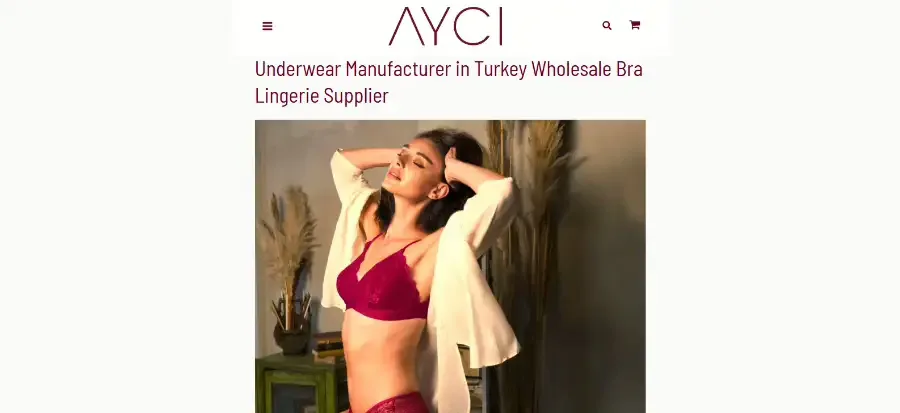
Ayci Tekstil operates as a dedicated private-label (OEM) partner for bras and lingerie in Istanbul. They offer a structured “concept-to-bulk” workflow that generic trading houses often lack. This makes them the safest entry point for brands launching intimate apparel lines who need clear communication.
The MOQ Warning Total order volume is a vanity metric. You must validate the MOQ per style, per color, and per size. Factories often demand 500 units but enforce an even size split, leaving you with dead stock in unpopular sizes. Ensure their size grading aligns with ISO 8559 sizing standards before you pay a deposit.
Procurement Checklist:
- Test the Fabric: Buy a sample set to verify hand-feel and elasticity.
- Lock the Specs: Confirm they can produce custom hangtags that meet FTC textile labeling requirements.
- Enforce QC: Require video inspection of the final bulk order before releasing the balance payment.
If you need faster logistics than Turkey offers, compare these specs with Portugal underwear manufacturers and USA underwear manufacturers.
2. NF Seamless — Best for Seamless Underwear Manufacturing (Circular Knit Capability)
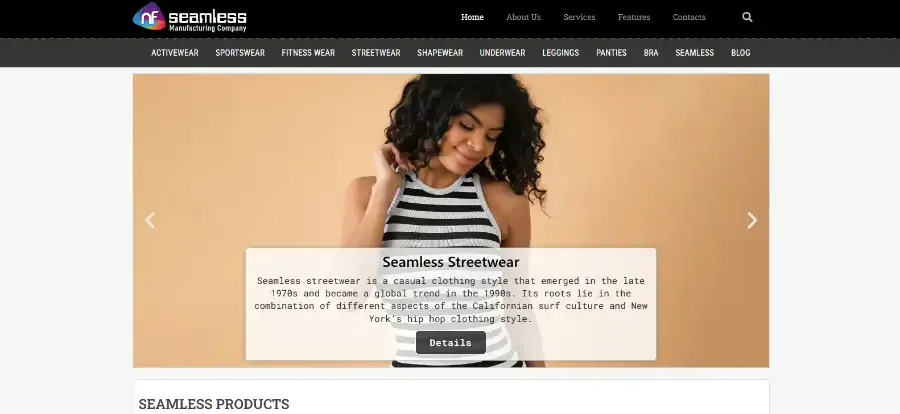
Seamless isn’t just a design choice; it is a completely different manufacturing discipline. While standard underwear is cut and sewn from fabric rolls, NF Seamless uses circular knitting machines—often Santoni technology—to spin yarn directly into finished tubes.
This eliminates side seams, preventing chafing and Visible Panty Lines (VPL). It delivers the high-compression “second-skin” feel essential for premium shapewear. However, the setup cost is higher. You aren’t paying for a paper pattern; you are paying for a technician to program a knitting machine.
What to ask before you sample: With seamless, quality depends on the yarn, not the stitching.
- Verify Machine Capability: Confirm they can run your specific types of female underwear (e.g., complex jacquard bras vs. basic panties).
- Demand Yarn Specs: Request certificates for branded fibers like The LYCRA Company or Nilit. Cheap generic nylon will lose elasticity quickly.
- Mandate Recovery Tests: Reference ASTM D2594 standards for stretch properties. If the fabric doesn’t snap back instantly, the product will fail.
- Align Designs: Seamless limits color blocking. Review lingerie vs underwear construction to ensure your tech pack matches their machine’s limitations.
3. Shapewear Wholesale — Best for Seamless Shapewear + Maternity Underwear Programs
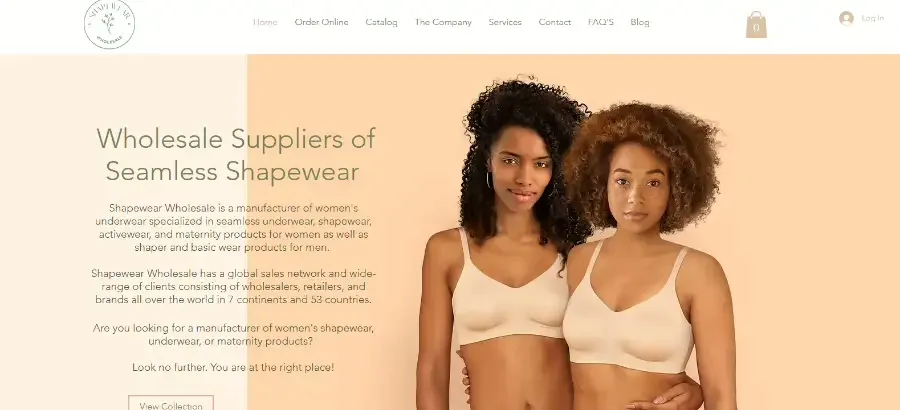
Developing custom high-compression garments takes months of technical adjustments. If speed is your priority, leverage an existing catalog.
What they are known for This supplier specializes in women’s seamless shapewear and maternity lines ready for export. They are the ideal partner for brands that need proven silhouettes—like body shapers and nursing underwear—without the capital expense of developing new seamless knitting molds.
How to buy intelligently Do not buy blind. A product often looks premium in a PDF but feels cheap in your hand.
- Request the catalog. Get the current price list and confirm MOQ thresholds for private labeling.
- Sample the full size run. Order every size, not just a Medium. Cross-reference the fit with our lingerie sizes guide to ensure alignment with Western standards.
- Verify safety. Confirm the facility holds ISO 9001 certification for quality management to minimize defect rates.
- Plan your mix. If you carry men’s items, check the types of mens underwear they produce to consolidate shipping.
🚀 Actionable Insight: Weigh your samples immediately. High-quality shapewear relies on high GSM (grams per square meter). If the production sample is lighter than the catalog sample, the compression will fail.
Send a message Shapewear Wholesale
4. HNX UNDERWEAR — Best for Wide Women’s Assortments
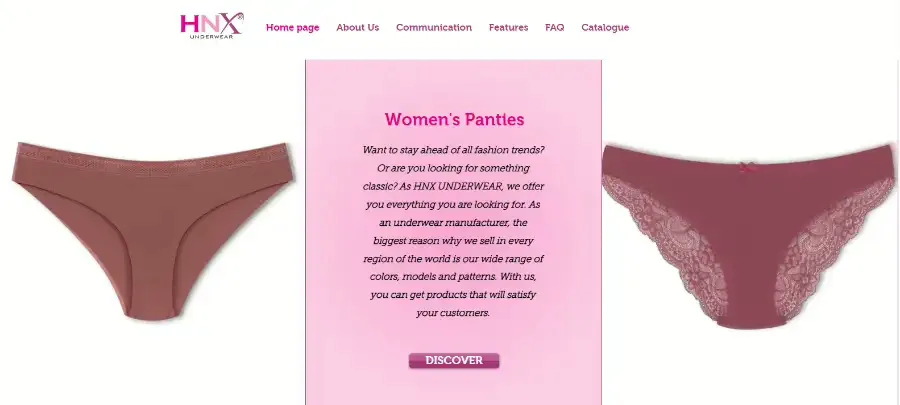
HNX Underwear specializes in volume and variety. They are an export-focused manufacturer known for a massive women’s catalog, ranging from basic cotton panties and thongs to complex bustiers.
This breadth makes them ideal for brands that need frequent style refreshes. But managing a wide assortment carries a risk: inconsistent sizing across different cuts. A Medium thong might fit perfectly while a bustier in the same size runs small.
To prevent returns, you must audit the technical specs for every SKU.
- Check the gusset: Confirm width and construction standards to ensure hygiene and comfort.
- Verify composition: Lab test the exact ratios in cotton/modal blends using AATCC test methods.
- Test elastic recovery: Ensure elastics verify against ASTM D4964 tension tests to prevent sagging over time.
- Review grading: Ensure plus sizes use dedicated patterns. Simply scaling up a size Small pattern distorts the fit on larger bodies.
Finally, define your category clearly. Use our lingerie vs underwear guide to map your collection positioning so you don’t confuse shoppers.
🚀 Actionable Insight: Request a “size set” sample run (XS, M, XL, 3XL) for each new silhouette to verify the grading rules before approving bulk production.
Make contact with HNX UNDERWEAR
5. Oulabi mir Textile — Best for Custom Underwear Production When You Need Flexibility
Oulabi Mir positions itself as a versatile option for brands exploring custom underwear in Turkey. They market flexibility, but for a new brand, undefined capabilities create risk. Since public data on their specific equipment and product focus (men’s vs. women’s) is limited, you must validate their reliability before negotiating.
The Due Diligence Checklist Treat your initial inquiry as a capability audit. Do not sign a contract until you verify these five points:
- Visual evidence: Demand recent video footage of similar underwear on the production line to prove active manufacturing status.
- Hard numbers: Get a written commitment on sampling costs and turnaround times.
- Specific MOQs: Confirm minimums per color and size. A low total MOQ is useless if you can’t split sizes.
- Export history: Verify they currently ship to your region to ensure they understand international trade compliance.
- License numbers: Request valid certificate IDs to cross-reference against the official OEKO-TEX label check.
Make contact with Oulabi mir Textile
6. Aynuz — Best for Fast Wholesale Buying + Entry-Level Private Label Basics
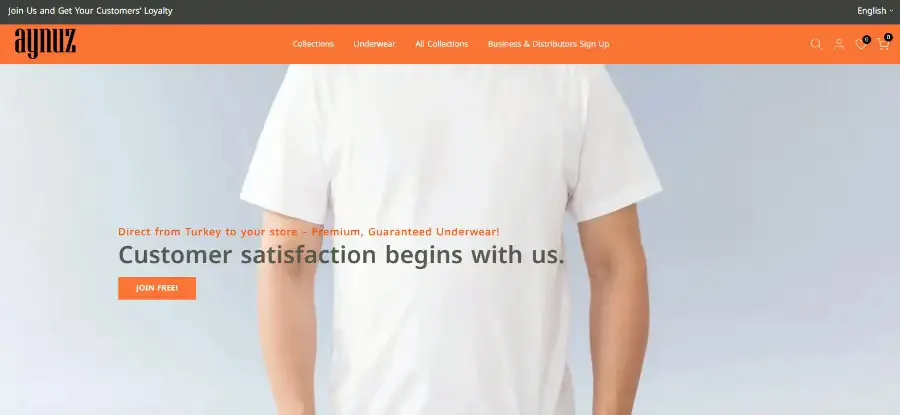
Aynuz functions less like a slow-moving factory and more like a B2B digital storefront. Instead of waiting weeks for prototypes, you browse a visible catalog of ready-made underwear basics and ship immediately. This model bridges the gap between simple wholesaling and branded production.
Who this is for This is the ideal entry point for resellers and founders validating specific mens underwear, such as boxers or modal undershirts. You avoid the high capital risk of custom molds by leveraging their existing stock to test the market first.
The Strategy: Test First, Brand Later Stop guessing at inventory requirements.
- Select: Pick best-selling stock SKUs from their catalog.
- Validate: Sell a small batch to prove customer satisfaction with the fit.
- Upgrade: Once you identify winners, negotiate private label agreements to build brand equity.
This approach drastically reduces risk when you start a lingerie business. You trade total customization for speed, getting verified Turkish cotton products to market in days.
7. Anıt İç Giyim — Best for Lingerie-Style Collections and Retail-Ready Presentation
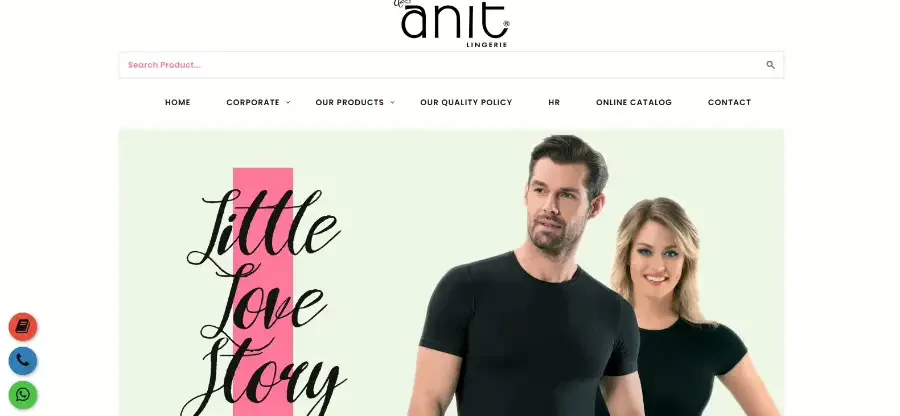
Anıt İç Giyim feels more like a consumer brand than a backend factory. They prioritize high-quality visuals and “lingerie-forward” styling that moves beyond basic cotton staples.
This suits boutiques and e-commerce sellers who need retail-ready designs immediately. But relying on a massive catalog creates a specific risk: inventory continuity. A professional product image does not guarantee the product is actually sitting on a shelf.
The Procurement Audit Clarify logistics before listing these items on your store. A “stock” item with a six-week lead time is effectively made-to-order. Verify these four points:
- Availability: Is this SKU strictly stock-service or does it require production lead time?
- Tagging: Do they support private label tag replacement on existing inventory?
- Packaging: Do units arrive in branded retail boxes or generic poly bags?
- Sizing: Turkish cuts often run smaller than US standards. Compare their charts against our lingerie sizes guide to reduce return rates.
Communicate with Anıt İç Giyim
8. Nazik — Best for Established-Scale Production Mindset (Legacy Textile Player)
Nazik represents the “old guard.” They operate with an industrial mindset across multiple textile fields rather than a single niche. This maturity suits enterprise procurement teams that prioritize stability and formal processes over speed.
Breadth creates risk. When a factory produces everything from home textiles to apparel, you must verify underwear isn’t an afterthought. You need dedicated machinery, not general-purpose equipment. While this industrial scale defines the best clothing brands in Turkey, you must confirm their innerwear capabilities match your program. Many legacy players hold certifications like ISO 9001, but general quality standards do not guarantee specific technical execution for intimate apparel.
- Confirm Focus: Ask if underwear is a dedicated division or an adjacent category.
- Request Proof: Demand photos of the current production line. Look for specialized waistband attachments and OEKO-TEX Standard 100 compliance for skin-contact safety.
- Clarify MOQs: Legacy players set high minimums. Ensure their per-size limits allow for your required color breadth.
9. Stildepo — Best for Boutique Brand Partnerships (Low MOQ Flexibility)
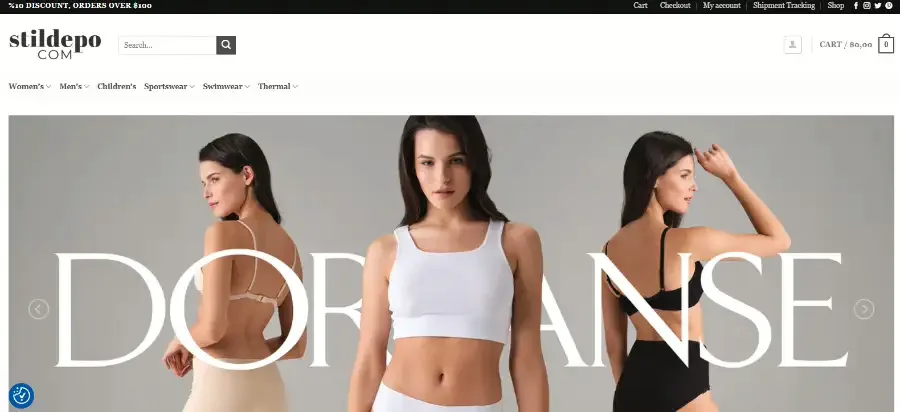
Custom manufacturing takes months. Stildepo cuts that timeline to days. They are not an OEM factory that builds your designs; they are a wholesale aggregator stocking thousands of ready-made products from established Turkish brands.
This platform allows you to import finished goods—from homewear to boxer briefs—immediately. You gain speed, but you lose brand ownership. You are reselling their labels, not building your own.
How to Reduce Risk Buying finished goods requires different checks than custom production:
- Verify Authenticity: Ensure products arrive with original branded tags and retail packaging.
- Check Size Charts: Turkish retail sizing often runs smaller than US/EU standards. Always cross-reference measurements.
- Confirm Replenishment: Verify they keep deep inventory of best-sellers so you don’t stock out.
If you need your own logo on the waistband, this is the wrong channel. You need a dedicated custom underwear manufacturer. For specific lace development, look for specialized lingerie manufacturers.
⚡ Power Move: Don’t guess on quality. Order a small “mixed SKU” sample lot to test the fabric feel and wash durability of three different brands before placing a bulk order.
10. Vonk Textile — Best for End-to-End Manufacturing Support
A sketch isn’t a blueprint. Most factories require technical files to start, which creates a barrier for new brands. Vonk Textile bridges this gap by offering end-to-end support—sourcing, pattern making, and production planning—to operationalize your collection. This full-service model aligns with the support found in a comprehensive hoodie manufacturer in Turkey, focusing on building a viable supply chain rather than just assembly.
What to verify immediately Don’t accept verbal estimates. Demand hard data before paying a deposit:
- MOQ per SKU: Clarify minimums per color and size. A “500 unit” total often masks high per-variant requirements.
- Production Milestones: Get written dates for sample approval, fabric arrival, and bulk cutting.
- QC Protocols: Confirm they use in-line inspections to catch defects early, not just final checks.
- Sustainability Documentation: Ask for current certificate numbers (like GOTS or OEKO-TEX). Verify them online.
If lead times are the bottleneck, benchmark their schedule against an underwear manufacturer in China to assess the speed versus proximity trade-off.
How to Source Underwear from Turkey: A 5-Step Execution Plan
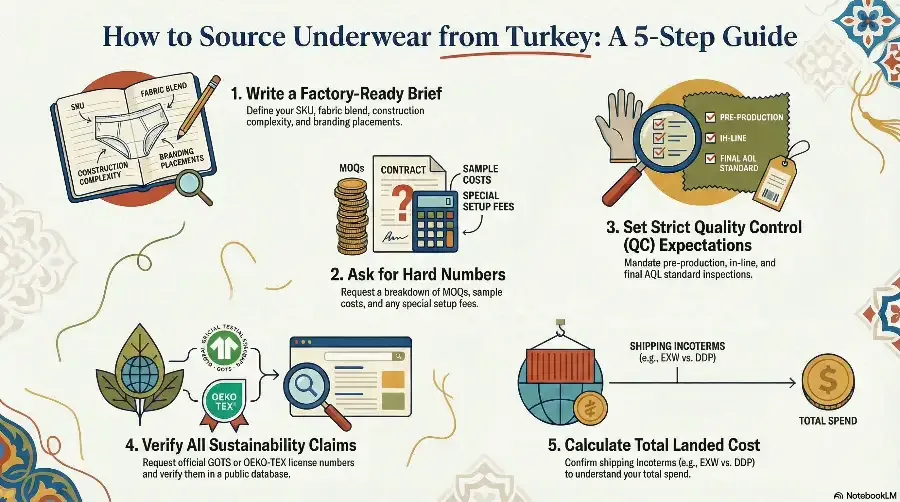
You have the list of manufacturers. Now you need a rigorous vetting process. Most brands fail here because they send vague emails. Use this workflow to force factories to take you seriously and provide accurate quotes.
Step 1: Write a Factory-Ready Brief
Factories ignore generic inquiries. Define your exact requirements before you ask for a price. Include these four elements in your initial email:
- SKU Type: Be specific. State if you are manufacturing types of mens underwear like boxer briefs or types of female underwear like thongs.
- Fabric: Specify the material blend and weight. Do not write “cotton.” Write “95% Organic Cotton, 5% Spandex, 180 GSM.”
- Construction: Assess the complexity. Review the labor differences between lingerie vs underwear. Lingerie requires detailed wire and lace work that increases production time.
- Branding: List every placement. Specify if you need jacquard waistbands, heat-transfer logos, or satin tags.
Step 2: Ask for Hard Numbers
Get raw data to calculate your actual budget. Ask the factory to complete this line-item breakdown:
- MOQ Structure: Request the Minimum Order Quantity per style, per color, and per size.
- Sample Costs: Confirm the fee for prototypes and the timeline for revisions.
- Setup Fees: Note that seamless knitting programs often require higher setup costs than standard cut-and-sew methods.
Step 3: Set Quality Control (QC) Expectations
Intimate apparel has zero margin for error. A single burst seam loses a customer forever. Mandate these three inspection stages:
- Pre-Production: Approve fabric rolls and accessories before cutting begins.
- In-Line: Check stitch integrity and elastic recovery while goods are on the sewing floor.
- Final Inspection: Enforce ISO 2859-1 (AQL) standards. Reject any goods with dye bleeding, pilling, or size intolerance.
Step 4: Verify Sustainability Claims
Turkey is famous for eco-friendly textiles, but you must verify the paperwork. Do not trust a logo on a website.
- Request License Numbers: Ask for the specific license number for GOTS (Organic) or OEKO-TEX (Chemical Safety).
- Verify the Source: Enter that number into the certifier’s public database. Confirm it belongs to that specific factory.
- Confirm Costs: Certified materials increase unit costs. Verify this fits your profit margin immediately.
Step 5: Confirm Shipping and Landed Costs
Calculate the “Landed Cost” to understand your total spend. This includes shipping, duties, and taxes.
- Define Incoterms: Use official ICC Incoterms rules. EXW (Ex Works) means you pay for pickup. DDP (Delivered Duty Paid) means the factory handles customs and delivery.
- Benchmark Logistics: Compare Turkish lead times against underwear manufacturers in USA or an underwear manufacturer Mexico.
- Compare Global Pricing: If Turkish costs are too high, benchmark against underwear manufacturer China, lingerie manufacturers China, or clothing manufacturers in Guangzhou China. For European proximity, check Portugal underwear manufacturer options.
Ready to start? Sourcing is complex. Contact our team today to skip the vetting process and get a production-ready quote.
People Also Ask About Underwear Manufacturers in Turkey
1. What is a realistic MOQ for private label underwear in Turkey?
Most export-grade Turkish factories require 500 to 1,000 units per style. However, this varies by production method. Basic cut-and-sew cotton programs often allow lower minimums, whereas seamless knitting (Santoni machines) requires higher volume to justify the technical setup. Always clarify if the MOQ applies per color or per size; strictly enforce a mix that prevents you from holding dead stock in unpopular sizes.
2. How do I request samples from Turkish lingerie suppliers?
Never ask for a sample without a blueprint. Professional factories require a Tech Pack that includes your target fabric weight (GSM), specific size grading table, and vector files for branding. Send this documentation first to prove you are a serious buyer. Expect to pay $80-$150 USD per prototype. This fee is typically refundable if you proceed with a bulk order over 500 units.
3. How can I verify “Organic” or “OEKO-TEX” claims?
Do not trust marketing logos on a website. Demand the specific certificate license number (e.g., 11-12345) from the supplier. Enter this ID into the official OEKO-TEX Label Check or the GOTS Public Database. This verifies that the license is valid, current, and actually belongs to the factory manufacturing your goods.
4. Should I manufacture in Turkey or China?
Choose Turkey for speed, premium cotton access, and duty-free proximity to the EU market. Choose China if your priority is the lowest possible unit cost on high-volume synthetic garments. Turkey is generally 15-20% more expensive than China but offers faster logistics (3-7 days to Europe/US) and lower tariff risks for Western brands.
If you need help matching your specific product designs to the right factory tier, contact our sourcing team here.