
| Metric | Detail |
|---|---|
| 0.3% | Hoodie defect rate, down from 4.0% |
| 80 | Pieces sampled from a 1,000-unit lot |
| 120 | Panels pulled at cutting before a seam closed |
Figures come from the lot’s QC log, the pre-shipment inspection report and the client’s own claims record.
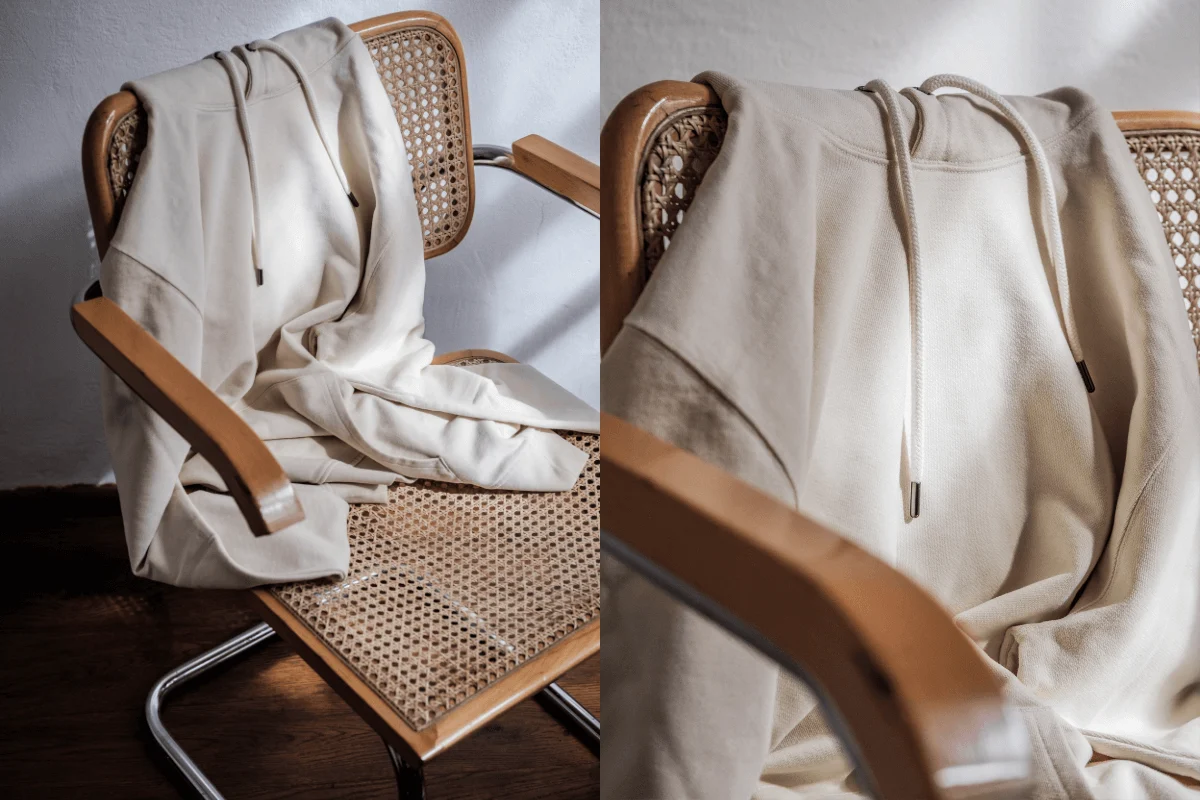
In one season, a streetwear collective took its flagship heavyweight hoodie from a 4.0% defect rate to 0.3%. The proof sat in a 1,000-unit wholesale lot in charcoal fleece, packed for retail shelves rather than a drop page.
The risk was commercial. Shade that drifted from the approved swatch, open seams and late cartons turned into claims, credit notes and smaller repeat orders. That is the part a defect percentage hides.
In short, the run held a 0.3% major-defect rate against AQL 2.5, caught 120 shade-drifted panels before sewing, and shipped both repeat lots inside their promised windows.
What follows covers the defect pattern behind that number, the five QC gates built to stop it, and the records a buyer can ask to see.
At a Glance
| Item | Detail |
|---|---|
| Brand | Streetwear Collective, a direct-to-consumer label moving into wholesale |
| The order | 1,000 heavyweight hoodies in one colourway, plus a repeat lot |
| The minimum | 100 pcs per colour; trims ride the same order |
| The sample | Quoted inside the $80–$150 band, with 7–10 working days and 3–5 fit revisions |
| The bulk run | 7–15 working days per lot |
| Scope | Swatch approval, shade-lot cutting control, sewing checks, DUPRO, AQL 2.5 at pre-shipment |
| The goal | Repeatable retail inventory at one shade and one construction |
The Challenge
Wholesale changed the standard. A drop buyer photographs a garment. A retail buyer counts cartons against a purchase order and sends back what does not match.
Heavyweight fleece raised the difficulty on both sides:
- More panels mean more seams to keep aligned.
- Thicker fabric puts a heavier load on every stitch.
- Hood balance, rib attachment and drawcord hardware all sit under retail scrutiny.
- Decoration only proves itself after a few washes.
The previous supplier’s runs tracked at a 4.0% defect rate. On a 5,000-piece order that is 200 rejected units, each one costing labour, freight and a buyer conversation.
Reviewing those runs with the QC lead turned up two causes. Mill dye lots varied, and the cutting floor mixed them: bundles from different rolls fed the same sewing line because the cutter sorted by size rather than shade. By final inspection, the mismatch had reached finished goods.
Sampling caught it late. The plan followed AQL 2.5, which sets a defect limit on a sample drawn from finished cartons. That rule tells a buyer how much defect is tolerable. It does not tell the line where the defect started, and reading an AQL chart shows how much a final pass depends on what happened upstream.
Each rejected carton pushed a retail floor date. Repeat orders arrived late enough that the buying team rebuilt its calendar around the risk, and the wholesale channel was heading toward smaller commitments.
The defect was upstream; the penalty was downstream. Panel mixing costs nothing to prevent at the cutting table and a claim at the retail shelf.
Our Solution
The order was rebuilt around five gates, each placed before the stage that could hide a failure. It ran on our own floor in Xiangyang, Hubei.
Phase 1: Pre-Production Alignment
Colour went first. Approved fabric swatches were locked before bulk dyeing, and a golden sample fixed tolerances, artwork placement, trims, labels and packing. Two dye lots can each sit inside tolerance and still read differently side by side, so the standard was a signed physical swatch rather than a number.
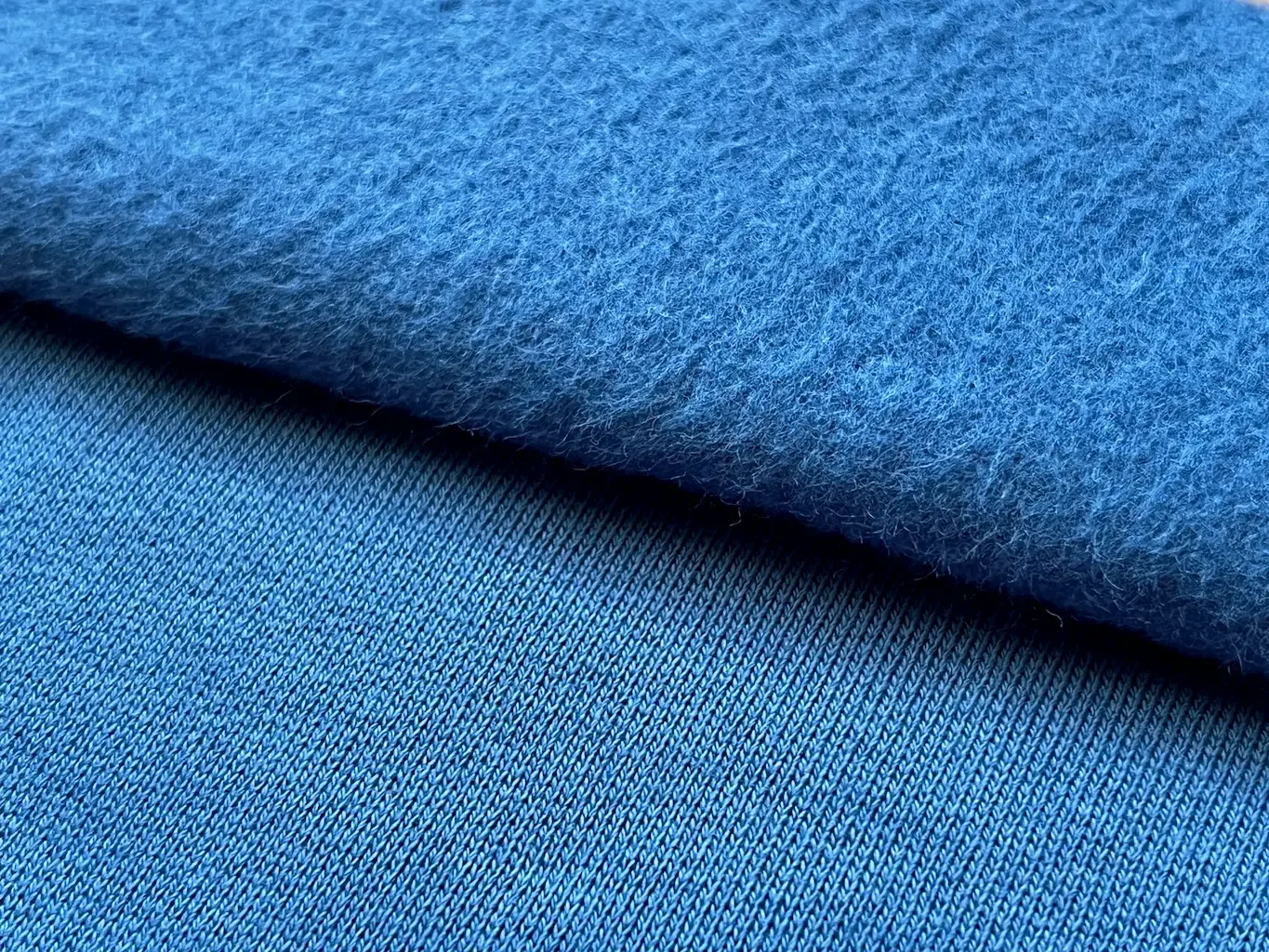
Fabric weight was confirmed with a cutter and scale against the tech pack. A 400 GSM fleece handles and shrinks differently from 350 GSM, and fleece against cotton knits shows how far two fabrics can diverge after a wash. Shrinkage allowance was checked against AATCC test methods before any marker was cut.
Phase 2: Cutting-Floor Control
The cutting floor is where colour problems start, so it got its own gate. Every roll was checked against its shade lot and tagged with the lot number. Cutters sorted bundles by lot, not only by size, which kept a body panel from lot A away from a hood panel from lot B.
Three checks ran alongside: fabric defects, roll width and marker accuracy. A loose thread becomes a hole after washing, a narrow roll wastes yardage, and a misaligned marker throws every size off by the same margin. That is the layer a cut and sew floor controls before the first seam closes.
Phase 3: Sewing-Floor Checks
On the line, the crew checked seam quality, stitch density, hood construction, pocket alignment, rib attachment, thread management, label placement and drawcord finishing.
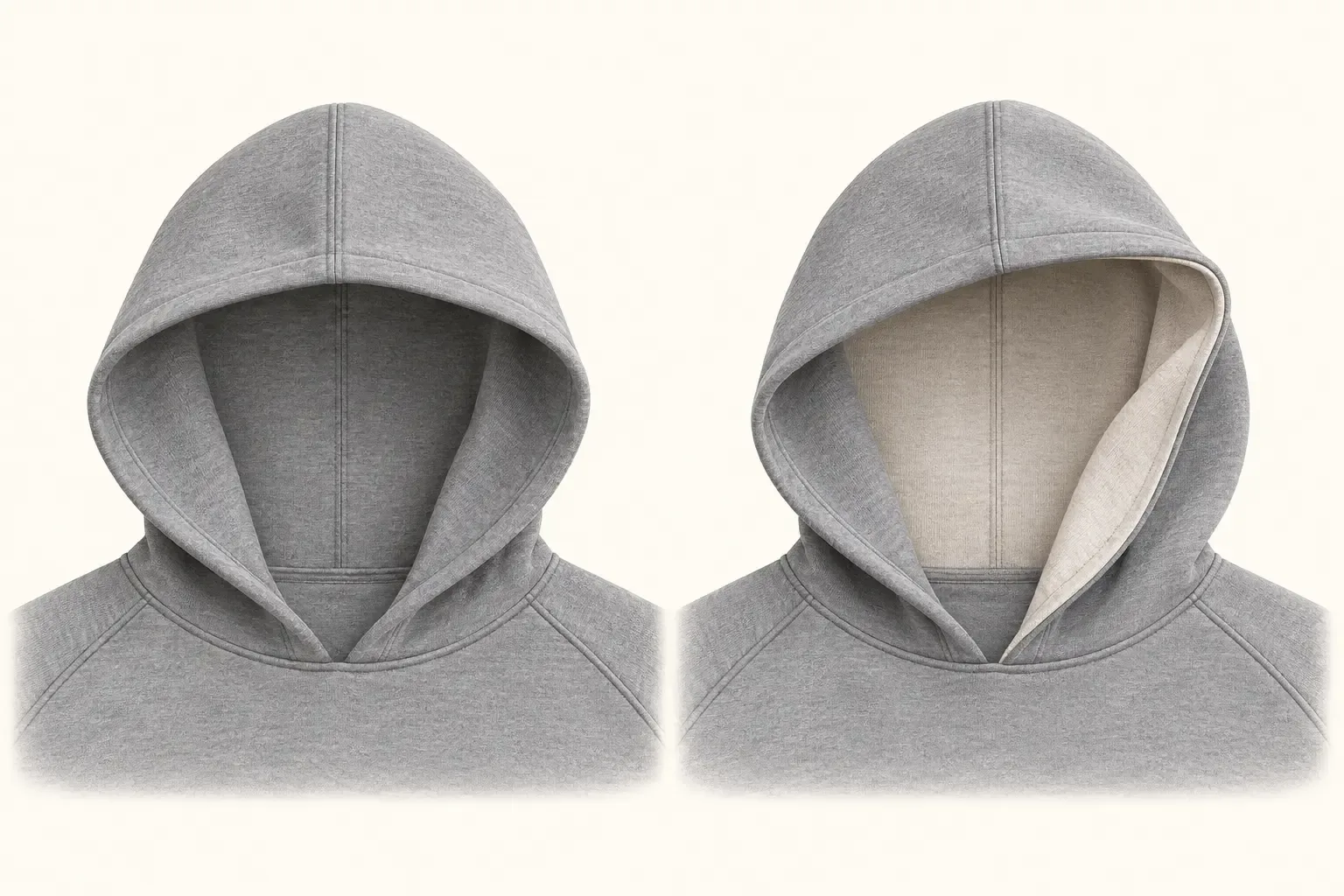
Heavyweight fleece sets its own numbers. Main seams ran 10–12 stitches per inch: fewer weaken the seam, more pucker the fabric. Hood balance was checked on a form, because a crooked hood is a defect a customer sees before the mirror.
Sewn-in labels and size labels were compared to the buyer’s artwork on every bundle, and decoration went through a cure and crack test. An embroidered logo that fails after five washes comes back as a retail return, not a factory defect.
Phase 4: Mid-Line DUPRO
This gate carried most of the result. DUPRO means during production: the inspection happens while units are still reworkable, not after they are packed.
Checkpoints landed at 20, 50 and 80 percent of the run. A repeated fault, such as a crooked pocket every tenth hoodie, was corrected before it multiplied.
On a 1,000-piece lot, a fault found at half-finished costs hours; the same fault found at packing costs a carton and a date. The wider routine behind those stops is set out in a full factory QC system.
Delivery risk was reported the same way. When a fabric roll ran late, the buyer heard about it while the ship date could still be adjusted, not after it slipped.
Phase 5: Pre-Shipment Inspection
Packing release was the last gate. Appearance, measurements, labels, fold method, polybagging, carton marks, barcode readability and assortment were all signed off against spec.
Major defects were judged at AQL 2.5 on a general inspection level II sample; critical defects carried zero tolerance.
The packaging spec was checked at the same time, because a missing care label or a wrong size sticker stops a delivery at the retail warehouse, not at the factory. Barcode readability was tested on a scanner against the GS1 standard the retail channel expects.

The AQL 2.5 Hoodie Checklist
Sampling follows ISO 2859-1 at general inspection level II. A 1,000-piece lot draws 80 pieces; majors accept at 5 and reject at 6; critical defects accept at zero. Buyers who want to check those numbers can read the same tables in QIMA’s AQL guide.
- Critical, zero tolerance: a size label that would mislead a retail buyer, needle or metal contamination, missing care or fibre content, fabric damage that makes the garment unsafe.
- Major, AQL 2.5: open seams, panel-to-panel shade mismatch, body-to-hood or body-to-rib colour shift, measurements outside tolerance, crooked or off-centre decoration, pocket asymmetry, skipped stitches in stress areas, eyelet failure, drawcord imbalance, zipper misalignment, broken trims, stains.
- Minor, AQL 4.0: loose inner threads, light pressing marks, small measurement drift that stays wearable.
- Hoodie-specific: fabric GSM, fleece hand, rib recovery, hood balance, cuff and hem return, seam bulk, print cure and crack resistance, embroidery puckering, shrinkage against lab test methods.
- Packaging: care label, fibre content, country of origin, size sticker, fold method, polybag warning, desiccant if specified, carton marks and a barcode scan test.
The written list matters as much as the numbers. A junior inspector, a third-party agent and a remote buying team all read the same definitions, so a disagreement has a document to settle it.
Third-party inspections with SGS or QIMA can be scheduled against the same list when a buyer’s compliance team requires one.
Results
Across one season and two bulk lots, the defect rate fell from 4.0% to 0.3%.
| Metric | Before | After |
|---|---|---|
| Defect rate | 4.0% | 0.3% |
| Colour complaints | Frequent | Materially reduced |
| Rework burden | High | Sharp drop |
| Delivery reliability | Inconsistent | Inside the promised window |
| New wholesale accounts | 0 | 2 long-term |
Lot #SC-2309 carries the proof. Its pre-shipment report recorded three major defects across 1,000 units, no critical defects, and 14 units reworked before the cartons were sealed. The figure came from that lot and the repeat run. It was not an average across a longer history.
The DUPRO catch explained much of the gain. During cutting, inspector Wei Zhang flagged shade drift in the charcoal fleece, and the floor pulled 120 panels before a single seam closed. A shade complaint never reached a retailer.
The 0.3% also sits inside the AQL 2.5 major-defect limit set by ISO 2859-1. It does not survive without all five gates. Remove the swatch lock and shade drifts. Remove the cutting sort and a body panel meets the wrong hood. Remove DUPRO and the same fault reaches packing.
Delivery tracked the same curve. Both repeat shipments released inside their promised window, which kept the retailer’s replenishment calendar intact. With defects cleared before packing, the buying team spent less of its week on credit notes and more of it on the next range.
Wash performance was checked the same way, because a hoodie that shrinks or fades after five home washes returns from the customer, not from the factory.
In the Client’s Words
“The first bulk run matched the swatches. The second matched the first. That consistency is why we moved to a long-term agreement.”
— Robert Hill, Buying Manager, Streetwear Collective
Who This Order Model Suits
The gates suit brands that:
- Sell into retail or distribution, where a carton is audited against a purchase order.
- Run one colourway across several sizes, so shade consistency carries the range.
- Hold a replenishment calendar that cannot absorb a late carton.
- Have taken a shade claim or a rework charge once and would rather not repeat it.
- Want QC records they can forward to their own buyer without rewriting them.
The same sequence runs on any hoodie programme from 100 pieces per colour. What changes with volume is how much the gates catch before a defect becomes a claim.
Vetting a Hoodie Wholesale Run
Ask these before the purchase order, not after the first carton:
- Which AQL level and inspection standard the factory applies, in writing.
- Whether DUPRO runs, and at what completion points on the line.
- How shade lots are tracked from roll to bundle to carton.
- What the destination market requires on labels and packaging requirements.
- Mill certificates behind the fabric: OEKO-TEX Standard 100, a wash-test report, or neither.
- The records that arrive before final payment: inspection report, photo log, rework count.
If a wholesale run is already on the calendar, open the contact page and tell us the lot size, the colour count and the retail dates. We will flag where the first lot is most likely to drift.