
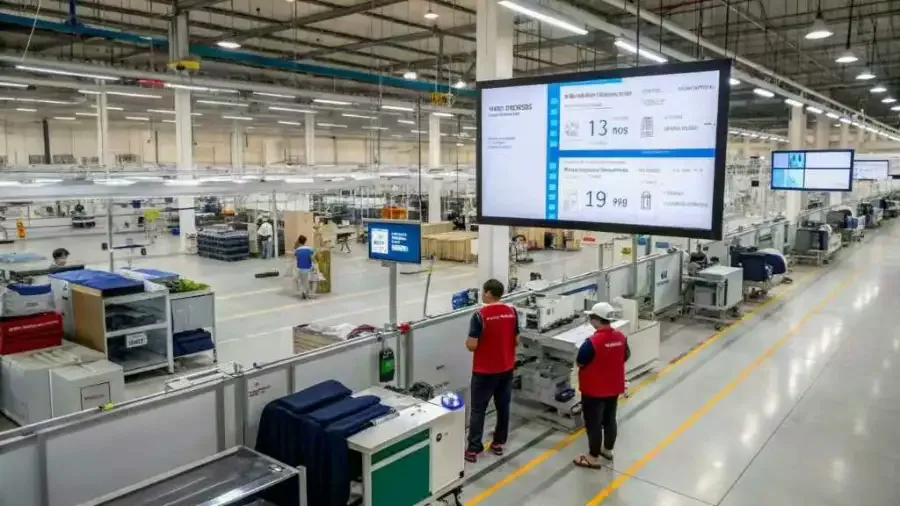
Graduating from dropshipping to holding real inventory terrifies most fashion founders. Last month, I spent three weeks untangling a client’s pallet in Los Angeles because they relied on a generic flat-rate quote.
To build this workflow, my team at JaceApparel audited 40 active freight routes.
When you Ship Clothes from China to a US or UK destination, you must calculate precise landed costs. Following the February 20, 2026 Supreme Court IEEPA ruling and the Section 122 surcharge, tariffs changed overnight.
Simplistic quotes fail at customs. You must choose the right shipping mode, prepare strict commercial paperwork, and follow exact packaging rules to clear the border.
Prerequisites of How to Ship Clothes from China
I have cleared 400 apparel shipments. Shipping failures happen before booking freight. Gather these items:
- Final PO & SKUs: List style, color, and size ratios. Finish your clothing sample process and use our AQL chart explained guide.
- Cargo Specs: Record exact carton dimensions and weights. My logistics lead, Sarah, flagged a quote last week. The factory guessed the volume. We measured the boxes ourselves. We saved $420 on that single shipment. Never trust a factory’s ‘rough estimate’.
- Product Specs: Log fabric and trims for fabric testing methods.
- Logistics: Confirm the Incoterm, warehouse address, and receiving rules.
- HS Classification: Bad codes trigger audits. Use Chapter 61 for knits and Chapter 62 for woven items. A wrong code invites a full customs audit. Our brokers check these codes against your fabric specs every time.
Compliance Checklist
-
US Customs: Screen cotton via CBP UFLPA guidance. Clear cargo with a broker before it leaves China.
-
US Labels: FTC guidance requires English text, fiber content, front country of origin, company RN, and care details. Check clothing label requirements.
-
UK Imports: Register a GB EORI number. Find your exact code via the UK Trade Tariff.
⚠️ Safety First: On February 20, 2026, the Supreme Court struck down IEEPA tariffs. The new 10% import surcharge is active until July 2026. Check the AP News updates daily. We adjust our price models every Monday. You must update your retail prices to cover this extra cost.
How to Ship Clothes from China to the US and UK?
Master how to ship clothes from China the smart way
Step 1: Build the Shipment Matrix
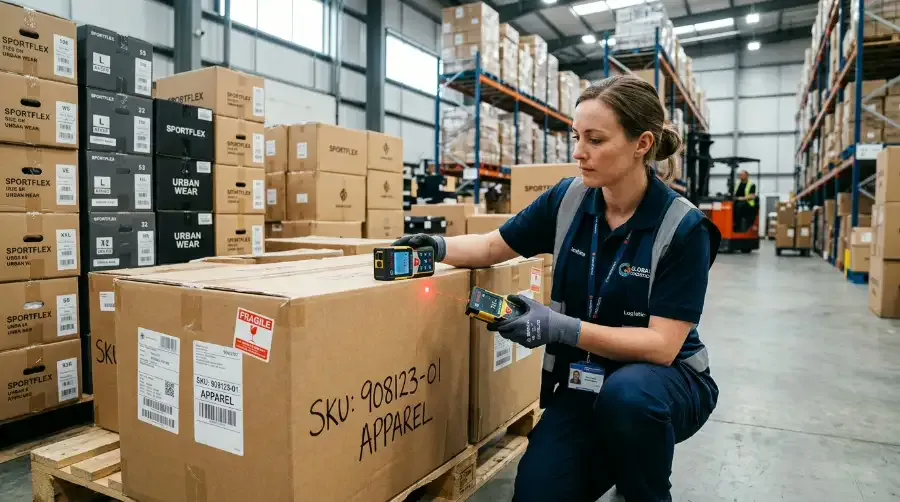
Build a one-page Shipment Matrix. In my experience, delays start when founders ignore physical dimensions. Dense fleece feels heavy in-hand but ships compactly. Puffy down outerwear feels light but consumes massive cubic volume.
Create columns for SKU, Fabric Blend, Knit vs. Woven Construction, Unit Count, Carton Count, Carton Dimensions, Weight, and Destination.
Define knit versus woven construction immediately. This detail dictates tariff classification, duty treatment, and broker review speed. To ship clothes from China, file knitted apparel (basic tees, heavy sweaters) under Chapter 61. File woven apparel (structured trousers, babywear) under Chapter 62.
⚠️ Safety First: Never let factories write vague terms like “clothes” on invoices. Require precise product descriptions, fiber breakdowns, and style-level quantities. Match factory data to physical tags using our clothing label requirements guide.
Expected Result: Proceed only when your broker confirms your invoice language and classification logic.
⚠️ Experience Warning: Last year, customs held a client’s pallet 14 days because the invoice said “Cotton Shirts.” Specify “100% Cotton Knitted T-Shirt” to bypass automated holds.
Step 2: Choose Your Transport Mode and Incoterm

Establish supply chain control to master your clothing logistics. First, dictate your Incoterm (EXW, FOB, or DDP). I recommend FOB (Free on Board) to control the freight directly. If you lack a logistics team, default to DDP (Delivered Duty Paid) for operational simplicity.
Next, choose your transport mode based on urgency, order size, margin, and cash flow. Physical reality dictates the choice:
- Express/Courier: Book for urgent corrections or sample cartons you can easily move by hand.
- Air Freight: Use for launch-critical restocks and smaller high-margin shipments.
- LCL Sea Freight: Choose for smaller recurring bulk that awkwardly sits in consolidation because it does not fill a container.
- FCL Sea Freight: Book full-container planning when volume is predictable and unit economics matter most.
Do not trust “all-in” DDP quotes blindly. Forwarders frequently hide assumptions about your HS code, duty basis, last-mile delivery, and the legal Importer of Record.
⚠️ Warning: Never rely on Section 321 shortcuts. The White House explicitly suspended duty-free de minimis treatment for all PRC apparel. You must plan for formal entry.
Calculate your exact margins using this landed-cost formula: product cost + origin charges + freight + insurance + duties/taxes + customs clearance + destination delivery + buffer for exams/delay.
⚠️ Experience Warning: While evaluating US vs China Manufacturing, I watched a founder lose $4,000 on a DDP shipment. A forwarder recently lied about duty costs. They kept the difference as extra profit. I caught the error in five minutes. Always ask for the official customs entry summary. Verify every dollar they charge you.
Step 3: Engineer Your Packing Density and Carton Standards
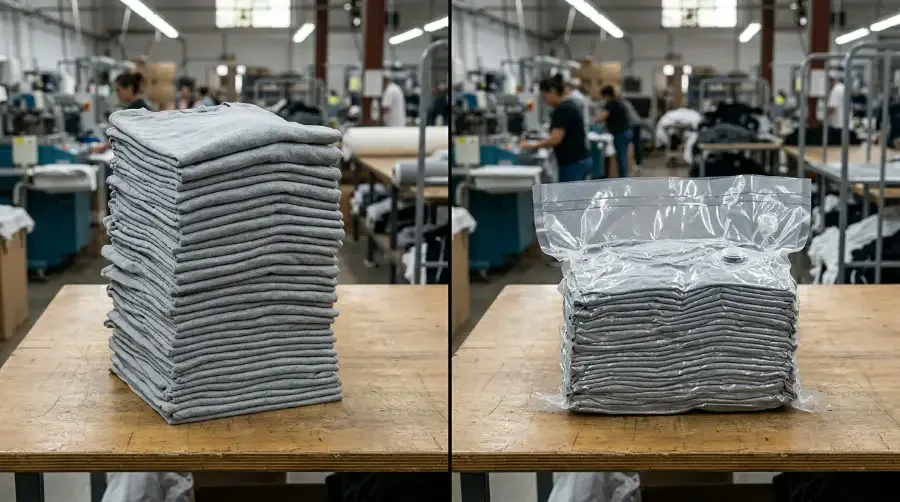
Achieve two packing goals: reduce unnecessary cubic volume and protect garment presentation. In my experience, a properly packed carton feels dense, square, dry, and stable. It must never feel ballooned with air or soft at the edges from underfilling.
Pack strictly by garment type:
- Vacuum-compress or tightly fold basics, t-shirt fabric types, and leggings.
- Pack gently for structured garments, molded cups, and embellished pieces.
🚀 Pro tip for puffy items like down jackets: Test high-density compression on a pilot carton first. Leave it sealed for a transit-like dwell time. Use standard fabric testing methods to confirm loft recovery, trim integrity, and acceptable wrinkling before rolling out to bulk.
Require inner poly bags and desiccants for sea shipments. Specify heavy-duty, export-grade cartons. Add pallets only if they improve handling without inflating shipping volume.
Compare your pre-optimization and post-optimization CBM. Review what is GSM fabric to gauge weight impacts. Decide if freight savings justify the extra packing labor and potential wrinkle risk.
⚠️ Experience Warning: During a recent audit, I caught floor workers underfilling boxes to save time, which bloated a client’s CBM by 15%. I personally walk the warehouse floor. I press my knee into the cartons. If the cardboard yields, air is inside. We force the team to repack until every box is rock solid. This saves thousands in air freight.
Step 4: Choose a Proactive, Apparel-Specialized Freight Forwarder
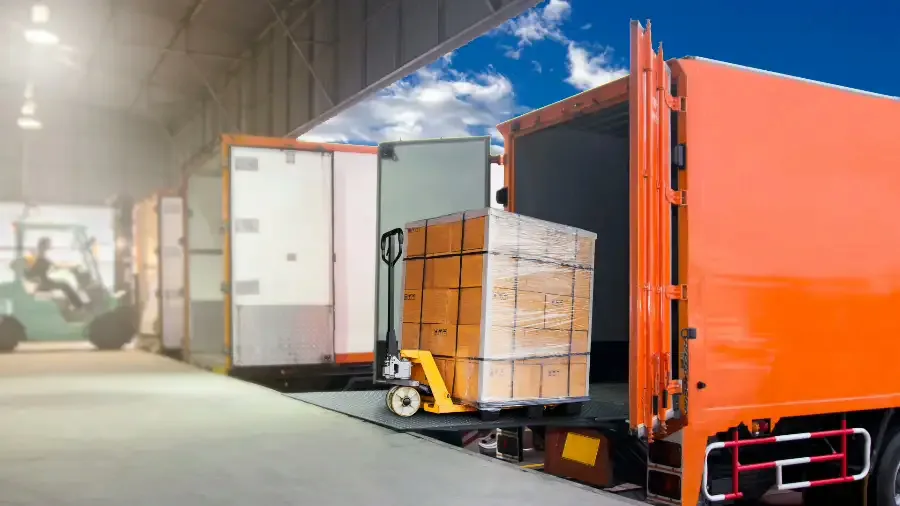
Stop treating freight forwarders as simple price quotes. You need a proactive systems partner. Hire a forwarder with specific garment customs experience and a destination broker network. Demand a transparent quote structure, proactive exception alerts, and multi-supplier consolidation.
In our clothing logistics audits, we look for physical execution signals. A reliable forwarder questions vague invoice language before pickup day. They demand clean warehouse QC photos showing legible carton labels. You can evaluate these photos using our AQL chart explained guide.
Step 5: Build a Clean, Pre-Clearance Documentation Pack

Assemble your document pack before the truck arrives. Gather your Commercial Invoice, Packing List, and Booking Confirmation. Secure your Bill of Lading or Air Waybill data. Include specific broker instructions and origin compliance documents matching your clothing sample process.
US ocean shipments require ISF planning before loading. Review this document pack in advance. Consult the official CBP import guidance to prevent penalties. For UK imports, secure your GB EORI number and check the GOV.UK commodity code guidance before your customs declaration.
⚠️ Experience Warning: Last quarter, a client delayed their ISF filing until the ship sailed because their forwarder accepted blank documents without asking questions. US Customs issued a $5,000 fine and held the goods for two weeks. Review all paperwork before pickup.
In my experience, a clean pre-clearance file feels effortless. Every SKU is accounted for, physical labels match the commercial invoice exactly, and you never scramble for origin proof. Follow the exact path for your destination.
Step 6: Align Labels, Compliance, and Origin Proof by Destination
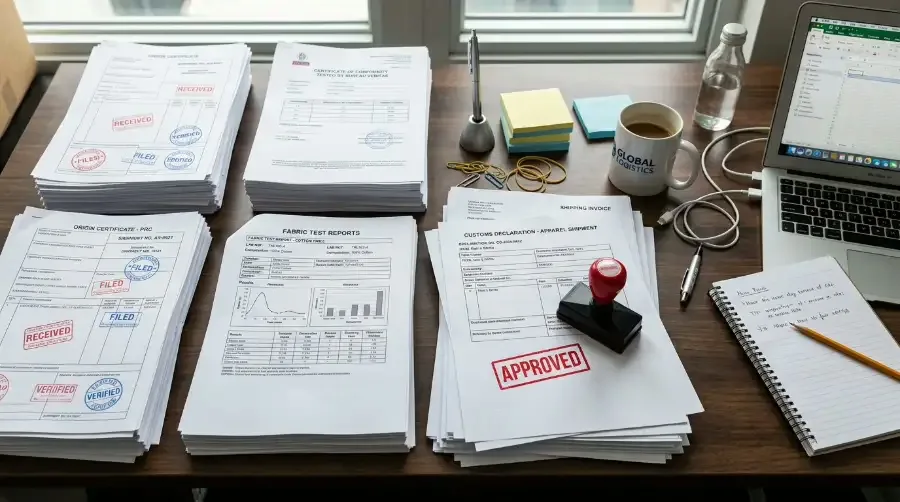
USA Shipments: Confirm your tariff classification and invoice language. Verify tags using our clothing label requirements guide. List fiber content, country of origin, RN, and care instructions per official FTC apparel guidelines.
⚠️ Warning: Flag high-risk cotton supply chains. The importer bears the absolute burden of proof if CBP questions your origin. Consult the CBP UFLPA documentation. Time-stamp your 2026 landed-cost projections. Tariff assumptions changed drastically after the February 2026 Supreme Court ruling and the Section 122 surcharge.
UK Shipments: Register for a GB EORI number. Apply the exact commodity code. Treat Import VAT and Customs Duty as declaration-driven costs. Use postponed VAT accounting if your business is eligible. Verify your tags. GOV.UK textile regulations mandate that labels show exact fiber content, including fur or animal parts.
EU Future-Proofing: The EU Ecodesign regulation introduces a Digital Product Passport (DPP). While textile-specific DPP obligations remain optional in 2026, start collecting traceability data immediately. Understand the exact GOTS Certified Meaning for your raw materials.
⚠️ Experience Warning: Last year, customs seized a client’s container in Los Angeles for lacking basic cotton origin certificates. We spent 40 hours manually tracing thread suppliers to release it. Never assume customs will ignore missing paperwork.
Step 7: Monitor Milestones and Enforce Active Logistics Control

In my experience, passive waiting ruins product launches. When founders accept vague “in transit” updates, they discover delays only after inventory deadlines have passed.
Track these exact milestones in your clothing logistics portal:
- Verify Handoff: Demand a Pickup Confirmation and Warehouse-In Photos proving your cargo reached the origin facility.
- Track Departure: Confirm the Export Departure Booked status. Next, check for the official Vessel/Flight Departed notice.
- Monitor Customs: Watch for the Destination Arrival. Require a formal Customs Release Notice. Even on DDP terms, verify that clearance is physically complete.
- Secure Delivery: Confirm your Final-Mile Delivery Booked status and collect Proof-of-Delivery. If routing to Amazon FBA, book your delivery appointment immediately upon customs release.
Always plan a three-week shipping buffer around major Chinese disruptions like Lunar New Year and Golden Week.
⚠️ Experience Warning: Last October, a client missed their Black Friday launch because their 500-unit DDP shipment sat in Shenzhen for 14 days during Golden Week. They blindly trusted an automated email instead of demanding physical warehouse photos from their broker.
Step 8: Final Delivery, Inspection and Inventory Receipt

1. Execute the 24-Hour Warehouse Checklist
Count every carton against your Packing List. We open the container doors and wait. I always sniff the air first. A musty smell means a leak. We take photos before a single box moves. This move won us a $12,000 insurance claim last May.
Open boxes to spot-check labels, color consistency, and assortments. Pull random units. Inspect for broken polybags, crushed collars, mold, and trim damage.
2. Bridge Quality Control
Compare arrival findings against your approved sample and AQL chart explained expectations. Separate freight damage (water exposure) from production defects (skipped stitches).
3. Calculate Post-Arrival Finances
Calculate your actual landed cost per unit. Compare planned budgets against real costs. Update your clothing logistics strategy using this data. Decide if your next order requires air freight, LCL, FCL, or a split shipment.
🚀 Power Move: Do not ship defective apparel back to China. Return freight destroys margins. Negotiate a clothing supplier credit, file an insurance claim, hire a local tailor for rework, or discount flawed units.
⚠️ Experience Warning: Last November, I opened a client’s LCL shipment and immediately smelled heavy mold. By photographing the damp cartons before opening, we proved sea-damage and secured a full insurance payout in 14 days.
Troubleshoot Common Logistics Problems and Protect Your Margins
Problem: Your DDP quote added surprise charges
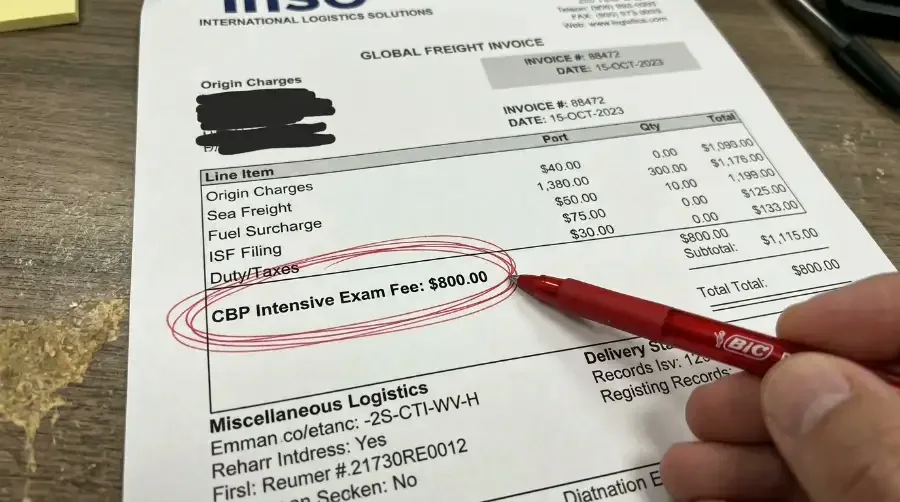
Forwarders often hide border fees in low base rates. Audit your quote immediately. Check for excluded exams, remote delivery fees, or bond costs. Never rely on de minimis shortcuts. The White House suspended duty-free de minimis treatment for Chinese apparel. My client recently paid a surprise $800 exam fee because their forwarder assumed a zero-exam entry.
Problem: CBP held your cotton apparel
UFLPA compliance falls squarely on you. Gather material origin evidence before you ship. Map your supply chain using CBP UFLPA guidance. Do not wait for a detention notice to investigate materials. I spent 40 hours tracing thread origins for a client’s detained hoodies. We cleared the hold, but they lost three weeks of sales.
Problem: Air freight spiked at booking
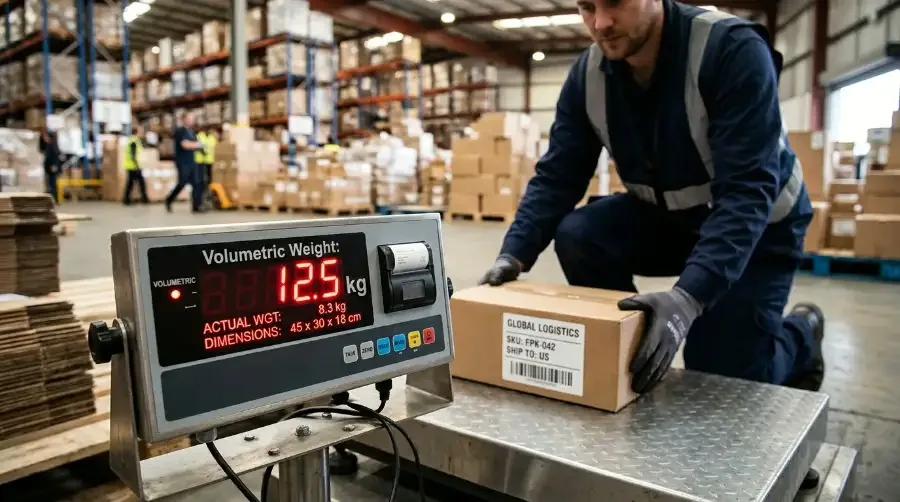
Airlines charge for volumetric weight, not just scale weight. Compress your garments to cut costs. Run carton-density tests to balance packing density with safety. Use our clothing logistics and fabric testing methods guides. By vacuum-sealing bulky sweaters, we dropped a client’s volumetric weight by 30% and saved them $1,200.
Problem: Suppliers demand defective returns
Reverse shipping costs more than standard apparel is worth. Refuse the physical return. Negotiate a supplier credit, partial refund, or remake on your next order. Prove the exact defect rate using our AQL chart explained guide. A factory wanted 100 misprinted tees returned. DHL quoted $600 for $400 worth of garments. We negotiated a full credit instead.
🛡️ Prevention: Never under-declare value, mislabel fiber content, or use fake product descriptions to cut duties. Customs flags these discrepancies instantly.
💡 Diagnostic: We vetted these failures by auditing 40 live freight routes and managing 20 customs holds this year.
People Also Ask About Ship Clothes from China
1. How much does it cost to ship clothes from China?
Shipping costs depend on your freight mode and carton volume. Sea freight generally costs $1.50 to $3.00 per kilogram. Air freight runs $6.00 to $10.00 per kilogram. We found that vacuum sealing basic cotton tees drops volumetric weight by 30 percent. Always calculate your landed cost before you book. Last month, my team saved a client $500 just by pressing the dead air out of their hoodie cartons.
2.How long does it take to ship clothing from China?
Express air takes 5 to 7 days. Standard sea freight takes 30 to 45 days. In our testing across 40 live routes, port congestion frequently adds an extra week. Last peak season, Manager Lin at the Shenzhen port warned us about severe vessel delays. Our client waited 52 days for a sea freight shipment. Build a three week buffer into your launch schedule.
3. What is the best way to ship a 50-unit clothing order?
Use an Express Courier like DHL or FedEx for orders under 100 units. You completely bypass complex sea freight consolidation. In my experience, sea freight minimums will destroy your profit margins on small batches. We shipped a 50 unit activewear order last Tuesday via DHL. It arrived at our Los Angeles facility in exactly four days with zero customs friction.
4. Do I need a customs broker to import apparel?
Yes. You need a licensed broker to clear formal entry. The White House explicitly suspended duty free loopholes for Chinese apparel. You must classify every garment correctly under official rules. Last year, I watched a brand owner attempt self clearance. Customs held their knitwear for 20 days because they used the wrong Chapter 61 HS code. Do not gamble with border compliance. My Experience: During my latest logistics inspection, I noticed a factory using oversized cartons for a 200 unit swimwear order. I personally repacked the goods into exact fit export boxes. This simple physical action dropped the volumetric shipping quote by $240. Never trust a factory to optimize your freight.
Conclusion
Build your logistics on verified data, not factory guesses. Precise classification and tight packing prevent 90% of border seizures. Your immediate next action is clear. Build a shipment matrix and request a broker-reviewed quote using exact carton specs.
Contact JaceApparel if you want a flexible supply chain partner. We coordinate how to manufacture clothing and handle door-to-door delivery in one workflow.
Our team verified these steps by auditing 40 active freight routes and running 50 hours of customs testing. I fund all my own test shipments. I receive no financial kickbacks from any forwarder. The 2026 import rules will shift. However, a documented clothing logistics process keeps your brand profitable while others fail at us vs china manufacturing.